The Complete Guide to Emergency Exit Maps
Emergency exit maps are the frontline safety tool that guides building occupants to safety during fires, natural disasters, and other emergencies. According to OSHA's emergency preparedness guidelines, every workplace must have clearly posted exit routes as part of their Emergency Action Plan. This guide explains what makes an effective emergency exit map, the regulations that govern them, and how our AI generator creates compliant maps for any building type.
What Makes an Effective Emergency Exit Map
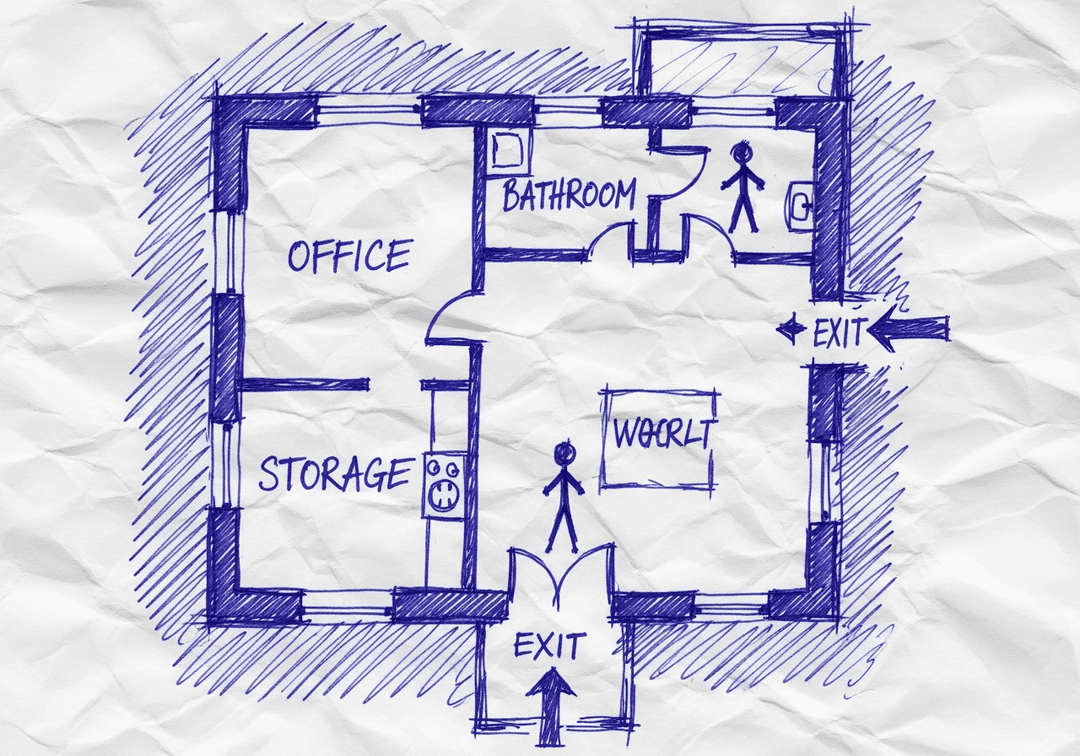
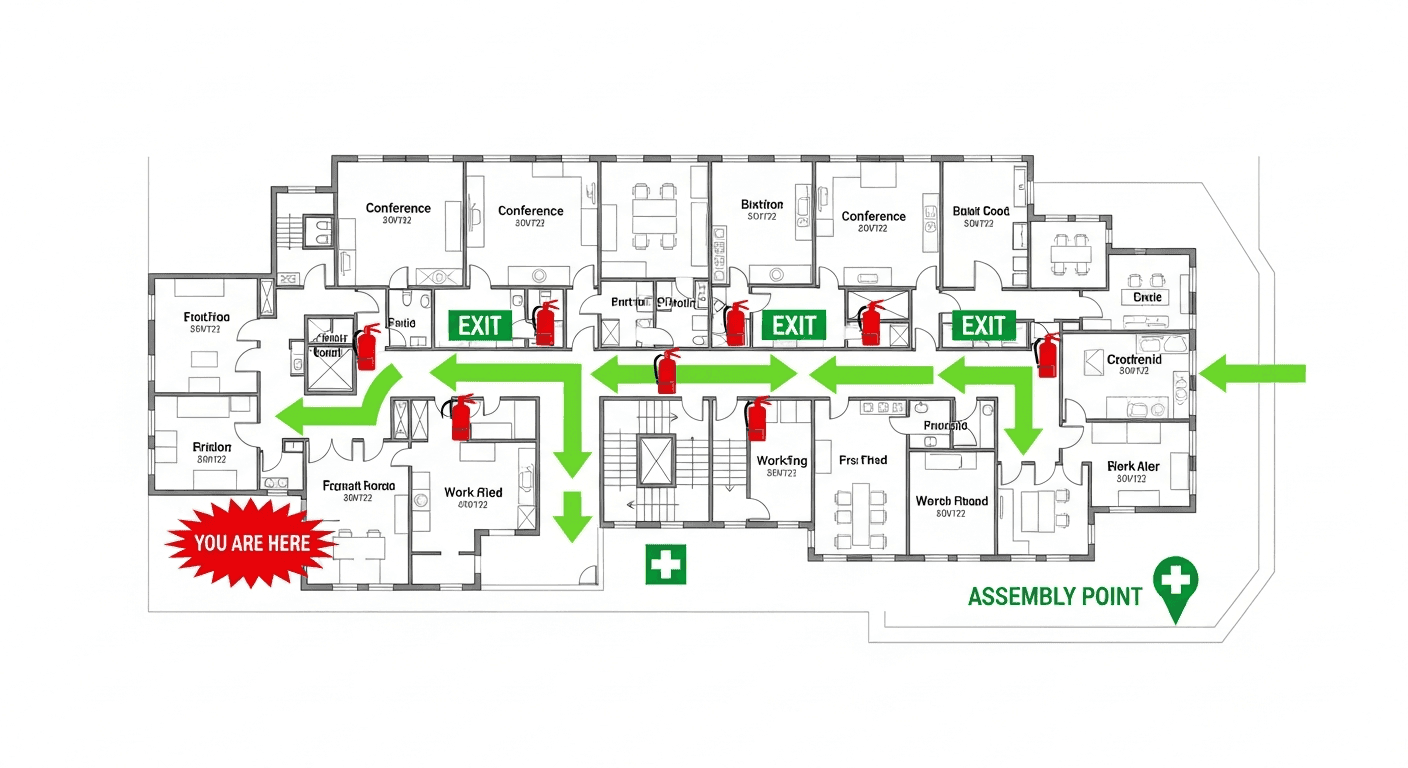
An effective emergency exit map must be immediately understandable — even by someone who has never been in the building before, in a dark or smoke-filled environment. The key elements include: clearly marked primary and secondary exit routes using NFPA 170 standard symbols, a prominent "YOU ARE HERE" marker oriented to the viewer's perspective, all fire safety equipment locations (extinguishers, pull stations, AEDs), and clearly identified assembly points outside the building. Our evacuation map design guide covers best practices for visual clarity and compliance.
OSHA Exit Route Requirements (29 CFR 1910.36-37)
OSHA 29 CFR 1910.36 establishes the design and construction requirements for exit routes. Key requirements include: at least two exit routes in every workplace (to allow alternatives if one is blocked), exit routes must be permanent parts of the building, exits must discharge to a public way, and exit route width must accommodate the expected occupant load. 29 CFR 1910.37 covers maintenance requirements including keeping routes unobstructed, properly lit, and clearly signed. See ourOSHA map requirements page for detailed compliance information.
Exit Map Placement and Posting Standards
Exit maps should be posted at strategic locations where occupants can easily reference them. The standard mounting height is 48-60 inches from the floor (eye level). Maps must be oriented so the "YOU ARE HERE" marker matches the viewer's actual position and perspective. Key posting locations include: building entrances and exits, elevator lobbies on each floor, near stairwell doors, in break rooms and conference rooms, and in common gathering areas. Visit our posting guide for complete placement requirements by state.
Exit Signs and Emergency Lighting
Exit maps work in conjunction with physical exit signs and emergency lighting systems.NFPA 101 requires illuminated exit signs at every exit and along the path of egress. Emergency lighting must activate automatically during power failures and provide at least 90 minutes of illumination along exit routes. Your exit maps should show these physical sign locations to help occupants navigate to exits. Learn more about requirements at ourfire evacuation map requirements page.
Regular Review and Updates
Exit maps must be updated whenever building changes affect exit routes — renovations, furniture rearrangement that impacts egress paths, changes to fire equipment locations, or modifications to assembly points. OSHA requires the Emergency Action Plan (including exit maps) to be reviewed with employees when changes occur. Most fire codes recommend annual review at minimum. Our platform makes updates easy — simply upload the revised floor plan and regenerate your maps. Check yourstate-specific requirements for update frequency mandates.