🏢Free Building Evacuation Plans - 1 File Upload + 5 Regenerations

Free Building Evacuation Map Generator — AI-Powered

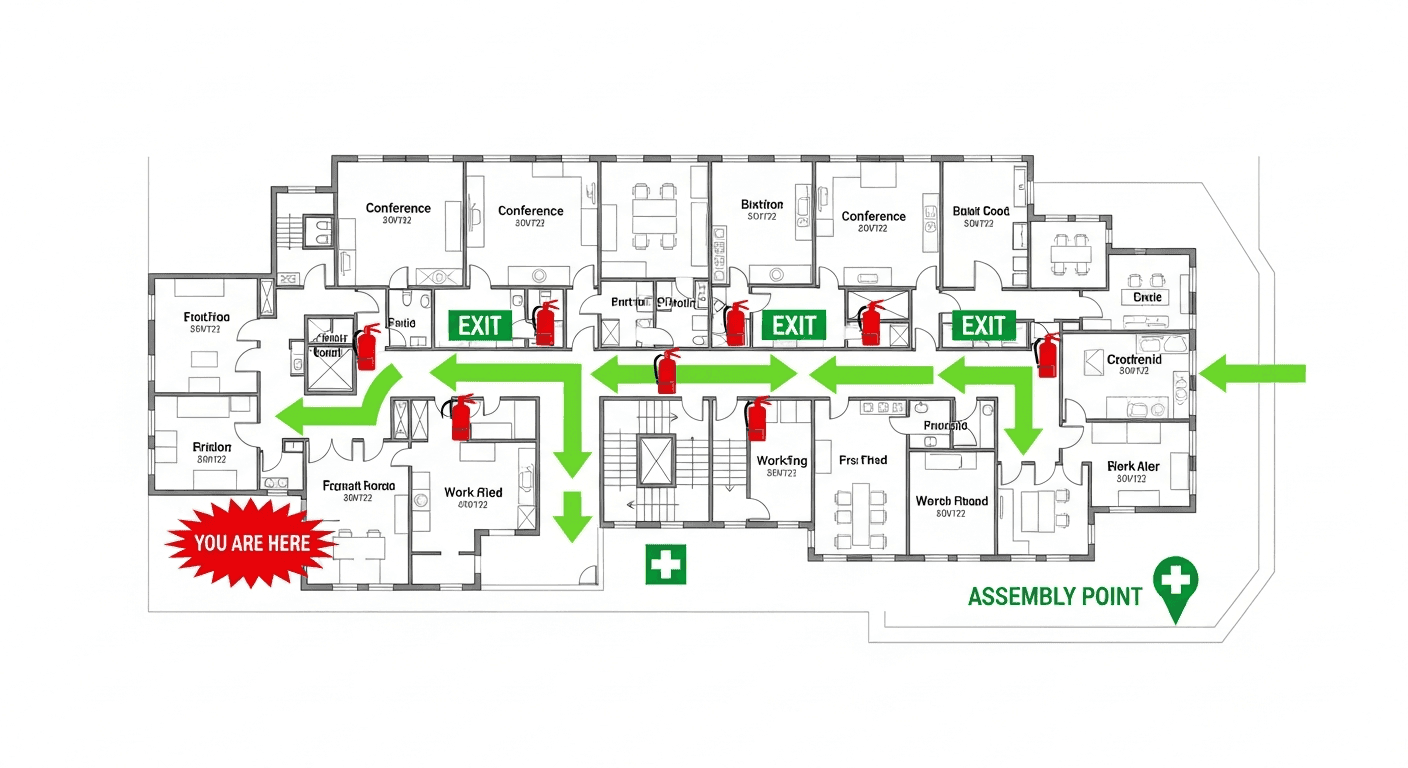
Create professional building evacuation plans for any building type — offices, warehouses, schools, hospitals, and more. Our AI generates OSHA and NFPA-compliant multi-floor evacuation maps with exit routes, fire equipment placement, and assembly points in 30 seconds.

📍Roof / MechanicalGenerating evacuation routes...
Floor 3 — Office Space
Floor 2 — Conference Rooms
Floor 1 — Lobby & Exits
OSHA fines for missing evacuation plans start at $16,131 per violation. Non-compliant buildings face immediate citations.

No credit card required Instant access OSHA & NFPA compliant

2,100+Buildings Using Our Plans
30 secGeneration Time
99%Fire Inspection Pass Rate
OSHA 29 CFR 1910.38
NFPA 101 Life Safety Code
IBC Means of Egress
ADA Accessible Routes

Supports Every Building Type

Select your building type and our AI applies the correct NFPA occupancy classification

🏢

Office Buildings

Corporate offices, co-working spaces, business centers

🏭

Industrial / Warehouse

Manufacturing plants, distribution centers, storage facilities

🏫

Schools & Universities

K-12 schools, colleges, training centers

🏥

Healthcare Facilities

Hospitals, clinics, nursing homes, labs

🏬

Retail & Commercial

Shopping centers, stores, malls, showrooms

🏗️

Mixed-Use Buildings

Residential + commercial, multi-tenant complexes

Assembly / Religious

Churches, theaters, event venues, gyms

🏘️

Residential Buildings

Apartments, condos, senior living facilities

Generate Your Building Evacuation Plan Now

Free registration • 1 file upload • 5 regenerations

🔄
Loading Map Generator...
🔒 Secure upload⚡ 30-second generation📄 Instant PDF download🏢 All building types supported

Why Building Managers Choose Our Evacuation Plan Generator

Purpose-built for commercial, industrial, and residential buildings of all sizes

🏗️

Multi-Floor Support

Generate unique evacuation maps for every floor of your building. Each map shows floor-specific layouts, stairwell locations, elevator positions, and directions to ground-level exits with proper floor numbering.

🏢

Any Building Type

Office buildings, warehouses, schools, hospitals, retail stores, churches, gyms, apartments — our AI applies the correct NFPA occupancy classification and code requirements for your specific building type.

ADA-Compliant Routes

Automatically includes ADA-accessible evacuation routes, areas of rescue assistance at stairwell landings, and evacuation chair locations for occupants with mobility impairments.

🧯

Fire Equipment Mapping

Places fire extinguishers at NFPA 10 compliant intervals, marks pull stations near exits, shows sprinkler risers, and identifies fire hose cabinet locations throughout your building.

📍

Assembly Point Designation

Clearly marked outdoor assembly areas with capacity indicators for building-wide accountability. Multiple assembly points for large properties and campuses with headcount zones.

📐

Travel Distance Compliance

Validates exit routes against NFPA 101 maximum travel distance requirements — 200 feet unsprinklered, 250 feet sprinklered — ensuring every occupant has a compliant path to safety.

How to Create Your Building Evacuation Plan

Four simple steps to a compliant building evacuation plan

1
📤

Upload Building Floor Plan

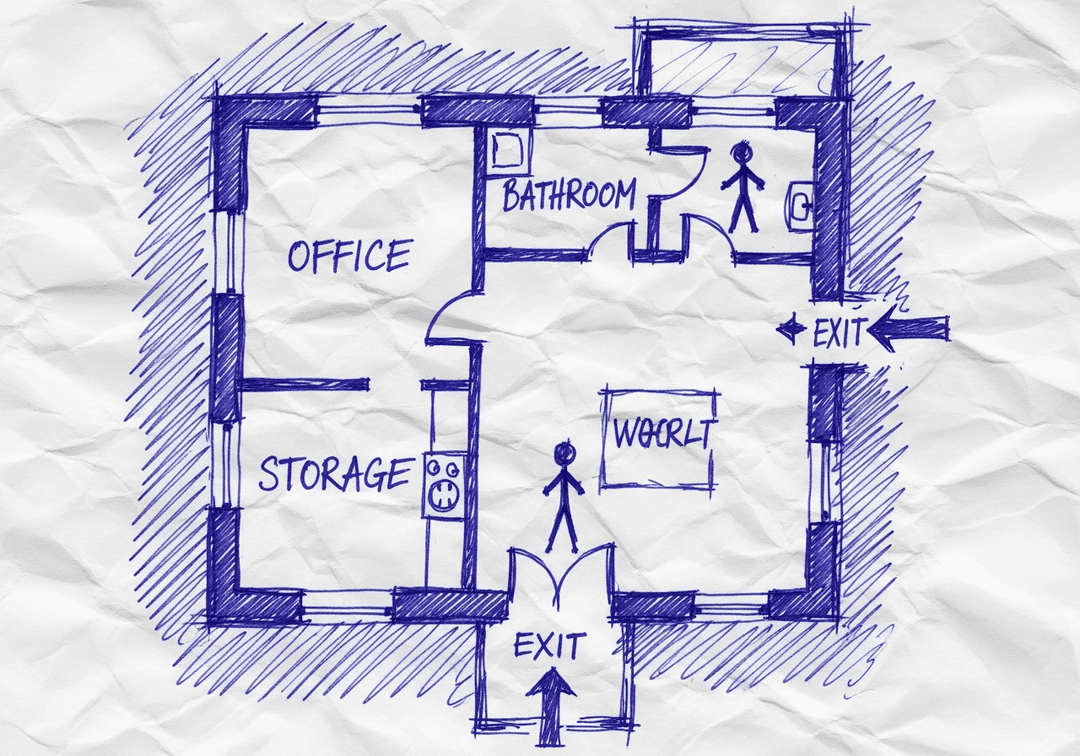
Upload any floor plan—architectural drawings, CAD exports, PDF blueprints, or even hand-drawn sketches of your building layout.

2
🏢

Select Building Type & State

Choose your building type and state. Our AI applies NFPA occupancy classification and state-specific fire codes automatically.

3
🤖

AI Generates Your Plan

Our AI identifies exit routes, places fire equipment, marks stairwells and assembly points, and generates your evacuation plan in 30-60 seconds.

4
📥

Download & Post

Download print-ready PDFs and post at every floor entrance, elevator lobby, stairwell, common area, and near all primary exits.

Building Evacuation Plan Features

Everything included in every building evacuation plan we generate

🏢 Building-Specific Elements

  • Floor-by-floor evacuation maps
  • "YOU ARE HERE" location markers
  • Floor number and wing identification
  • Stairwell and elevator shaft locations
  • Tenant and suite identification
  • Loading dock and service exit routes
  • Mechanical room and utility access
  • Roof access and helipad markings

🔥 Fire Safety Equipment

  • Fire extinguisher locations with class type
  • Manual fire alarm pull stations
  • Fire alarm control panel (FACP) location
  • Sprinkler riser and valve locations
  • Fire department connection (FDC) points
  • Fire hose cabinet and standpipe locations
  • Smoke detector and alarm zones
  • Emergency generator and electrical shutoffs

📋 Occupant Safety Information

  • Primary and secondary exit routes
  • Stairwell access with floor range info
  • Elevator locations (DO NOT USE during fire)
  • ADA-accessible evacuation routes
  • Areas of rescue assistance
  • Outdoor assembly point locations
  • Emergency contact numbers
  • Building address and floor identification

Floor-by-Floor Evacuation Planning

Each floor gets its own customized evacuation map with specific routes and equipment

4F
4th Floor — Executive Offices2 stairwells • 1 elevator bank • 4 exits per stairwell
Map Generated
3F
3rd Floor — Open Office Space2 stairwells • Break room • Server room hazard zone
Map Generated
2F
2nd Floor — Conference & TrainingHigh occupancy areas • ADA accessible routes marked
Map Generated
1F
1st Floor — Lobby & Main ExitsPrimary assembly point • Fire department access • FACP
Map Generated
B1
Basement — Parking & MechanicalEmergency exit stairs • Utility shutoffs • Sprinkler riser
Map Generated

Building Evacuation Plan Compliance Requirements

Our plans meet all federal, state, and local building safety regulations

OSHA 29 CFR 1910.38 — Emergency Action Plan

Federal workplace safety requirements:

  • Written Emergency Action Plan for 10+ employees
  • Evacuation procedures and exit route assignments
  • Procedures for employees operating critical equipment
  • Employee headcount at assembly points
  • Fire alarm and reporting procedures
  • Annual review and employee training

NFPA 101 — Life Safety Code

Occupancy-specific requirements by building type:

  • Means of egress capacity and width
  • Maximum travel distance to exits
  • Dead-end corridor limitations
  • Exit signage and emergency lighting
  • Fire-rated construction requirements
  • Automatic sprinkler requirements

IBC & ADA Standards

Building code and accessibility requirements:

  • IBC means of egress Chapter 10
  • Accessible routes of travel
  • Areas of rescue assistance at stairwells
  • Visual alarm notification devices
  • Evacuation chair placement
  • Tactile and braille exit signage
⚠️

Professional Review Recommended: While our AI generates plans following OSHA, NFPA, and IBC guidelines, we recommend having your building evacuation plans reviewed by a local fire marshal or certified fire protection engineer before posting.

The Complete Guide to Building Evacuation Plans

Building evacuation plans are essential safety documents required by OSHA 29 CFR 1910.38 and the NFPA 101 Life Safety Code for virtually every commercial building in the United States. Whether you manage an office tower, warehouse, school, hospital, or retail space, a compliant evacuation plan with posted floor maps is not optional — it's a legal requirement. This guide covers everything you need to know about creating, posting, and maintaining building evacuation plans.

Why Every Building Needs an Evacuation Plan

Under OSHA regulations, any employer with more than 10 employees must maintain a written Emergency Action Plan (EAP). This plan must include evacuation procedures, exit route assignments, and employee notification procedures. Beyond OSHA, the NFPA 101 Life Safety Code establishes occupancy-specific requirements based on your building's use — each occupancy type (Assembly, Business, Educational, Healthcare, Industrial, Mercantile, Residential, Storage) has different exit requirements, travel distances, and safety equipment specifications. Learn more about OSHA evacuation map requirements.

Multi-Story Building Evacuation Challenges

Multi-story buildings present unique evacuation challenges that single-story structures don't face. Each floor requires its own dedicated evacuation map showing floor-specific exit routes, stairwell access points, and directions to ground-level exits. High-rise buildings (typically 75+ feet or 7+ stories) face additional requirements including stairwell pressurization systems, fire service elevator access, communication systems in stairwells, and phased evacuation procedures where only the fire floor and floors immediately above are initially evacuated. Visit our fire evacuation map requirements page for detailed standards.

Building Type-Specific Requirements

NFPA 101 assigns each building an occupancy classification that determines specific fire safety requirements. Assembly occupancies (theaters, restaurants, churches) have strict occupant load calculations and exit width requirements. Healthcare occupancies require defend-in-place strategies for non-ambulatory patients. Industrial and storage occupancies must address hazardous material zones. Educational occupancies need age-appropriate evacuation procedures. Our AI generator applies the correct occupancy classification automatically based on your building type selection. Check your state-specific requirements for additional local code requirements.

Posting Requirements for Building Evacuation Maps

Building evacuation maps must be posted at strategic locations throughout the building: at every floor entrance and elevator lobby, near stairwell entrances, in break rooms and common areas, at main entrances and exits, and in conference rooms and high-occupancy spaces. Maps should be mounted at eye level (48-60 inches from the floor) and oriented so the "YOU ARE HERE" marker matches the viewer's perspective. Learn more from our posting guide.

Fire Safety Equipment on Building Maps

A complete building evacuation map must show all fire safety equipment locations including fire extinguishers (per NFPA 10, typically every 75 feet of travel distance), manual fire alarm pull stations (near exits and stairwells), the fire alarm control panel location, AED and first aid kit locations, sprinkler risers and control valves, standpipe connections, and emergency lighting. Our AI places all equipment according to NFPA standards and your specific building layout. Use our OSHA fine calculator to understand the penalties for non-compliance.

Building Evacuation Plan FAQ

Common questions about building fire safety plans and compliance

What is a building evacuation plan and who needs one?

A building evacuation plan is a documented emergency procedure that includes floor-by-floor evacuation maps, exit routes, fire safety equipment locations, and assembly points. Under OSHA 29 CFR 1910.38, every employer with more than 10 employees must have a written Emergency Action Plan. Additionally, NFPA 101 Life Safety Code and the International Building Code (IBC) require posted evacuation maps in commercial, industrial, educational, and residential buildings. Our AI generator creates compliant plans for any building type.

How do I create an evacuation plan for a multi-story building?

Multi-story buildings require a separate evacuation map for each floor showing that floor's specific layout, stairwell locations, elevator positions (marked DO NOT USE during fire), and directions to ground-level exits. Upload each floor plan to our generator, select your building type and state, and our AI creates floor-specific maps with proper stairwell identification, floor numbers, and travel distance calculations. High-rise buildings (typically 75+ feet) have additional requirements including stairwell pressurization and phased evacuation procedures.

What building types does the generator support?

Our generator supports all commercial and residential building types including office buildings, retail stores, warehouses, manufacturing facilities, schools, hospitals, hotels, restaurants, churches, gyms, apartment complexes, mixed-use developments, government buildings, and more. Each building type gets industry-specific compliance elements based on the applicable NFPA occupancy classification (Assembly, Business, Educational, Healthcare, Industrial, Mercantile, Residential, Storage).

What OSHA and NFPA requirements apply to building evacuation plans?

Buildings must comply with OSHA 29 CFR 1910.38 (Emergency Action Plans), OSHA 29 CFR 1910.37 (Maintenance, Safeguards, and Operational Features for Exit Routes), NFPA 101 Life Safety Code occupancy-specific chapters, NFPA 10 (fire extinguisher placement), NFPA 72 (fire alarm systems), and the International Building Code (IBC) for means of egress. Our AI automatically applies the correct standards based on your building type and state.

How often should building evacuation plans be updated?

Building evacuation plans should be updated whenever there are renovations, tenant changes, layout modifications, changes to exit routes, fire safety equipment relocations, or changes in building occupancy. OSHA requires annual review of Emergency Action Plans, and most fire codes require updates after any fire marshal inspection findings. Our platform stores your plans for easy updates—upload revised floor plans and regenerate compliant maps instantly.

What should be included on a building evacuation map?

A compliant building evacuation map must include: primary and secondary exit routes with directional arrows, 'YOU ARE HERE' markers, fire extinguisher locations, manual fire alarm pull station locations, AED locations, first aid kit locations, assembly point designations, stairwell and elevator locations, ADA-accessible routes, areas of rescue assistance, emergency contact information, building address, and floor identification. Our AI places all required elements automatically.

Does the generator handle ADA accessibility requirements?

Yes, our generator automatically includes ADA-accessible evacuation routes, areas of rescue assistance at stairwell landings, evacuation chair locations, accessible exit routes that avoid stairs, and visual/tactile notification device locations. ADA-accessible rooms and spaces are given priority route marking to the nearest accessible exit.

Can I generate evacuation plans for an entire building at once?

Yes, you can upload multiple floor plans and our generator will create individual evacuation maps for each floor. Each map is customized with floor-specific layouts, stairwell access information, and proper 'YOU ARE HERE' positioning. You can download all maps as high-resolution PDFs ready for posting throughout your building.

Ready to Create Your Building Evacuation Plan?

Join 2,100+ building managers that trust our AI-powered generator for fire safety compliance.

✓ Free to start✓ OSHA & NFPA compliant✓ Multi-floor support✓ Print-ready PDF

No credit card required. 1 free file upload with 5 regenerations.