What Is Fire and Safety Compliance?
Fire and safety compliance is the process of meeting all federal, state, and local regulations designed to prevent workplace fires and protect occupants during fire emergencies. The primary federal standards come from OSHA (29 CFR 1910.38 Emergency Action Plans, 29 CFR 1910.39 Fire Prevention Plans, 29 CFR 1910.157 Portable Fire Extinguishers) and NFPA (NFPA 101 Life Safety Code, NFPA 10 Portable Fire Extinguishers, NFPA 72 Fire Alarm Systems). Compliance requires written plans, posted evacuation maps, maintained equipment, and regular employee training.
Fire Safety Compliance Checklist
- Written Emergency Action Plan (29 CFR 1910.38)
- Written Fire Prevention Plan (29 CFR 1910.39)
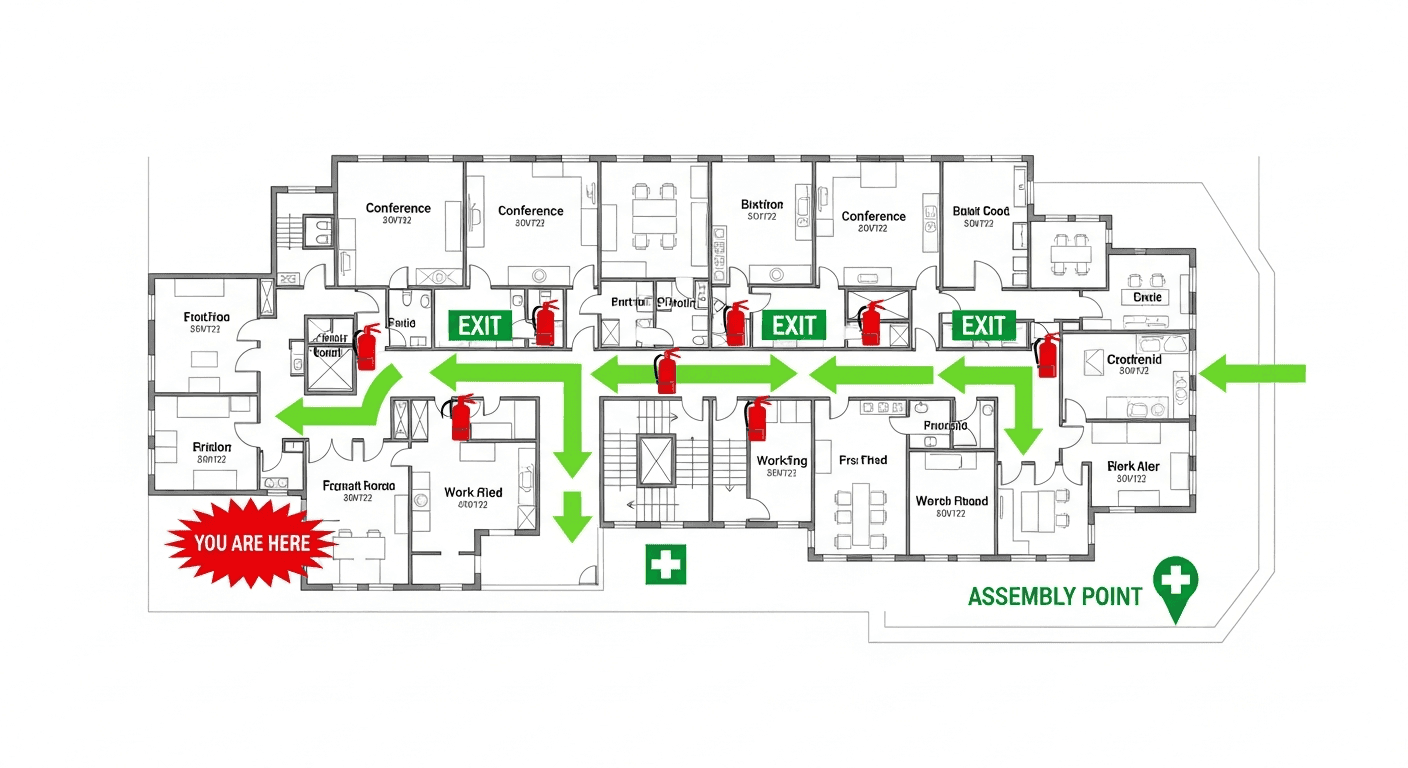
- Posted evacuation maps at all exits and common areas
- Fire extinguishers within 75 feet of all work areas
- Monthly visual fire extinguisher inspections documented
- Annual professional fire extinguisher service
- Illuminated EXIT signs at all required exit doors
- Emergency lighting with 90-minute battery backup
- Fire alarm system tested quarterly (NFPA 72)
- Sprinkler system inspected quarterly (NFPA 25)
- Annual fire drill conducted and documented
- Employee training on fire extinguisher use and evacuation procedures
- Flammable material storage per NFPA 30
- Electrical panel clearance (36 inches minimum)
- Hot work permit program for welding/cutting operations
Key Fire Safety Standards & Penalties
| Violation | Max Fine |
|---|---|
| No Emergency Action Plan (1910.38) | $16,991 |
| No Fire Prevention Plan (1910.39) | $16,991 |
| Blocked or locked exit routes | $16,991 |
| Missing/expired fire extinguishers | $16,991 |
| No employee evacuation training | $16,991 |
| Missing EXIT signs or emergency lighting | $16,991 |
| Willful fire safety violations | $170,181 |
Fire Prevention Plan Requirements (29 CFR 1910.39)
OSHA requires a written Fire Prevention Plan that includes: a list of all major workplace fire hazards, proper handling and storage procedures for hazardous materials, potential ignition sources and their control methods, types of fire protection equipment necessary for each hazard, maintenance procedures for fire protection systems, names of employees responsible for fire prevention equipment maintenance, and housekeeping procedures to control accumulation of flammable waste. This plan must be kept in the workplace and made available to employees for review.
Fire Extinguisher Compliance (29 CFR 1910.157)
- Class A extinguishers within 75 feet travel distance of any point
- Class B extinguishers within 50 feet of flammable liquid hazards
- Monthly visual inspections with documented date and initials
- Annual maintenance by certified technician with service tag
- 6-year internal examination for stored-pressure extinguishers
- 12-year hydrostatic test for all types
- Mounted 3.5-5 feet from floor (handle height)
- Not blocked or obstructed — clear access at all times
Fire Safety Compliance Timeline
Write Your Plans
Create Emergency Action Plan and Fire Prevention Plan documenting all fire hazards, procedures, and responsibilities
Generate Evacuation Maps
Use OSHAMap to create OSHA-aligned evacuation maps showing exits, extinguishers, and assembly points
Install Equipment
Ensure fire extinguishers, EXIT signs, emergency lighting, and alarm systems are properly placed and functional
Train Employees
Conduct fire safety training covering evacuation procedures, extinguisher use (PASS method), and alarm response
Conduct Fire Drill
Run a full evacuation drill, time it, document participation, and identify improvements
Maintain & Document
Set up recurring schedules for monthly extinguisher checks, quarterly alarm tests, and annual professional inspections
Stay OSHA-Aligned — Generate Your Map Now
Upload your floor plan and get a print-ready, compliant evacuation map instantly.
Create Your Free MapFire Safety Statistics
NFPA reports about 1,100 fires occur in U.S. workplaces every day
Workplace fires cause billions in property damage each year
Fire extinguisher violations are among OSHA Top 10 citations
NFPA estimates 89% of workplace fires are preventable with proper compliance