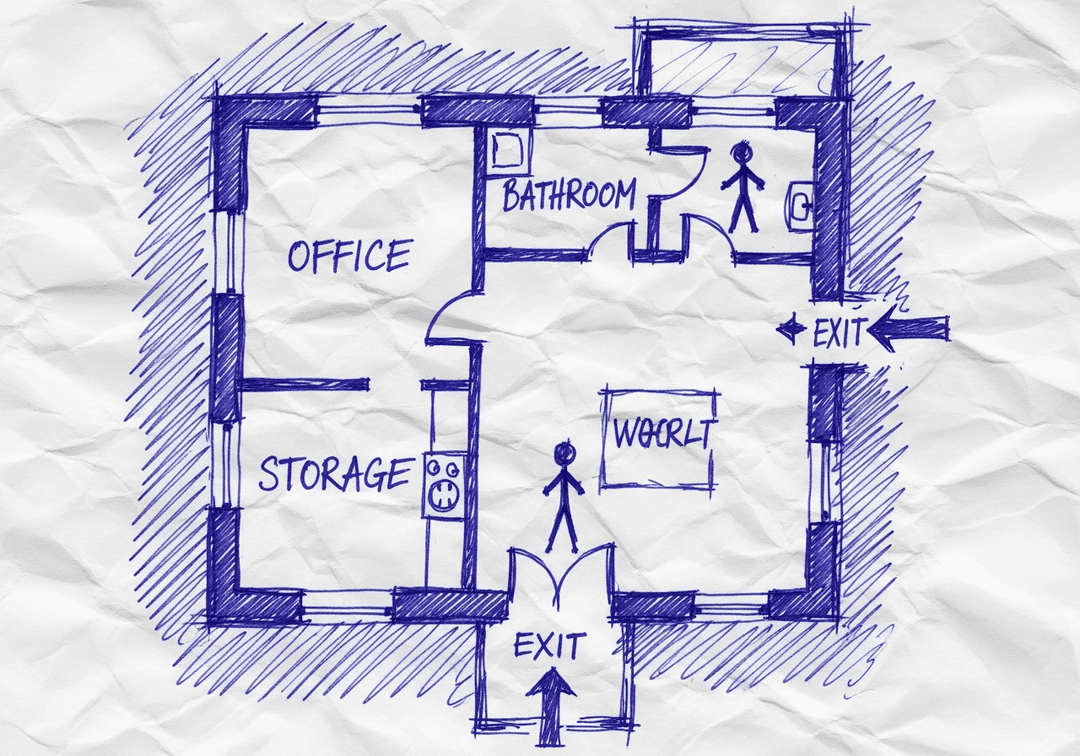
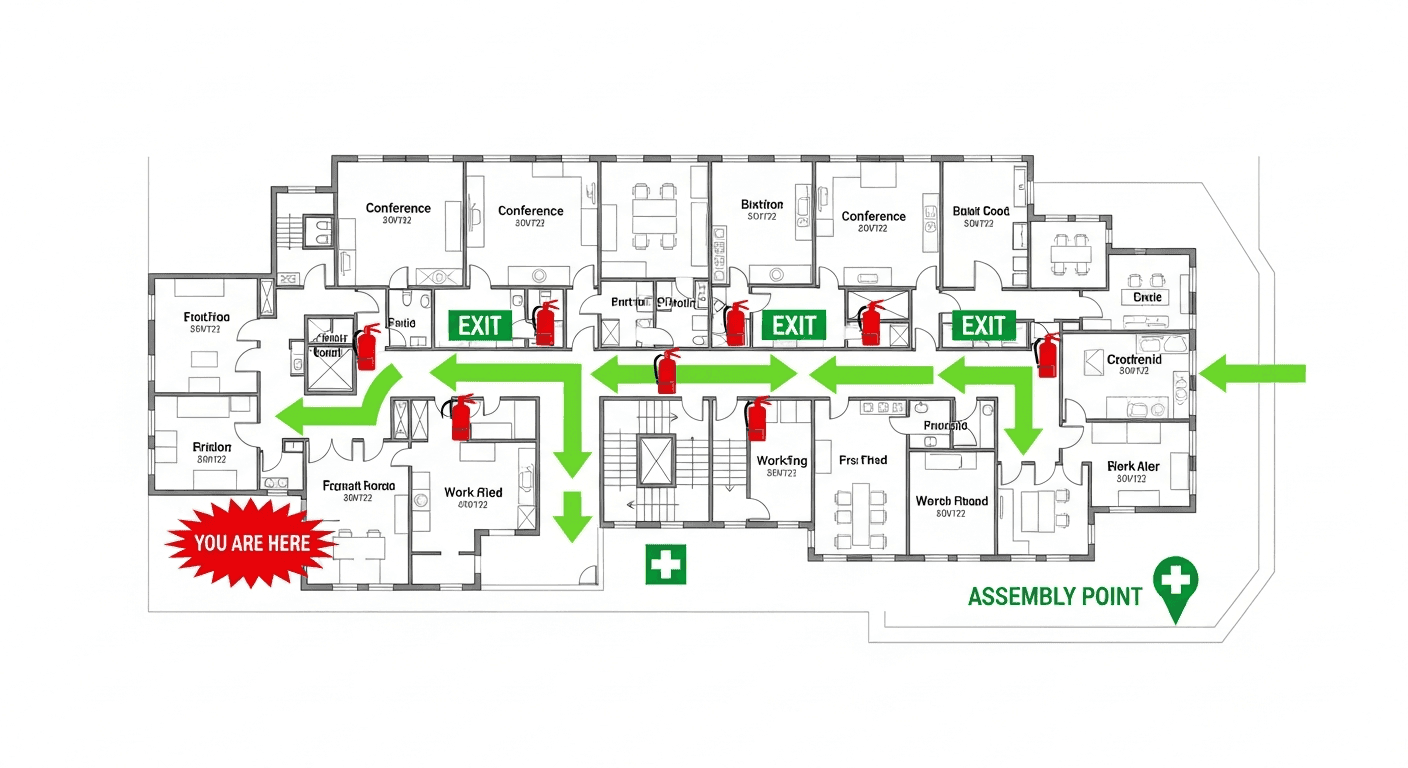
What Is an Emergency Exit Plan?
An emergency exit plan is a documented strategy and visual map showing how building occupants should exit the building during any emergency — fire, severe weather, chemical release, active threat, or other hazard. Under OSHA, exit plans are governed by two key standards: 29 CFR 1910.36 (Design and Construction Requirements for Exit Routes) and 29 CFR 1910.37 (Maintenance, Safeguards, and Operational Features for Exit Routes). Together with the Emergency Action Plan requirement (29 CFR 1910.38), these standards form the foundation of workplace emergency preparedness.
OSHA Exit Route Requirements (29 CFR 1910.36)
- Minimum two exit routes in every workplace (remote from each other)
- Exit routes must be permanent parts of the workplace
- Exit routes must lead directly to the outside or to a street
- Minimum 28-inch width for exit access (corridor width may need to be wider)
- Minimum 7 feet 6 inches ceiling height throughout exit route
- Exit doors must open from the inside without keys or special tools
- Exit doors must swing outward in the direction of exit travel
- Exit routes must be able to handle the building occupant load
- Exit discharge must lead to a public way (street, alley, or open space)
Exit Route Maintenance (29 CFR 1910.37)
- Exit routes kept free from obstructions at all times
- Exit routes kept free of explosive or highly flammable materials
- Exit route surfaces maintained and in good repair
- EXIT signs posted at each exit door
- EXIT signs visible from maximum distance of 100 feet
- EXIT sign letters at least 6 inches high, 3/4-inch wide strokes
- Exit signs remain illuminated at all times (including power failure)
- Emergency lighting provides 90 minutes of backup illumination
- "NOT AN EXIT" signs on doors that could be mistaken for exits
- Doors along exit routes equipped with panic hardware (if required)
Exit Sign & Lighting Specifications
| Violation | Max Fine |
|---|---|
| EXIT sign letter height | 6 inches min |
| EXIT sign stroke width | 3/4 inch min |
| Visibility distance | 100 feet min |
| Emergency lighting backup | 90 minutes min |
| Exit route lighting (minimum) | 1 foot-candle |
| Route clear width | 28 inches min |
| Ceiling height | 7 ft 6 in min |
What Your Exit Plan Must Include
A compliant emergency exit plan document and posted map must include: (1) All emergency exit locations clearly marked, (2) Primary evacuation routes from every area to the nearest exit, (3) Secondary routes in case primary exits are blocked, (4) "You Are Here" markers at each posted location, (5) Fire extinguisher and pull station locations, (6) Assembly point outside the building, (7) ADA-accessible routes and areas of rescue assistance, (8) Floor number and building identification, and (9) Date of last update. Posted exit plans should use OSHA-standard color coding: GREEN for safe routes and exits, RED for fire equipment.
Where to Post Emergency Exit Plans
- At every exit door and stairwell entrance
- In all common areas (break rooms, lobbies, conference rooms)
- Near elevator banks (with "Do Not Use During Emergency" notice)
- In areas where 10+ employees regularly work
- At eye level (54-60 inches from floor to center)
- Under non-glare covers for protection
- In hotel/lodging: on back of every guest room door
Stay OSHA-Aligned — Generate Your Map Now
Upload your floor plan and get a print-ready, compliant evacuation map instantly.
Create Your Free MapEmergency Exit Planning Expert Tip
The number one mistake I see during inspections is businesses that have exit plans posted but the plans don't match the current layout. Every renovation, furniture rearrangement, or equipment installation that affects exit paths means your exit plan needs updating. I tell building managers: walk every exit route on your plan once a quarter. If the path doesn't match what's on paper, update it immediately. With tools like OSHAMap, regenerating an updated plan takes 30 seconds — there's no excuse for outdated exit plans.
How Many Exits Does My Building Need?
The International Building Code (IBC) Chapter 10 establishes minimum exit requirements based on occupant load: 1-49 occupants = 1 exit minimum (2 recommended), 50-500 occupants = 2 exits minimum, 501-1,000 occupants = 3 exits minimum, over 1,000 occupants = 4 exits minimum. Exits must be separated by at least one-third of the building diagonal distance to ensure at least one exit remains accessible if another is blocked. Maximum travel distance to an exit is 200 feet for unsprinklered buildings and 250 feet for sprinklered buildings.