✏️Sketch-to-Map AI Technology

Egress Map Generator | OSHA & NFPA Compliant

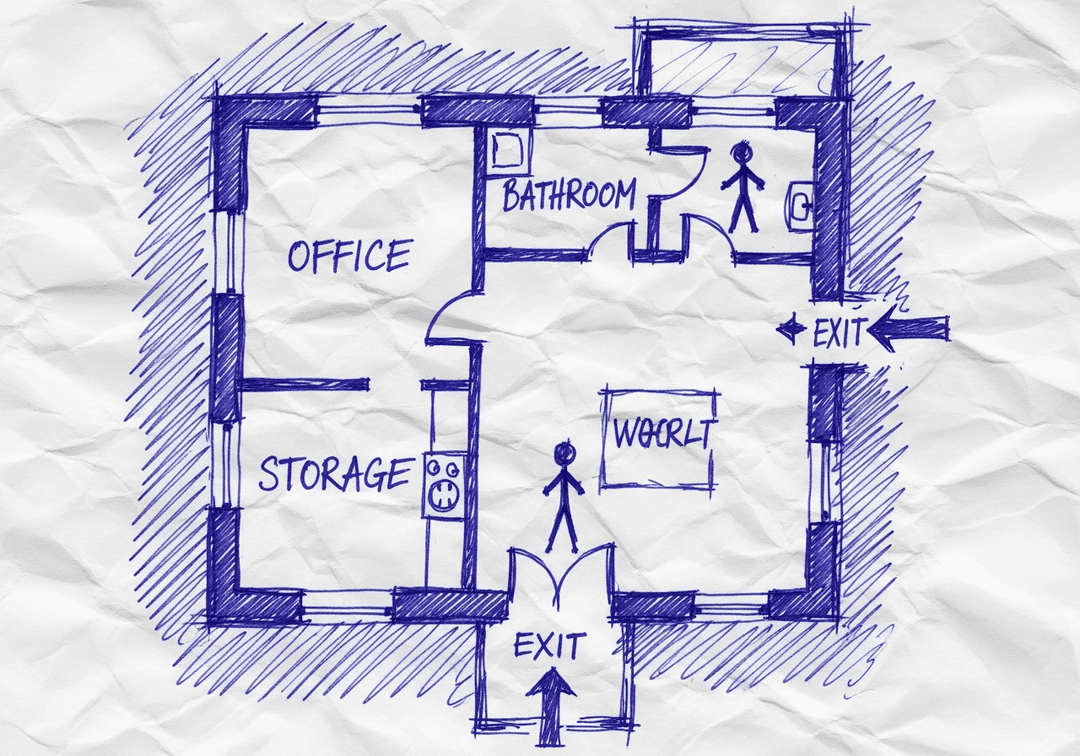
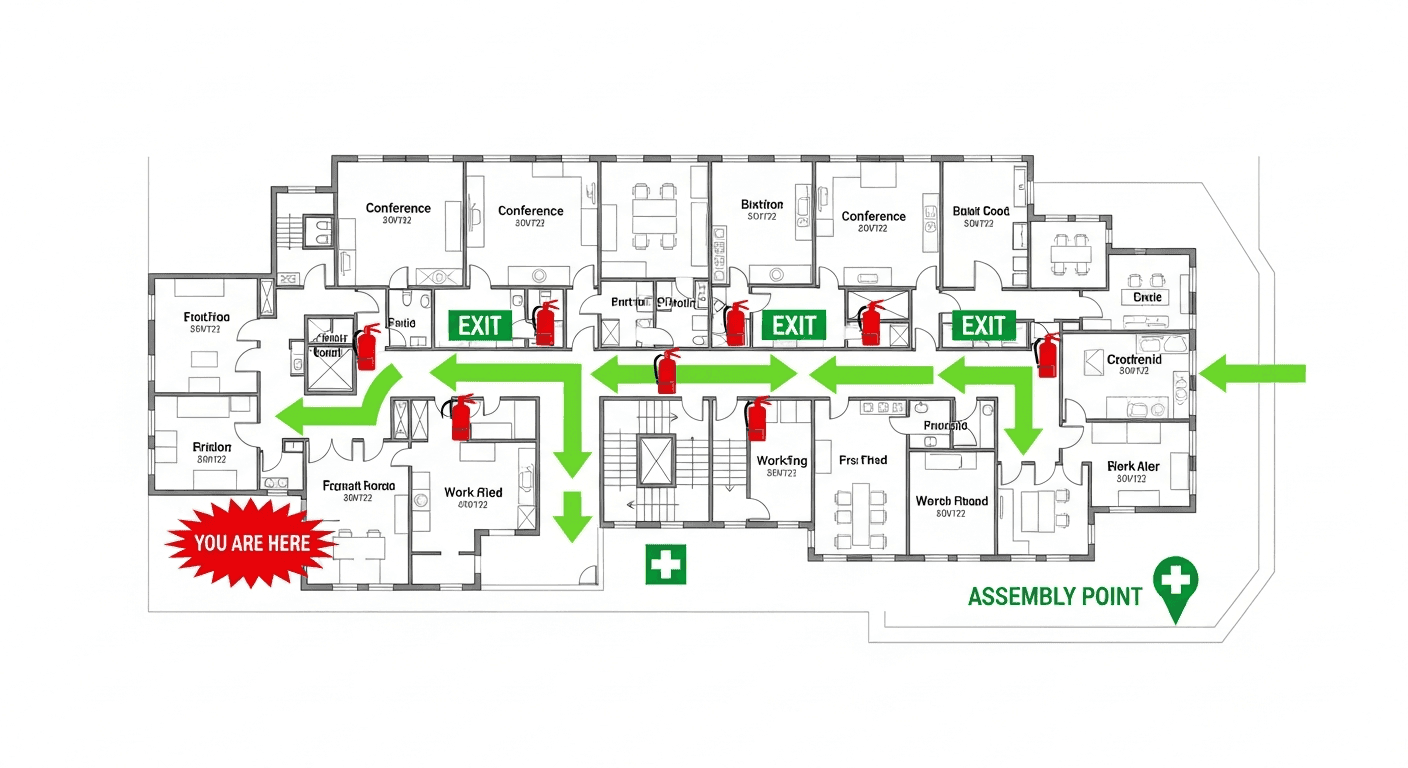
Draw your floor plan on paper, upload a photo, and get an instant professional egress map. Our AI transforms rough sketches into OSHA-compliant exit route maps in seconds.

30 secSketch to Map
100%Code Compliant
5 FreeMaps

No design skills needed. Hand-drawn sketches welcome.

How to Create an Egress Map from Sketch

See how our AI transforms any hand-drawn layout into a compliant exit map

✏️
Your Hand Sketch

Draw on paper, napkin, or whiteboard

AI

~30 seconds

🗺️
Professional Egress Map

Print-ready with all exit routes

Egress Planning Fundamentals & Requirements

Understanding the critical elements of effective egress design

🚪

Primary vs Secondary Exits

Every occupied space needs at least two means of egress. Primary exits are the main routes, while secondary exits provide alternatives if primary routes are blocked. Our maps clearly distinguish both.

  • Primary routes in green arrows
  • Secondary routes in yellow arrows
  • Travel distance calculations
📐

Corridor Width Requirements

Egress corridors must meet minimum width requirements based on occupancy load. General rule: 0.2 inches per person, with minimum 44 inches for most corridors. Our AI validates your layout.

  • 44" minimum for most corridors
  • 36" minimum for fewer than 50 occupants
  • Bottleneck identification
🚨

Exit Signage & Illumination

All exits must be clearly marked with illuminated signs visible from any direction of egress travel. Emergency lighting must provide 1 foot-candle minimum for 90 minutes after power failure.

  • Exit sign placement
  • Emergency lighting zones
  • Photoluminescent paths

Accessible Egress Routes

ADA requires accessible means of egress for people with disabilities. This includes areas of refuge, evacuation chairs, and accessible route signage. Our maps include all accessibility elements.

  • Areas of refuge locations
  • Evacuation chair stations
  • Accessible route marking

Free Egress Map Generator

Upload your hand sketch or floor plan. Get a professional egress map instantly.

📊 5 of 5 Free Maps Left

Create Your Egress Evacuation Map

📷
Clear ImageUse a clean, high-quality scan or photo
↔️
Correct OrientationImage should be right-side up, not rotated or sideways
🔍
No ZoomCapture the entire floor plan, avoid zooming in on sections
💡
Good LightingThe clearer and less blurry, the better results
📁

Drag & drop your floor plan here

or

PNG, JPG, PDF - Hand-drawn sketches work too!

🔒Your files are private: never shared, stored temporarily, deleted automatically.

Compliance Options

Generate bilingual map with English + Spanish labels

ℹ️Adds Spanish translations (Español) to all text on the map
🔥 NEW

Customize Your Map

Add special requests for your safety map - tell our AI exactly what you need!

  • 🎯Add specific details like "Mark fire extinguisher near kitchen"
  • 📍Request specific zones: "Highlight assembly point in parking lot"
  • 🏥Add safety equipment: "Include AED location near reception"
0/2000

Quick Add:

How to Solve Corridor Bottleneck Issues

How to identify and address common egress flow problems

01

Convergence Points

Where multiple corridors meet, occupant flow can create dangerous bottlenecks. Solution: Stagger convergence with curved walls or expand intersection width by 50%.

Pro Tip:Our maps highlight convergence points automatically
02

Door Swing Conflicts

Doors opening into egress paths reduce effective corridor width and can trap evacuees. NFPA 101 requires doors in egress paths to swing in the direction of travel for 50+ occupants.

Pro Tip:Maps show door swing direction for compliance
03

Dead-End Corridors

Dead-end corridors exceeding 20 feet (50 feet if sprinklered) violate code and create dangerous traps. Our AI identifies dead-end violations and suggests remediation.

Pro Tip:Red zones indicate dead-end problems
04

Stairwell Capacity

Stairwells are often the limiting factor in multi-story egress. Calculate stairwell capacity: 60 persons per 22" of stair width per floor served. Merge floors require additional capacity.

Pro Tip:Maps indicate stairwell flow capacity

Multi-Tenant Building Egress Requirements

Coordinated egress planning for shared buildings

Tenant Space Responsibilities

Individual tenants are responsible for egress within their demised premises. This includes posting egress maps at strategic locations, maintaining clear pathways, and training employees on evacuation procedures.

  • Interior egress route mapping
  • Exit door maintenance within space
  • Employee evacuation training
  • Occupancy limit compliance
🏢Tenant Space

Building Management Duties

Building owners/managers handle common area egress, overall building evacuation plans, fire alarm systems, and coordination between tenants during emergencies.

  • Common area egress maintenance
  • Fire alarm and suppression systems
  • Building-wide evacuation coordination
  • Emergency lighting in common areas
🏗️Building Common

Stairwell Egress Prioritization Guide

Optimize multi-floor egress with strategic stair assignments

Floor-Based Assignment

Assign specific stairwells to different building sections to prevent overcrowding. Example: East wing uses Stair A, West wing uses Stair B. This distributes load evenly.

Phased Evacuation

For high-rise buildings (7+ stories), implement phased evacuation: fire floor evacuates first, then floor above, then floor below, continuing alternately until complete.

Counterflow Prevention

Designate stairwells as "DOWN ONLY" during evacuation to prevent dangerous counterflow from emergency responders ascending. Mark alternative stairs for fire department access.

Floor 5 Stair A
Floor 4 Stair B
Floor 3 Stair A
Floor 2 Stair B
Floor 1 EXIT

Free Evacuation Drill Automation Tools

Turn egress maps into actionable drill programs

📱

Digital Distribution

Share egress maps digitally with all occupants via QR code posters. Everyone can access maps on their phones during an emergency or drill.

⏱️

Timed Drills

Use egress maps to establish evacuation time benchmarks. OSHA recommends complete evacuation within 3 minutes for most occupancies.

📊

Bottleneck Analysis

During drills, identify actual vs. predicted bottlenecks. Update egress maps and routes based on real-world evacuation data.

📋

Compliance Documentation

Generate drill reports with timestamped egress map versions. Maintain OSHA-required records of evacuation drill frequency and results.

NFPA 101 Life Safety Code Requirements 2025

Key egress provisions your maps must address

Requirement
NFPA Standard
Included in Maps
Minimum two exits per floor
NFPA 101 § 7.4
Auto-verified
Travel distance limits
NFPA 101 § 7.6
Calculated
Exit discharge locations
NFPA 101 § 7.7
Marked
Corridor width minimums
NFPA 101 § 7.3.4
Validated
Dead-end corridor limits
NFPA 101 § 7.5.1.5
Flagged
Exit access illumination
NFPA 101 § 7.8
Zones shown

NFPA 101 Travel Distance Requirements by Occupancy

Maximum travel distances to exits vary by building occupancy type and sprinkler status per NFPA 101 Life Safety Code. Our egress maps automatically calculate and verify these distances.

Occupancy Type
Non-Sprinklered
Sprinklered
Assembly (theaters, arenas)
150 ft (46 m)
200 ft (61 m)
Business (offices)
200 ft (61 m)
300 ft (91 m)
Educational (schools)
150 ft (46 m)
200 ft (61 m)
Healthcare (hospitals)
100 ft (30 m)
200 ft (61 m)
Industrial (factories)
200 ft (61 m)
250 ft (76 m)
Mercantile (retail stores)
150 ft (46 m)
250 ft (76 m)
Storage (warehouses)
200 ft (61 m)
400 ft (122 m)
High-Hazard
75 ft (23 m)
100 ft (30 m)

Note: These are general guidelines. Always verify with local AHJ (Authority Having Jurisdiction) and OSHA 29 CFR 1910.36 for specific requirements.

Need a Facility Risk Assessment?

Beyond egress maps, identify potential workplace hazards and create comprehensive emergency exit plans for your entire facility.

Trusted by Safety Professionals

"We sketched our warehouse layout on a whiteboard, snapped a photo, and had professional egress maps for all three shifts within 10 minutes. Incredible."
Robert ChenFacilities Director, Distribution Center
"The AI correctly identified a dead-end corridor violation we'd missed for years. The egress map update probably saved us from a major citation."
Sarah MartinezSafety Manager, Manufacturing Plant
"As a property manager with 12 buildings, I needed quick egress map updates after renovations. This tool cut our map update time by 95%."
James ThompsonCommercial Property Manager

Ready to Create Your Egress Map?

Upload your hand sketch or floor plan and get a professional egress map in seconds. Register for 5 free maps with unlimited revisions.