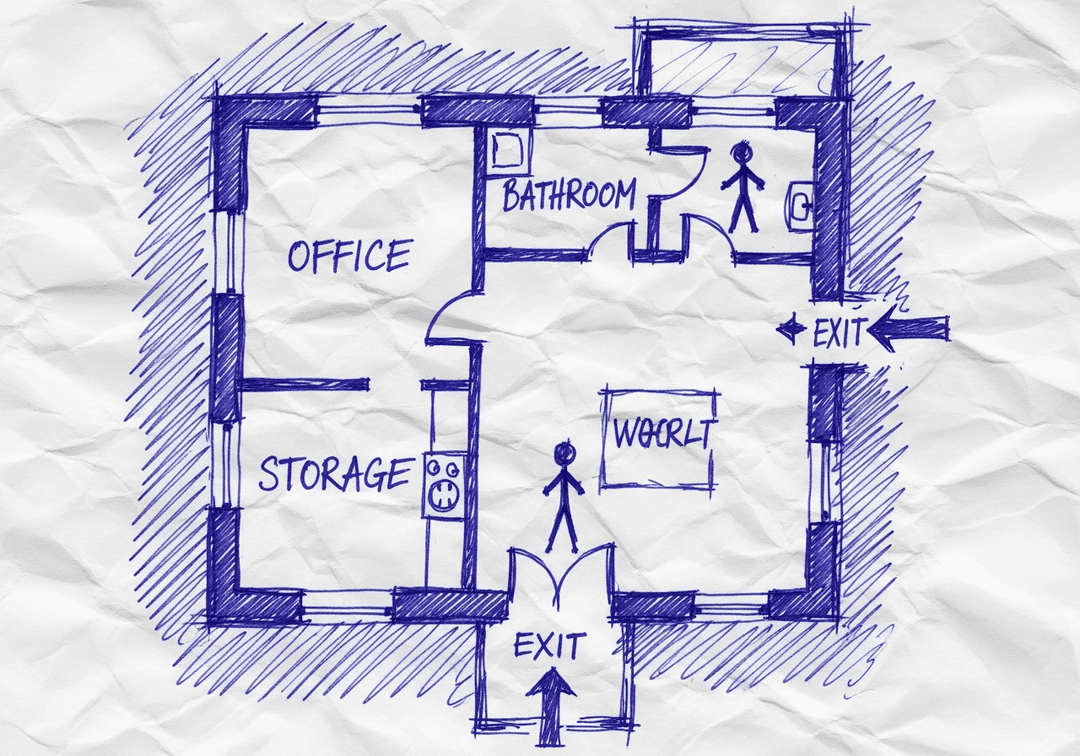
Few cities pack as much architectural variety into as little space as Boston. A single block in Beacon Hill, Back Bay, or the North End can mix 18th- and 19th-century brick rowhouses with modern build-outs, while the Financial District and Seaport rise into glass high-rises. Many of the older buildings were converted from homes or warehouses into offices, labs, restaurants, and shops, leaving narrow winding stairwells, single egress stairs, low ceilings, and irregular floor plans that make evacuation routing far harder than in a standard modern office.
For private-sector employers, Boston workplaces follow federal OSHA: 29 CFR 1910.38 requires most employers to maintain an Emergency Action Plan — in writing for workplaces with more than 10 employees — and to keep exit routes clearly marked. Evacuation diagrams are commonly expected to be posted where employees can see them, and local fire codes often make that explicit. On top of that, the Massachusetts Comprehensive Fire Safety Code (527 CMR 1.00, the state’s adoption of NFPA 1) and the Boston Fire Department govern means of egress, occupancy limits, and exit signage. Massachusetts public-sector workers are additionally covered by the state OSHA program that took effect in 2022.
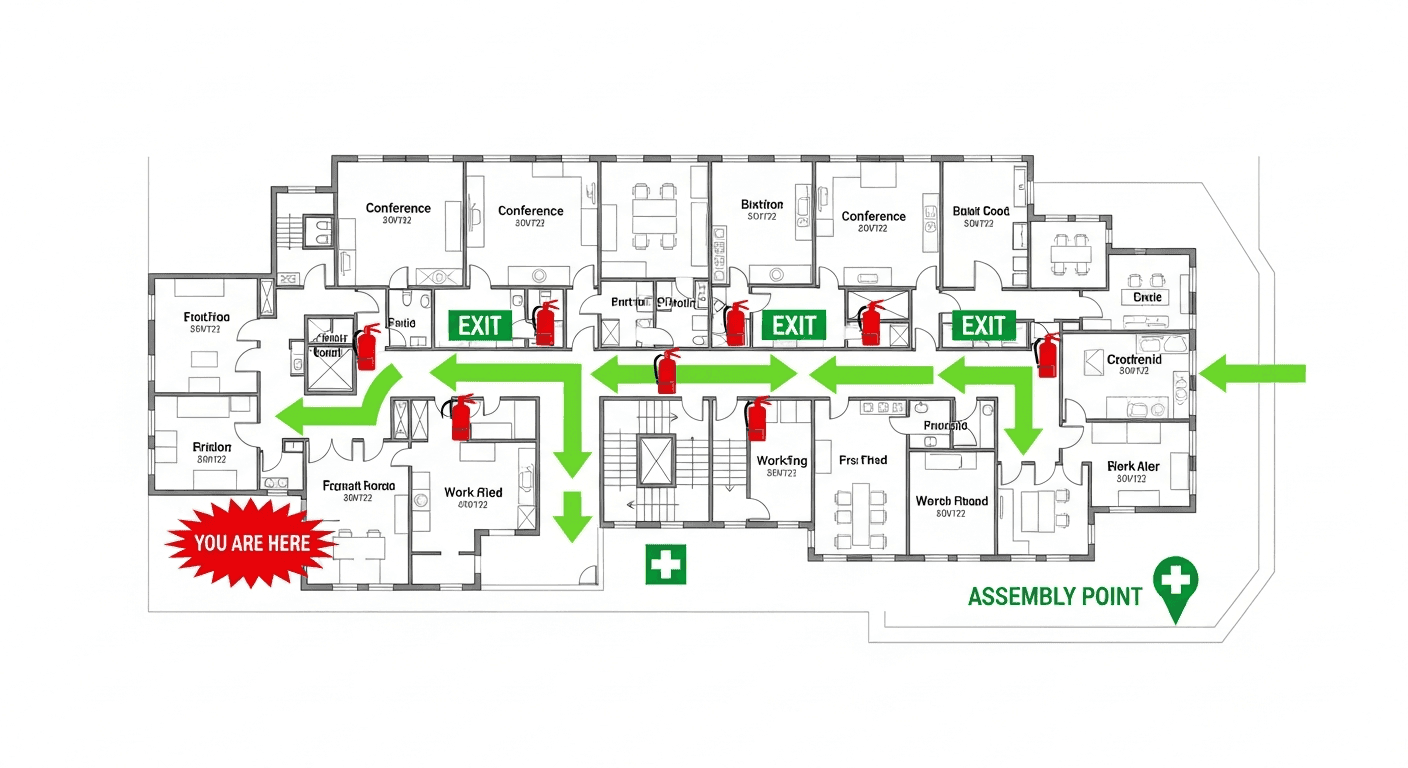
Boston’s climate adds a planning layer most generators ignore: winter snow and ice routinely block secondary exits and outdoor assembly areas, so cleared primary routes and a backup assembly location matter. Dense downtown blocks also leave little open space for gathering, which pushes assembly points off-site. OSHAMap turns your floor plan into a clean, print-ready map that marks every exit, route, and assembly point — so a converted Back Bay brownstone or a Seaport tower both end up with a posting-ready diagram in minutes.