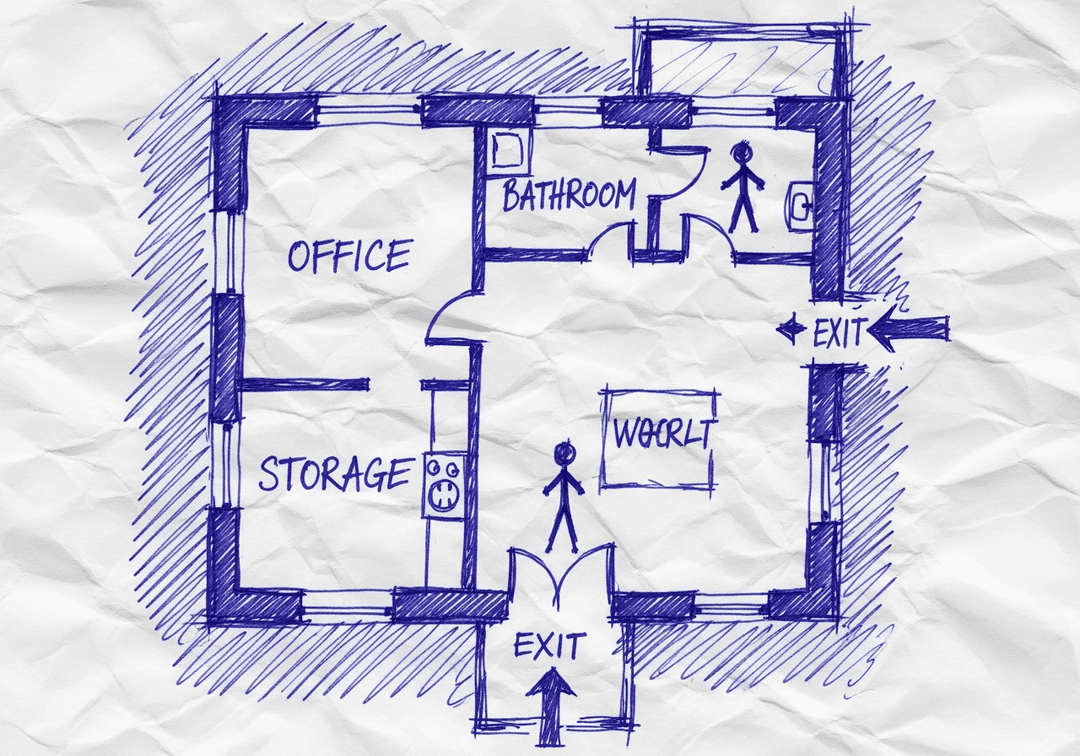
Los Angeles spreads workplace risk across an unusually wide range of buildings: Downtown LA high-rises and Century City towers, Hollywood soundstages and post-production studios, Mid-Wilshire mid-rises, garment-district lofts, and mile after mile of tilt-up warehouses and single-story retail across the basin and the San Fernando Valley. Many sites are converted or tenant-built, which leaves blocked secondary exits, repurposed stairwells, and floor plans that rarely match the original drawings.
California businesses answer to Cal/OSHA, the state-run program whose Title 8 standards are frequently stricter than federal OSHA. Section 3220 requires an Emergency Action Plan with marked exit routes and assembly areas, and the Los Angeles Fire Department layers on high-rise life-safety and emergency-planning requirements for taller buildings. Cal/OSHA also enforces heat-illness prevention (Title 8 §3395) and a wildfire-smoke standard (§5141.1) that both bear directly on where and how you stage an evacuation.
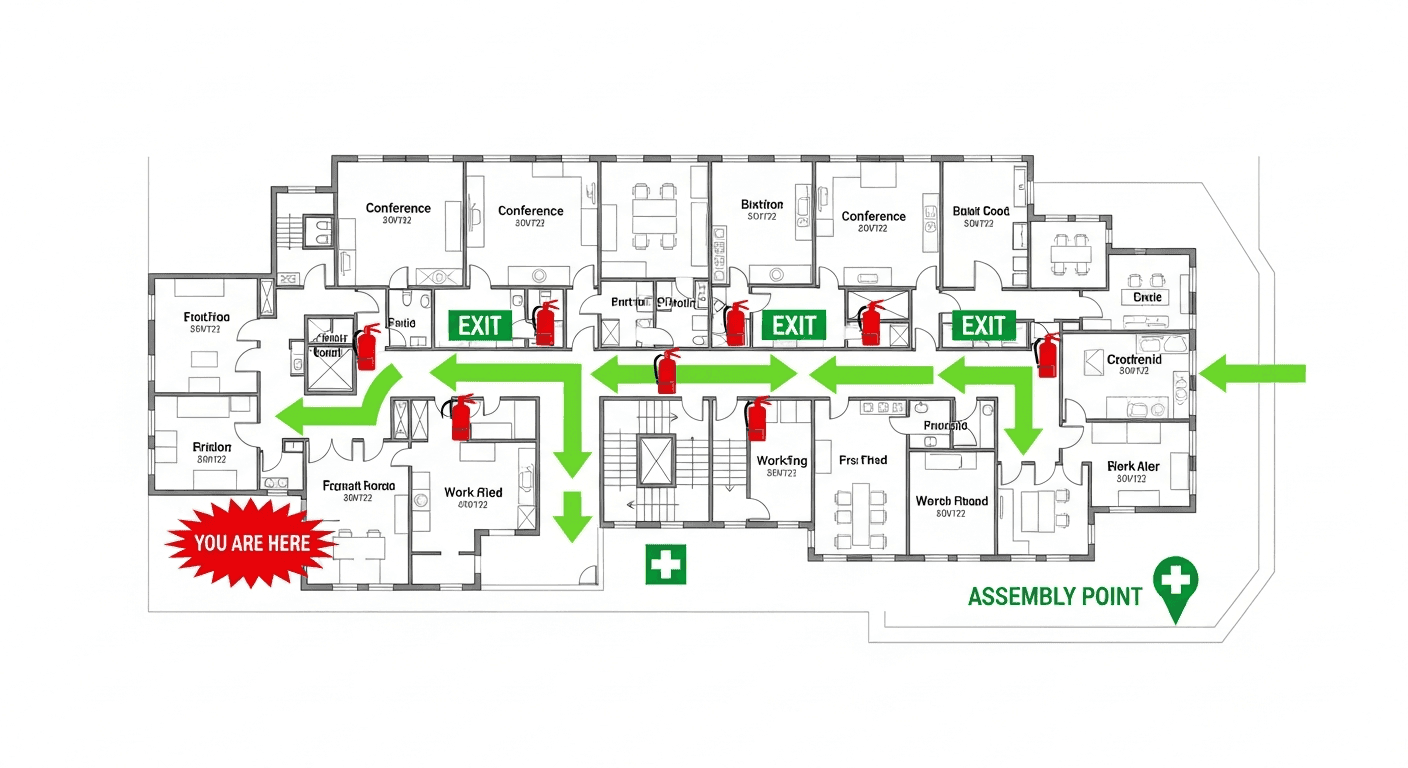
LA's hazards shape the map itself: Santa Ana wind-driven wildfire and smoke days can make an open-air assembly point unhealthy, while seismic events can jam doors and rule out elevators. OSHAMap turns your existing floor plan into a clean, print-ready evacuation map, marking every exit, route, and assembly point, so a DTLA tower and a Valley warehouse each get a posting-ready diagram in minutes.