What is an Emergency Action Plan (EAP)?
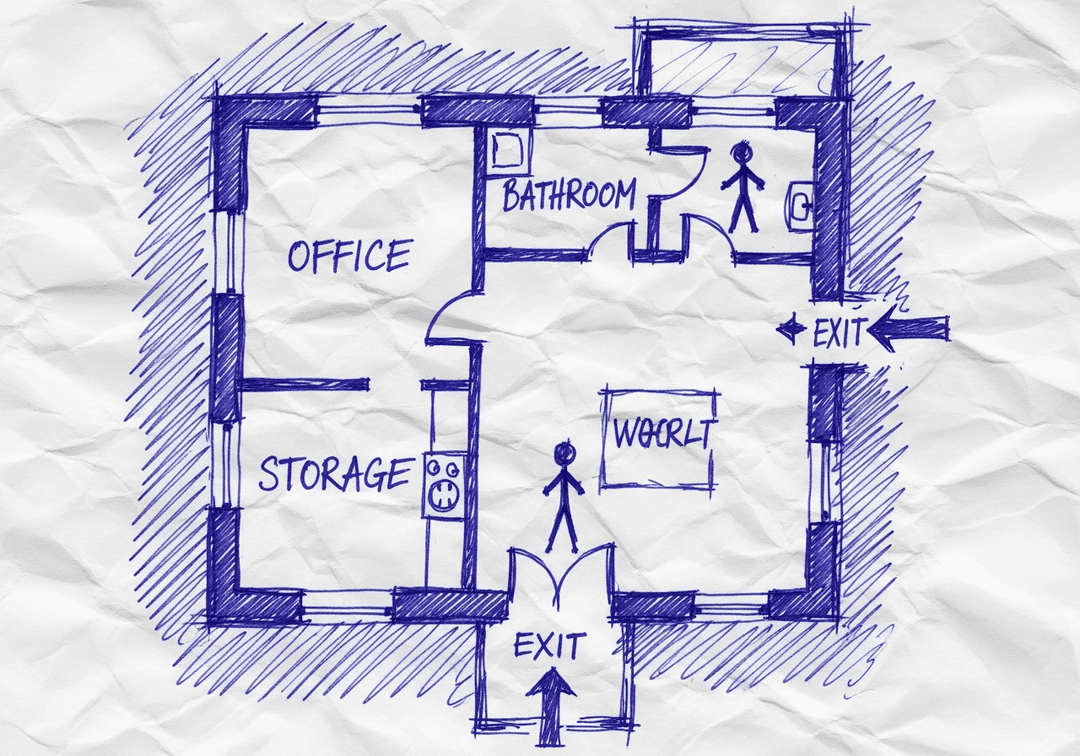
An Emergency Action Plan (EAP) is a written document required by OSHA standard 29 CFR 1910.38 for workplaces with more than 10 employees. The EAP outlines procedures for emergency situations including fires, severe weather, chemical spills, and other hazards. Evacuation maps are a critical visual component of any effective EAP.
When is a Written EAP Required?
- Workplaces with more than 10 employees must have a written EAP
- Smaller workplaces may communicate the plan orally
- Certain OSHA standards (like Process Safety Management) require EAPs regardless of size
- State OSHA programs may have additional requirements
Required EAP Elements (OSHA 1910.38)
- Procedures for reporting fires and emergencies
- Evacuation procedures and emergency escape routes
- Procedures for employees who remain to perform critical operations
- Procedures to account for all employees after evacuation
- Rescue and medical duties for designated employees
- Names or job titles of persons to contact for EAP information
How Evacuation Maps Support Your EAP
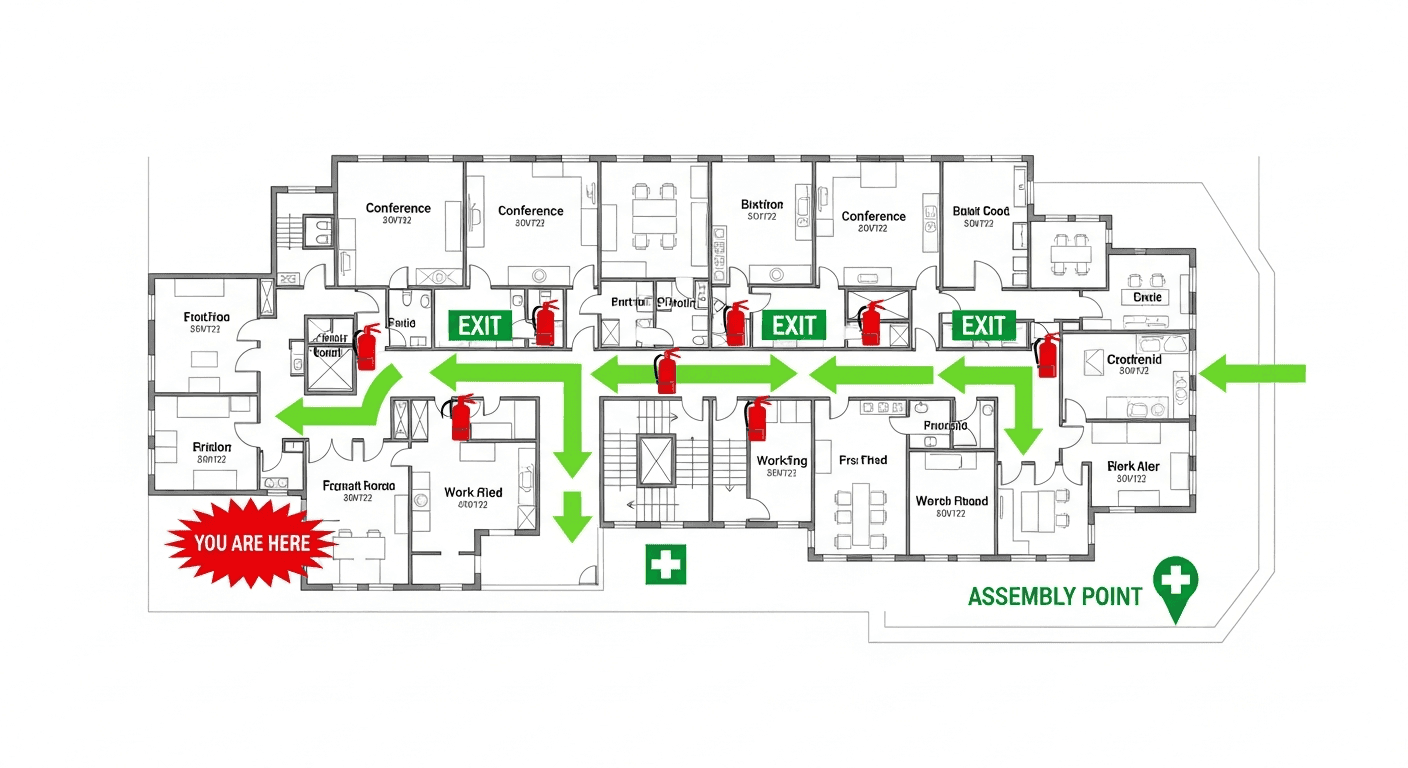
Evacuation maps are the visual implementation of your EAP. They translate written emergency procedures into clear, actionable guidance that employees can follow during high-stress situations. A proper evacuation map shows all escape routes described in your EAP, assembly points, and safety equipment locations.
EAP Training Requirements
- Train employees when EAP is first developed or adopted
- Retrain when employee responsibilities change
- Retrain when the EAP itself is modified
- Review evacuation maps with employees during training
- Conduct regular evacuation drills (recommended annually)
EAP Compliance by the Numbers
Two-thirds of small businesses lack a compliant written EAP according to OSHA surveys
Maximum penalty for willful violations of EAP requirements
Businesses with proper EAPs evacuate 23% faster on average during drills
Employees at EAP-compliant businesses report feeling prepared for emergencies
Real-World Success Story
Challenge
Midwest Metal Fabricators, a 200-employee manufacturing facility, faced an OSHA inspection after an employee complaint. Their EAP was 8 years old, evacuation maps showed a floor layout from before a major expansion, and only 40% of employees had received training in the past year.
Solution
They used our AI-powered tool to regenerate all evacuation maps in one afternoon, updated their written EAP to reflect current operations, and implemented quarterly training refreshers with documented attendance.
Result
The facility passed their follow-up inspection with zero citations. Employee drill evacuation times improved by 34%, and they saved an estimated $47,000 in potential penalties. The safety manager now updates maps quarterly using our tool.
OSHA-Compliant EAP Template
Complete, fillable Emergency Action Plan template covering all OSHA 1910.38 requirements. Includes sections for emergency contacts, evacuation procedures, employee roles, training logs, and drill documentation. Pre-formatted for easy customization to your facility.