New York City concentrates more workers into vertical space than anywhere else in the country. Manhattan office towers and supertall mixed-use buildings sit alongside pre-war walk-ups in Brooklyn and Queens, converted SoHo and DUMBO lofts, and ground-floor retail beneath apartments across all five boroughs. Older buildings frequently rely on a single stair or narrow corridors, while modern high-rises use phased evacuation and relocation rather than emptying the whole tower at once.
Private-sector NYC employers fall under federal OSHA and its 29 CFR 1910.38 Emergency Action Plan rule; public employees are covered separately by New York's PESH program. On top of that, the FDNY enforces the NYC Fire Code, which requires fire-safety and emergency-action plans for high-rise office buildings, a designated Fire and Life Safety Director, and regular fire and non-fire emergency drills. Those drills depend on a clear, building-specific diagram of stairs, routes, and refuge areas.
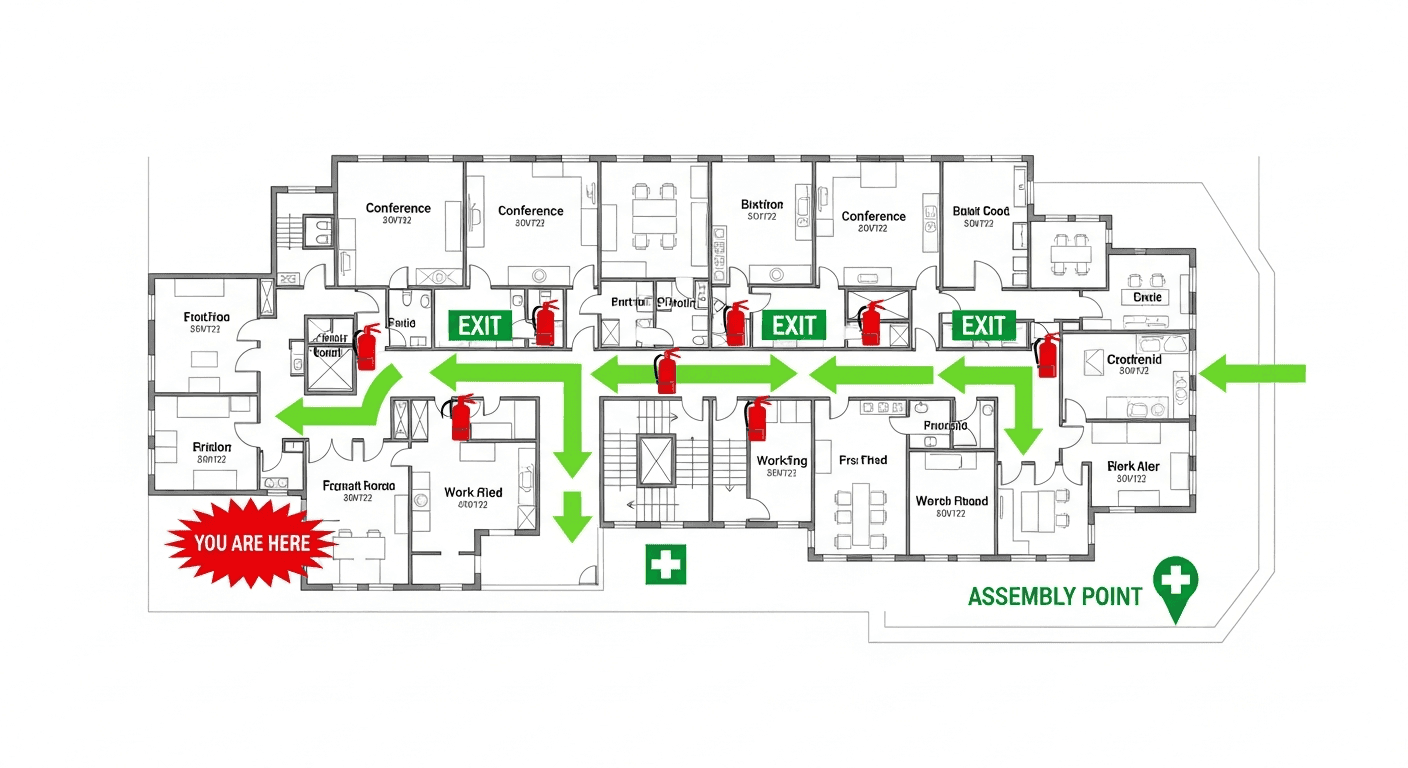
Dense streets leave almost no open ground for a traditional assembly point, so many NYC workplaces muster in a designated lobby or a pre-arranged off-site location, and winter ice makes those routes harder. OSHAMap converts your floor plan into a posting-ready evacuation map with every exit, stair, route, and assembly point marked, whether you run a Midtown floor or a Brooklyn loft.