Q: What OSHA standards apply to aerospace evacuation maps?
Quick Answer:
Aerospace facilities must comply with 29 CFR 1910.38 for Emergency Action Plans, requiring posted evacuation maps with exit routes, fire extinguisher locations within 75-foot travel distance, assembly areas, and emergency equipment markers. Additional standards including 29 CFR 1910.119, AS9100 may apply based on facility hazards.
✈️
Aerospace OSHA Evacuation Maps 2026
By Michael Rodriguez, CSP, CHST|Published: January 2024 | Updated: June 2026
📅Last reviewed: June 8, 2026 · Reviewed by OSHAMap Safety Editorial Team · Review with a qualified safety professional when required.
Sky-High Safety Standards - Create Compliant Maps in Seconds
Aerospace manufacturing evacuation plans meeting stringent requirements. Generate professional maps free and instant with our AI-powered map maker.
Free instant preview • No credit card • Download in seconds
3 Simple Steps:
1Upload Floor Plan
→
2Select State & Industry
→
3Get Your Map
🏢Trusted by 7,500+ businesses nationwide🇺🇸Used in all 50 States🗺️Over 15,000 evacuation maps generated🔒Built on secure, encrypted infrastructure✅OSHA-aligned US standards
Get Your Free OSHA Risk Assessment
Identify compliance gaps specific to Aerospace in minutes. Our quick assessment helps you understand your evacuation planning requirements.
Upload your floor plan and get a professional OSHA-aligned aerospace evacuation map in seconds
📤
Upload
⚡
Generate
✅
Download
📊 5 Free Maps Left
Create Your Aerospace Evacuation Map
✏️
High ContrastUse dark ink on white paper. Bold lines help our AI detect walls accurately
📐
Top-Down AnglePhotograph from directly above — tilted angles distort the geometry
🏷️
Label RoomsWrite "Exit", "Storage", "Breakroom" etc. — our AI reads your labels for compliance
🔍
Full Floor PlanCapture the entire layout including all walls, doors, and exits — no cropping
🚪
Mark ExitsCircle or label exit doors with a red dot or "EXIT" text for best detection
💡
Good LightingAvoid shadows and glare — even lighting produces the sharpest results
📁
Drag & drop your floor plan here
or
PNG, JPG, HEIC, TIFF, BMP, PDF - Hand-drawn sketches work too!
or
No floor plan handy? Generate an instant demo map — no upload needed.
Edit your map for free. Move, resize, and recolor every exit sign, route, and icon. Create a free account to save and download in HD. No credit card required.FREE
🔒Your files are private: never shared, stored temporarily, deleted automatically.
Compliance Options
🔥 NEW✨
Customize Your Map
Add special requests for your safety map - tell our AI exactly what you need!
🎯Add specific details like "Mark fire extinguisher near kitchen"
📍Request specific zones: "Highlight assembly point in parking lot"
🏥Add safety equipment: "Include AED location near reception"
0/2000
Quick Add:
Frequently Asked Questions
Is this evacuation map generator really free?
Yes — you can generate your first OSHA-aligned evacuation map draft completely free. Just upload a floor plan and our AI drafts a professional map in about 30 seconds. No credit card required.
Are the generated maps aligned with OSHA?
Our AI drafts maps that follow OSHA 29 CFR 1910.36–37 and NFPA 101 Life Safety Code standards. Every map includes clearly marked exits, fire extinguisher locations, assembly points, and directional evacuation arrows. Supervisor review is required before posting to your facility.
What file formats can I upload?
We accept JPG, PNG, and PDF floor plans. For best results, use a clear, high-resolution image of your floor plan with visible walls, doors, and rooms.
How long does map generation take?
Most maps are generated in 20–40 seconds. Complex multi-floor plans may take slightly longer. You can download your map immediately after generation.
Can I edit the map after generation?
The generated map is a high-resolution image you can download and print. For custom edits or enterprise features like multi-floor support and branded maps, check our pricing plans.
Is my floor plan data secure?
Yes. All uploads are encrypted in transit (TLS 1.3) and processed in secure cloud environments. We do not share your floor plans with third parties.
Aerospace Requirements by State
View aerospace evacuation requirements for these states:
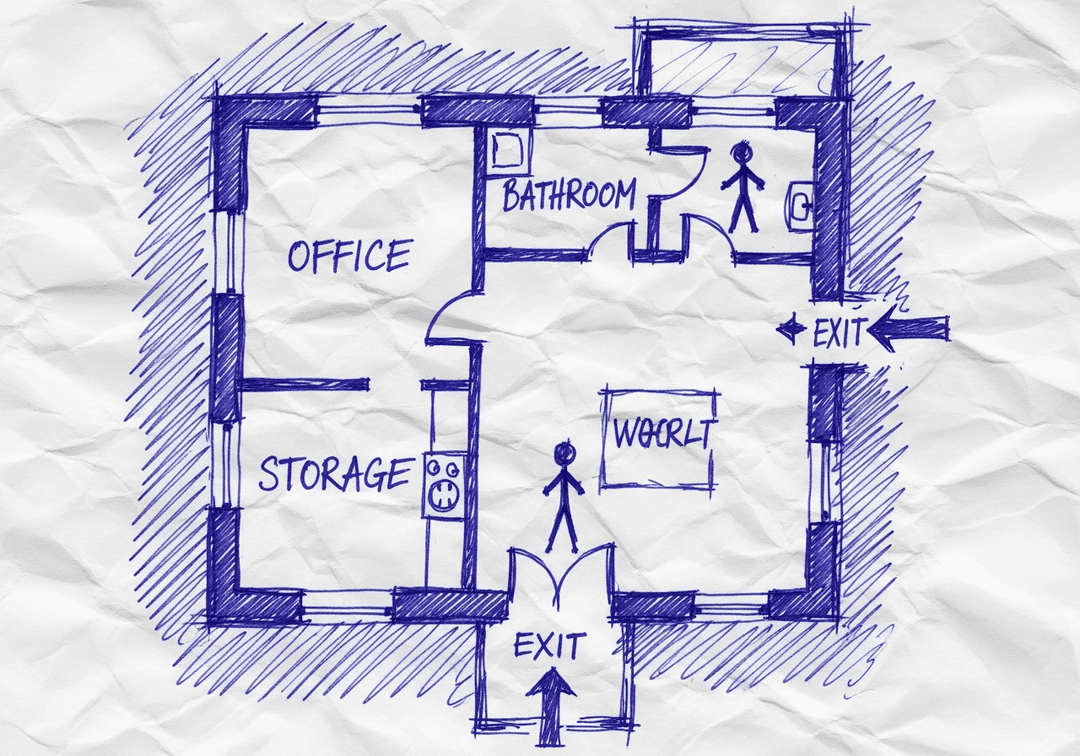
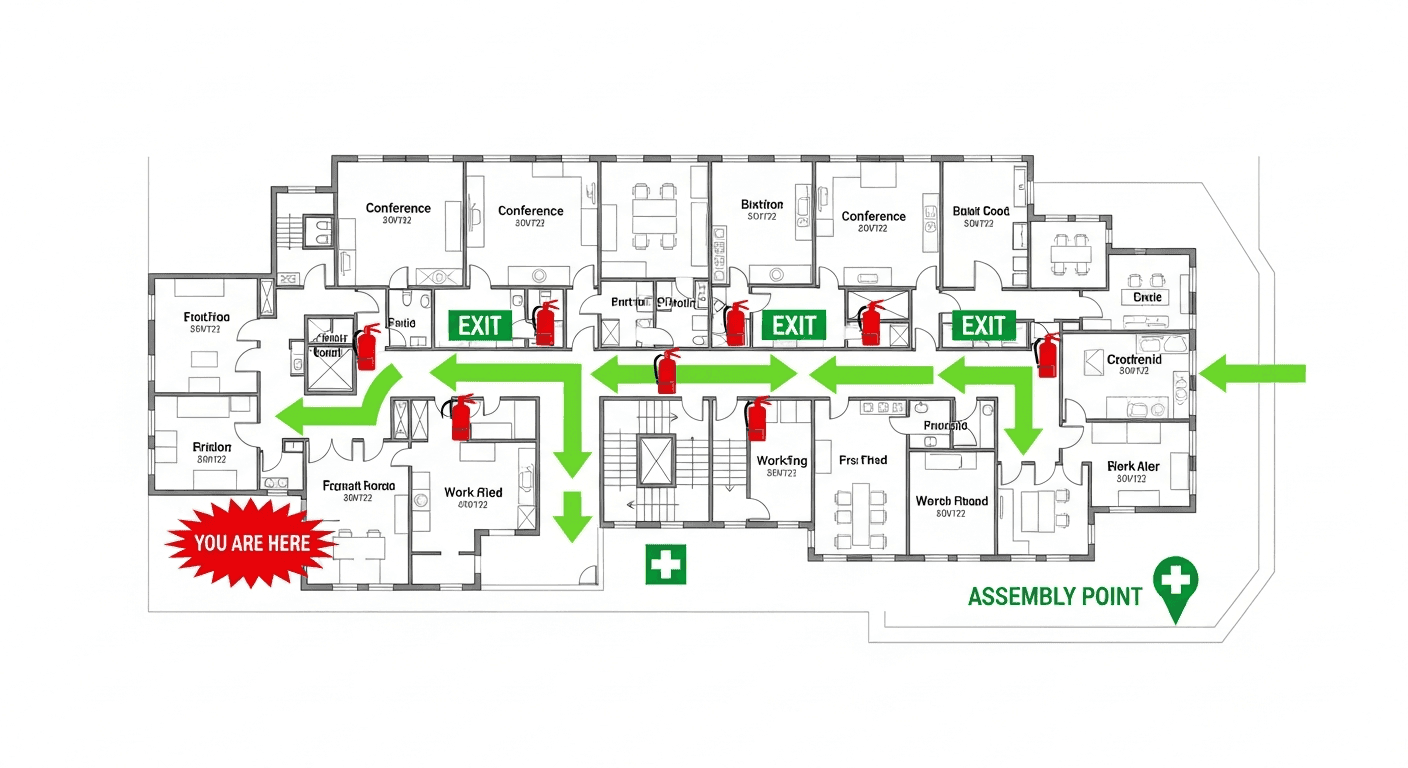
From Napkin Sketch to Professional Aerospace Evacuation Map
Our AI creates professional evacuation maps specifically designed for Aerospace facilities in seconds
✏️Your Sketch
Hand-drawn on paper
Rough layout
Basic room labels
⚡AI Magic~30 seconds
✅Professional Result
🧯 Fire Extinguishers
🚪 EXIT Signs
➡️ Evacuation Routes
📍 YOU ARE HERE
👥 Assembly Point
🏥 First Aid
Works with photos, scans, PDFs, CAD files, or even hand-drawn napkin sketches
✓ OSHA/NFPA-Aligned Draft
✓ Instant Results (~30 sec)
✓ Print-Ready (11x8.5" or 17x11")
Why Aerospace Professionals Choose Our AI Map Generator
Do I need design skills to create an evacuation map?
No design skills are required. Our AI understands hand-drawn floor plans, smartphone photos, scanned blueprints, and PDF documents. Simply upload any representation of your facility layout and receive a professional-grade emergency evacuation map instantly.
Are the generated maps OSHA-aligned?
OSHAMap is designed to help users organize key evacuation-planning information commonly associated with OSHA 29 CFR 1910.38 — clearly marked exit routes, fire extinguisher locations within 75-foot travel distance, assembly points, YOU ARE HERE markers, and accessibility accommodations per ADA guidelines. Each draft must be reviewed and verified for the actual workplace by the employer, safety officer, or AHJ before posting.
Can I update my evacuation map after renovations?
Yes, unlimited revisions are included. If you renovate your office or add a new emergency exit, simply re-upload your updated floor plan and generate a new compliant map instantly. All free maps include unlimited regeneration so you always have current evacuation documentation.
What types of buildings can use this evacuation map generator?
Our generator works for any building type including warehouses, manufacturing plants, healthcare facilities, schools, retail stores, and office buildings. The AI adapts to any facility size and layout, generating appropriate exit routes, fire safety equipment placement, and assembly point locations.
Industry-Specific Expertise
Aerospace Safety: Precision Manufacturing with Zero Tolerance
Operational safety insights designed specifically for Aerospace professionals
Operational Realities & Best Practices
Clean Room Operations
Challenge:Gowning and contamination control affect evacuation
Best Practice:Emergency degowning procedures prioritize life over contamination
Composite Materials
Challenge:Carbon fiber dust and resin hazards
Best Practice:Respiratory protection and specialized fire suppression
✓ OSHA-Aligned✓ Print Ready✓ AI-Powered✓ Used by 47,000+ Businesses
Why Choose OSHAMap?
Professional OSHA-aligned evacuation maps that protect your employees and your business
✅
Aligned
OSHA/NFPA-Aligned Drafts
Every draft is designed around 29 CFR 1910.38 — exit routes, fire extinguisher locations, and assembly points included. Human review required before posting.
Compliance
💰
$16,550+
Avoid Costly OSHA Fines
OSHA fines for missing or non-compliant evacuation plans can reach $16,550 per violation. Stay protected.
Cost
⚡
<2 min
Maps Generated in Minutes
Upload your floor plan and receive a professional evacuation map in under 2 minutes. No waiting for consultants.
Understanding risks specific to aerospace facilities
⚗️
Chemical hazards
Chemical exposure risks necessitate proper labeling, spill containment, and emergency shower locations.
Reference: 29 CFR 1910.1200
🕳️
Confined spaces
Confined spaces require entry permits, atmospheric monitoring, and rescue procedures.
Reference: 29 CFR 1910.146
⚠️
High bays
High bays requires specific safety protocols and emergency planning.
Reference: 29 CFR 1910.38
Aerospace OSHA Compliance Requirements 2026
Key regulatory requirements for aerospace facilities
📋
29 CFR 1910.38
Specific compliance requirements for aerospace operations and worker safety.
📋
29 CFR 1910.119
Specific compliance requirements for aerospace operations and worker safety.
📋
AS9100
Specific compliance requirements for aerospace operations and worker safety.
Aerospace Fire Safety & Evacuation Requirements
🚨
Industry-Specific Emergencies
Aerospace facilities face unique emergency scenarios including chemical hazards and confined spaces. Professional evacuation maps ensure employees know exactly where to go during any emergency.
📋
OSHA Compliance
OSHA requires aerospace facilities to maintain written emergency action plans per 29 CFR 1910.38. Clearly posted evacuation maps are an essential component of these plans.
👷
Worker Protection
With hazards like confined spaces and high bays, aerospace workers need clear guidance to evacuate safely. Our maps highlight all exits, fire extinguishers, and assembly points.
💰
Avoid Costly Violations
OSHA violations for inadequate emergency planning can cost up to $16,550 per violation. Professional evacuation maps help aerospace facilities stay compliant.
Aerospace Emergency Preparedness Best Practices
Compliance tips for aerospace evacuation planning
1
Post Maps at Every Entrance
Place evacuation maps at eye level (4.5-5 feet) at every building entrance and in high-traffic areas like break rooms and lobbies.
2
Update After Layout Changes
Whenever you reconfigure workstations, add equipment, or modify exits, update your evacuation maps immediately to maintain accuracy.
3
Conduct Regular Drills
OSHA recommends evacuation drills at least annually. Use your maps during drills to reinforce evacuation routes with all employees.
4
Train New Employees
Include evacuation map orientation in new hire training. Every employee should know their nearest exit and assembly point on day one.
5
Account for Shift Workers
Aerospace facilities often operate multiple shifts. Ensure all shifts have access to maps and are included in evacuation training.
6
Mark Hazard-Specific Equipment
For aerospace hazards like chemical hazards, clearly mark safety equipment locations on your maps.
Free Account Benefits
Create an Account to Unlock
📋
Map History Vault
Never lose a map again
🔄
Unlimited Regeneration
Perfect your evacuation plans
📊
Compliance Dashboard
Stay audit-ready 24/7
🤖
AI Recommendations
Proactive compliance insights
👥
Team Collaboration
Unified safety management
🔔
OSHA Alerts
Never miss an update
📥
Bulk Downloads
Save hours of work
🏆
Priority Support
Expert guidance included
No credit card required
⭐FREE RESOURCES
STEP 1 OF 2
Get Free OSHA Compliance Resources
Enter your email to receive free checklists, guides, and compliance tips
Get your professional OSHA-aligned evacuation map in under 2 minutes.
Aerospace OSHA Evacuation Map FAQs
What OSHA standards apply to aerospace evacuation maps?
Aerospace facilities must comply with OSHA standards including 29 CFR 1910.38, 29 CFR 1910.119, AS9100. The primary standard, 29 CFR 1910.38, requires written emergency action plans with evacuation procedures, exit route markings, and employee training. Our AI-generated maps automatically include all required elements for aerospace compliance, ensuring you meet all applicable standards.
What are the unique hazards in aerospace that affect evacuation planning?
Aerospace facilities face specific hazards including chemical hazards, confined spaces, high bays. These hazards require specialized evacuation routes that avoid high-risk areas, properly placed safety equipment, and clearly marked emergency assembly points away from danger zones. Our aerospace evacuation maps are designed to address these industry-specific challenges with appropriate exit routes and equipment placement.
How often must aerospace facilities update evacuation routes?
OSHA requires aerospace facilities to review and update evacuation plans whenever changes occur that affect egress or emergency procedures. Best practice for aerospace is quarterly reviews due to chemical hazards, confined spaces, high bays risks. Maps should be immediately updated after equipment moves, layout changes, or when new hazards are introduced. Our platform makes updates fast and maintains version history.
What training is required for aerospace evacuation procedures?
Under 29 CFR 1910.38, aerospace employees must be trained on evacuation routes, assembly points, and their specific roles during emergencies. Training should cover recognition of chemical hazards, confined spaces, high bays scenarios that may trigger evacuation. Annual refresher training is required, with additional training after any plan changes. Our maps include clear visual guides that support effective training.
How do I create an evacuation map for my aerospace facility?
Upload your floor plan to OSHAMap, select "Aerospace" as your industry type, and our AI generates a professional OSHA-aligned evacuation map in under 2 minutes. The map automatically includes aerospace-specific elements like proper fire extinguisher spacing, exit routes that account for chemical hazards, and compliant assembly point locations.
Are aerospace evacuation maps suitable for fire inspections and OSHA audits?
Yes, our maps are specifically designed to meet all OSHA and fire code requirements for aerospace facilities. They include compliant exit routes, fire extinguisher locations at required 75-foot travel distance intervals, emergency equipment symbols per 29 CFR 1910.38, assembly points, AED locations, and first aid stations. Maps are print-ready in sizes appropriate for posting requirements.
What emergency equipment must be shown on aerospace evacuation maps?
Aerospace evacuation maps must display fire extinguisher locations (Class ABC for general areas, specialized types for aerospace-specific hazards), fire alarm pull stations, emergency exits with travel distance compliance, first aid kit locations, AED positions, emergency eyewash stations where applicable, and designated assembly areas. Additional requirements under AS9100 may apply. Our AI automatically places all required equipment symbols.
How many emergency exits are required for aerospace facilities?
Under OSHA 29 CFR 1910.36, aerospace facilities must have at least two exit routes to permit prompt evacuation of employees and other building occupants during an emergency. Additional exits are required when the occupant load, building configuration, or travel distance exceeds limits. For aerospace operations, factors like chemical hazards, confined spaces, high bays may require additional exits. Exit routes must be located as far apart as practical and lead directly outdoors to a safe assembly area. Our maps automatically identify and mark all required exit routes.
What special considerations exist for aerospace evacuation plans?
Aerospace facilities have unique evacuation considerations including: chemical hazards and confined spaces requiring specialized response protocols, industry-specific equipment that may block egress paths, compliance with 29 CFR 1910.119 for hazard-specific procedures, potential need for shelter-in-place zones, and coordination with specialized emergency responders. Our AI-powered generator accounts for these aerospace-specific factors when creating your evacuation map, ensuring proper exit routes around hazardous areas.
Free OSHA Safety Tools
Professional compliance tools used by 7,500+ businesses
Our Aviation & Aerospace Evacuation Maps page goes deeper into the OSHA / NFPA codes, inspector findings, and auto-placed compliance icons for your facility type.