
Vacation Rental Fire Escape Plan for Hosts and Guests
A vacation rental fire escape plan helps an unfamiliar guest recognize the alarm, locate the unit's relevant exits, reach the designated outside meeting place, contact emergency services from safety, and stay out.
Start this planning guideIllustrative household guidance. Review actual conditions and follow local or building-specific instructions.
It is a concise orientation to the actual short-stay home, not a hotel operations plan, a substitute for required notices, or proof that the property complies with local fire, building, accessibility, or licensing rules.
Hosts should obtain requirements and building-specific instructions from the authority having jurisdiction, property manager, association, insurer, and qualified professionals as applicable. NFPA and USFA household guidance supports inspecting routes, showing doors and windows, planning two ways out, keeping openings clear, and choosing an outside meeting place. A host cannot label every window a usable guest exit merely to satisfy a diagram.
The four sections below separate a guest-facing example from the private host review. All sample properties and names are explicitly fictional. High-rise or multi-unit guests must follow the building's instructions: do not publish a universal command to evacuate, defend in place, enter a stair, or use an elevator. During a real event, leave when appropriate under the actual plan, call from safety, and never re-enter.
01 / household planning
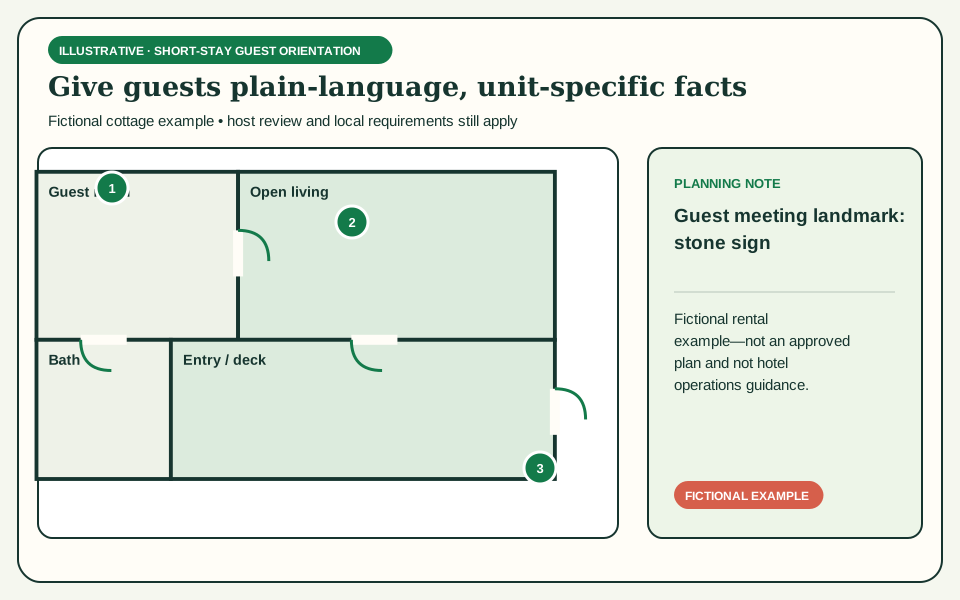
Annotate a guest-facing unit example
Orient a first-time visitor with a truthful, readable map tied to landmarks they can see in the rental.
Start with a simplified outline of the rented unit. Mark “You are here,” sleeping rooms, doors, windows, smoke alarms, the primary route, an adult-reviewed alternative, and the outside meeting place. Use solid and patterned route lines with text labels so color is never the only distinction. Keep the map oriented the same way a guest faces it at the display location.
Give landmarks plain names found in the space: “hall beside blue cabinet,” “front porch door,” or “courtyard gate.” Avoid internal room numbers a guest never sees. A map should reduce uncertainty at night, not require a legend with tiny text. Provide a larger printed or digital version when the full layout cannot remain legible.
Inspect every route represented. Confirm normal paths are clear and relevant doors operate as intended, while maintaining required security. NFPA advises checking that doors and windows open easily. However, a window, balcony, roof, ladder, or security release is not automatically a guest route; height, landing, ability, and local requirements need qualified review.
End the line at a specific outside meeting place a safe distance from the structure and away from responder access, traffic, pools, cliffs, gates, and neighboring hazards. “Outside” is too vague for a group. If local or building authorities designate a location, use that location and ensure current guest materials agree.
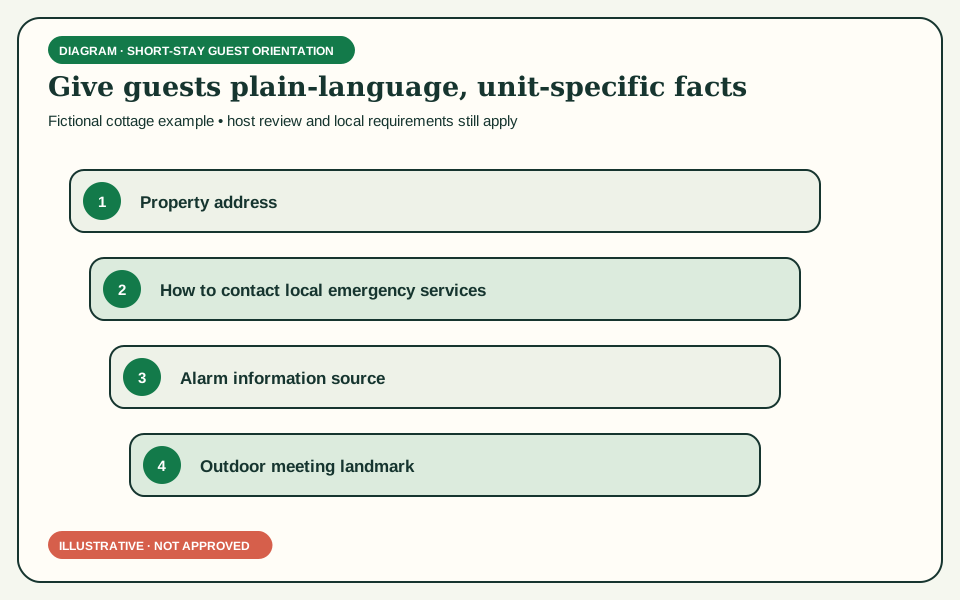
Mark the street address prominently on the instruction card so a guest can report it from safety. Check that exterior property numbers are visible to responders, as NFPA recommends for homes. Include the unit identifier where relevant, but do not burden the guest with host account details or long directions.
For multi-unit and high-rise rentals, connect the unit drawing to official building information without inventing it. Show building alarm meanings, stairs, assembly locations, refuge provisions, and elevator rules only as supplied and verified by responsible management or authorities. Update the guest map whenever that official instruction changes.
Consider: A map does not certify an opening as safe or legally required. Obtain local, property-specific review for windows, upper levels, balconies, security devices, and multi-unit building instructions.
Sources: NFPA: Escape planning, U.S. Fire Administration: Escape planning, Ontario Association of Fire Chiefs: Fire escape plans
Explore guest-facing plan details
Choose a label: Orient a first-time visitor with a truthful, readable map tied to landmarks they can see in the rental.
Windows and unusual alternatives require property- and person-specific review; a drawing is not permission to use them.02 / household planning
Write a plain-language guest instruction card
Put the essential actions and verified property information into a short card guests can scan on arrival.
Lead with action words: recognize the alarm, leave by the nearest appropriate route under the property plan, go to the named meeting place, call emergency services from safety, and stay out. Keep sentences short enough for a tired traveler. Pair text with map labels, not decorative icons whose meaning is uncertain.
State the exact property address and any useful unit name. International guests may not know the local emergency number, so display the locally verified number rather than assuming one universal number. Never invite guests to call the host before emergency services when fire or smoke is present; host notification comes after immediate safety actions.
Describe locks or releases only when guests are permitted and expected to operate them, and verify instructions with local requirements. Do not publish bypass instructions for security systems. If an exit requires a key, unusual force, or hidden control, address the condition with qualified property review rather than relying on a paragraph.
Tell guests not to collect luggage or return for phones, documents, or pets. NFPA advises staying out once escaped. If anyone may be missing, guests should tell the dispatcher and firefighters from outside. Hosts should never ask a guest to investigate an alarm or protect property.
Provide the same essential information in accessible formats appropriate to the property: high-contrast large print, plain language, a digital copy compatible with zoom, and translations based on the guest population. Translation should be reviewed by a competent speaker; an unclear automatic translation can create conflicting directions.
Keep optional host contact, accessibility notes, and pet information separate from the immediate actions. The emergency panel should not become a house manual. Ask guests during arrival to identify the displayed map and meeting place; do not make a buried booking-message attachment the sole orientation.
Consider: Verify the local emergency number, address, translations, and lock instructions. Do not tell guests to investigate, call the host first, or re-enter.
Sources: NFPA: Escape planning, American Red Cross: Home fire escape planning, U.S. Fire Administration: Escape planning
Edit a guest information card
Up to 1,000 characters per field. Entries remain only in this page until you leave or refresh.
Next step / visual draft
Bring these notes into a visual starting point.
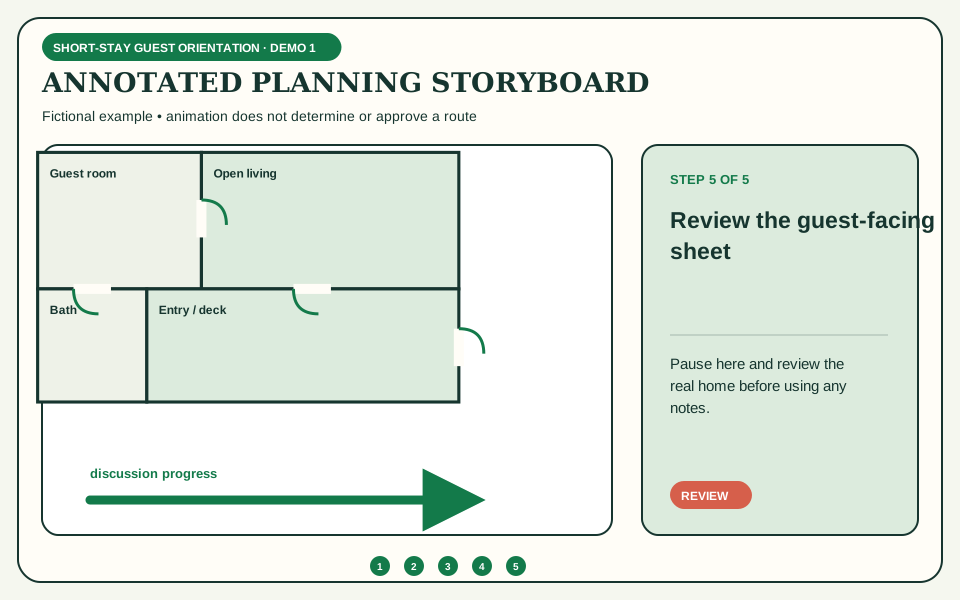
Use the map maker from a floor plan or sketch. It creates a visual draft, not an approved home plan.
Open the fire escape plan makerDraw an evacuation map03 / household planning
Separate host duties, guest actions, and local review
Prevent a friendly welcome card from obscuring the host's ongoing maintenance and regulatory responsibilities.
The host or responsible operator must determine applicable local fire, building, rental, licensing, inspection, accessibility, and posting requirements. That review cannot be delegated to guests or completed by a generic online page. Keep authority contacts, inspection records, device documentation, and building instructions in the private host file.
Hosts maintain required alarms and safety equipment according to law, manufacturer instructions, and qualified advice. They inspect routes between stays, provide accurate instructions, correct reported defects, and update material after layout changes. A checkbox confirming a visual glance does not replace required testing, servicing, or inspection.
Guests are responsible for reading the orientation, keeping routes clear during their stay, supervising their party under the household arrangements, leaving when the actual plan requires, meeting outside, calling from safety, and reporting damage. They are not asked to test equipment, assess a second-story window, silence alarms, or determine whether the property is compliant.
Ask guests to disclose access needs only voluntarily and only to arrange support the property can accurately provide. Do not collect diagnoses. If a guest asks about step-free routes, alarm notification, door hardware, or assistance, answer with verified functional facts and acknowledge limits. Never guarantee an evacuation outcome.
Hosts of units within managed buildings must reconcile the guest card with official instructions. Ask management about alarm signals, stair routes, doors, elevators, refuge or defend-in-place provisions, assembly, and updates. Because strategies differ, do not paste household guidance over building-specific direction.
Create a correction pathway. Give guests a non-emergency way to report a blocked path, damaged map, unreadable card, or equipment concern. Treat safety reports urgently under the property's procedures. If a serious condition cannot be corrected, follow local authority and platform obligations rather than quietly leaving the same guest sheet in place.
Consider: This page cannot determine local compliance. Hosts must verify current requirements and building instructions with the authorities and responsible professionals for the actual property.
Sources: NFPA: Escape planning, Ontario Association of Fire Chiefs: Fire escape plans, U.S. Fire Administration: Escape planning
Complete host and local-review prompts
04 / household planning
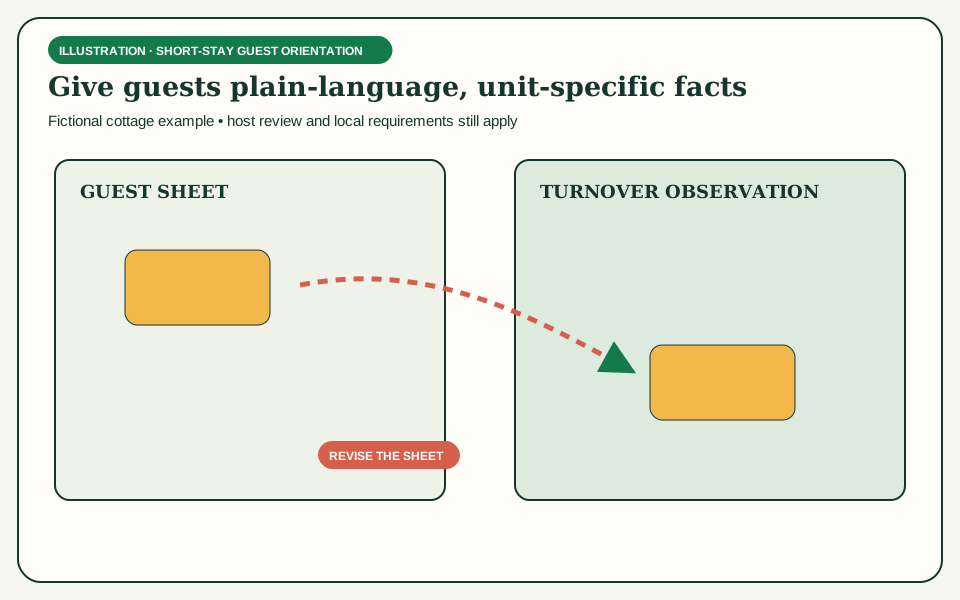
Use a turnover and layout-change checklist
Catch the small changes that can make yesterday's accurate guest orientation wrong today.
At each turnover, compare the physical layout with the displayed map. Look for moved beds, added furniture, luggage racks, decorative screens, child equipment, or locked owner storage that changes a line or landmark. The map must show current geometry; never leave a route passing through a newly placed object.
Walk the normal route and inspect for ordinary obstruction, damage, loose rugs, exterior work, snow, vegetation, gate changes, and unreadable address numbers. NFPA recommends clear routes and visible street numbers. Resolve defects through the correct maintenance process; do not simply add a warning asking guests to negotiate them.
Confirm the instruction card is present, legible, and consistent across print, digital house manual, booking message, and building notice. Remove superseded versions. Test QR links only as a secondary convenience because connectivity and phone access may fail; essential information remains visible without scanning.
Check dates on translated and accessible formats. A changed meeting place, emergency number, property name, or lock requires every version to change. Ask a competent reviewer to confirm translated safety wording. Avoid handwritten amendments that can be overlooked or misread.
Trigger a deeper review after renovation, occupancy change, new sleeping area, alarm work, security hardware change, accessibility modification, ownership or manager change, or updated building instructions. Some changes may require permits or authority review before guests return; the turnover checklist cannot answer that legal question.
Record the observation, action owner, resolution, and date. Do not mark unresolved safety conditions complete. If a route or instruction is uncertain, pause reliance on the material and contact the responsible authority or professional. A transparent issue log is more useful than a perfect score with hidden exceptions.
Consider: A turnover record is not an inspection certificate. Unresolved route, equipment, building-instruction, or regulatory questions require the responsible authority or qualified professional.
Sources: NFPA: Escape planning, U.S. Fire Administration: Escape planning, Ontario Association of Fire Chiefs: Fire escape plans
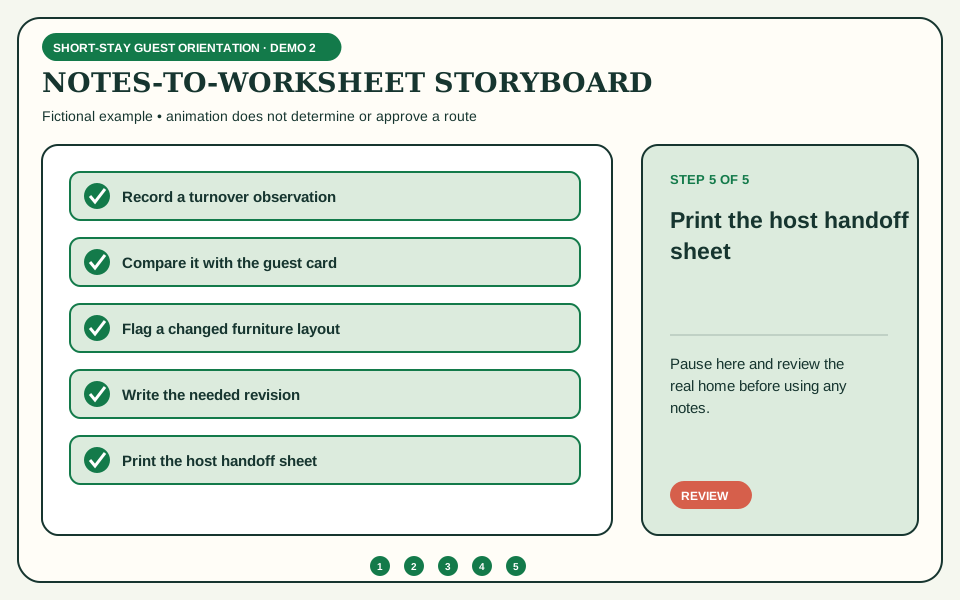
Record turnover changes for the handoff sheet
Up to 1,000 characters per field. Entries remain only in this page until you leave or refresh.
Review or print your worksheet
Preview current entries and blank writing lines. Printing opens your browser’s print dialog, where you can choose a printer or “Save as PDF.”
Continue planning
Related household resources
Questions and worksheet
Vacation Rental Fire Escape Plan for Hosts and Guests FAQ
Is a vacation rental plan the same as a hotel evacuation map?
No. This guide addresses unit-level orientation in a short-stay home. Hotel-scale operations, employee duties, public areas, code requirements, and facility maps have a different owner. A rental inside a hotel-like or multi-unit building must also use verified building instructions.
Can I label every bedroom window as the second way out?
No. Show windows accurately, but do not call one a usable route until height, opening, landing, security devices, guest ability, local requirements, and qualified guidance have been considered. Never imply that guests should jump or rehearse an upper-level window escape.
Should guests call the host when an alarm sounds?
They should not delay immediate safety action or emergency contact to call the host. The card should direct them under the verified property plan to safety, the meeting place, and the locally verified emergency number. Host contact comes afterward when safe.
What should a high-rise rental card say?
Only verified building-specific instructions. Obtain current alarm, door, stair, elevator, refuge, assembly, and evacuation-strategy information from management and responsible authorities. Do not publish a universal evacuate or stay-put rule or tell guests to enter smoke.
Does this checklist prove my rental complies with local rules?
No. Requirements vary by jurisdiction, building, occupancy, and platform or licensing arrangement. Consult the authority having jurisdiction and other responsible professionals. A completed online interaction is not an inspection or approval.
When should the guest sheet be updated?
Check it at turnover and update after any route, furniture, sleeping-area, address, lock, alarm, meeting-place, translation, accessibility, building-instruction, management, or regulatory change. Replace all versions and remove obsolete copies.