
Home Fire Drill Checklist and Improvement Log
A home fire drill is a controlled check of a plan the household has already made.
Start this planning guideIllustrative household guidance. Review actual conditions and follow local or building-specific instructions.
It should confirm that people recognize the signal, use a clear adult-reviewed route, reach the outside meeting place, stay outside, and account for everyone. It should not manufacture smoke, danger, panic, blocked exits, or a rescue challenge. This checklist covers preparation, selected scenarios, outside accountability, and a printable improvement log.
NFPA advises practicing a home fire drill at least twice a year, including at night and during the day, and emphasizes getting outside and staying outside. USFA similarly advises mapping doors and windows, finding two ways out, keeping them clear, choosing an outside meeting place, and practicing with everyone. Practice cannot prove how people will perform in a real fire; it can reveal correctable gaps in the plan.
Adapt every drill to children, older adults, pets, mobility, hearing, vision, communication, sensory needs, and the actual home. Discuss unsafe alternatives at a table instead of attempting them. In apartments and high-rises, practice must follow building-specific instructions; never direct residents universally to evacuate, stay put, enter a stair, or use an elevator.
01 / household planning
Before-the-drill checklist
Set a safe scope, notify participants, inspect routes, and define what the exercise will and will not test.
Review the completed household plan before choosing a date. Every participant should know the primary route from rooms they use, the adult-reviewed alternative, the outside meeting place, and who provides assistance. A drill is not the time to discover that a window is too high, a security bar has no suitable release, or a helper never accepted the role.
Walk the practice route and remove ordinary obstructions. Confirm doors and windows selected for routine practice open easily without creating a security hazard afterward. NFPA recommends keeping escape routes clear. Do not lock or secretly block an exit to create difficulty, and never disable a smoke alarm or other safety feature.
Tell household members when the drill will occur and how the alarm cue will be introduced. Prepare children and anyone who may experience distress. Use the alarm's test function only according to manufacturer instructions. If someone may not perceive the signal, treat that as a notification-planning issue requiring appropriate advice—not a reason to repeatedly startle them.
Assign observers sparingly. An observer must not obstruct a route or ask participants to repeat unsafe movements. Give them a short list: signal recognized, assistance began as agreed, route clear, meeting place reached, accountability complete, and nobody re-entered. Avoid recording video without consent or collecting unnecessary personal information.
Define the stop rule. Anyone may pause the drill for distress, pain, a fall risk, a real alarm, smoke, weather, traffic, or an unexpected hazard. If there are signs of a real fire, stop treating the event as practice, leave, call emergency services from safety, and stay outside. Never investigate merely because a drill was scheduled.
Check weather and the meeting place. Ensure the path outdoors and gathering area are appropriate for the household, including mobility devices and children, and do not obstruct responders or traffic. Have necessary clothing positioned only if doing so does not delay escape; a planning discussion may be safer than a physical drill in severe conditions.
Consider: If any sign suggests a real fire, leave and call from safety. Never use theatrical smoke, flames, blindfolds, locked exits, surprise hazards, or physically unsafe alternatives.
Sources: NFPA: Escape planning, U.S. Fire Administration: Escape planning, American Red Cross: Home fire escape planning
Complete the preparation checks
02 / household planning
Choose safe day, night, and unavailable-route scenarios
Vary the conversation without creating the hazards the household is planning to avoid.
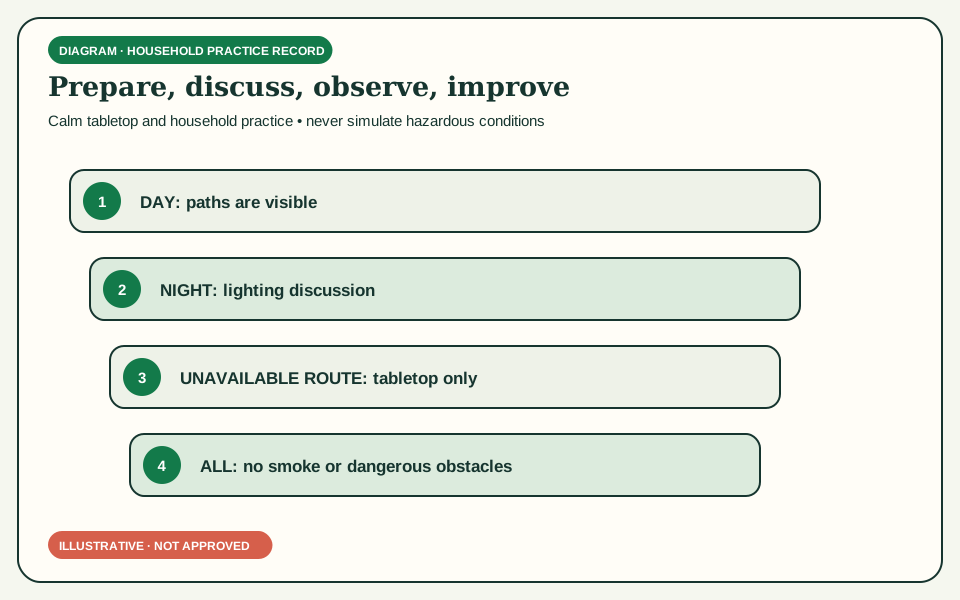
Day practice is the best starting point because people can learn the sequence in familiar conditions. Begin with an announced signal, normal lighting, and the primary route. Observe decisions rather than chasing a speed target. If someone forgets the meeting place or collects belongings, record the behavior and calmly reteach the step.
Night practice can be announced and carefully planned. NFPA recommends practicing at night and during the day, but that does not require waking children without warning, switching off all lights, or introducing fall hazards. First discuss bedroom-door positions, notification, eyeglasses, mobility aids, and helper rendezvous in daylight. Choose the least distressing safe method that still tests the plan.
An unavailable-route scenario is usually best as a tabletop exercise: place a card over the primary line on the map and ask which adult-reviewed alternative applies. Do not physically block a door or put someone near smoke. If the alternative involves a window, ladder, balcony, stairs, transfer, or unfamiliar device, discuss it only until appropriate qualified guidance supports practice.
Vary who is home on paper. Ask what changes when the primary helper is at work, a visitor stays overnight, or a child is with a babysitter. Update responsibilities before a physical drill. Never make a child responsible for rescuing another person or animal because an adult is absent.
For pets, rehearse only advance responsibilities that do not delay human escape. Know where leashes or carriers are normally kept near an exit if safe, but do not hide an animal for someone to find. In a real event, get out, stay out, and tell firefighters about a missing pet; nobody should re-enter.
Apartment and high-rise scenarios require the building's own instructions. Residents should learn alarm meanings and exits from management and the fire service. Do not simulate entering a smoky corridor or stair, and do not apply a universal elevator, stair, evacuation, or defend-in-place rule. Record unanswered building questions for responsible authorities.
Consider: A scenario prompt is not live emergency routing. Do not direct anyone through smoke or physically test windows, ladders, stairs, lifts, or transfers without qualified home-specific review.
Sources: NFPA: Escape planning, U.S. Fire Administration: Escape planning, American Red Cross: Pet fire safety
Select a safe practice scenario
Next step / visual draft
Bring these notes into a visual starting point.
Use the map maker from a floor plan or sketch. It creates a visual draft, not an approved home plan.
Open the fire escape plan makerDraw an evacuation map03 / household planning
Meet outside and account for everyone
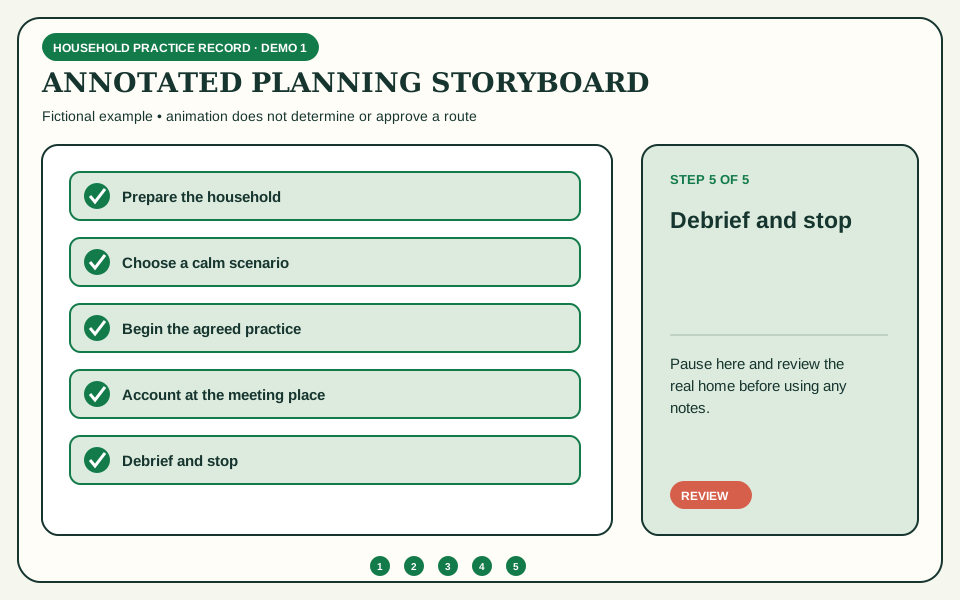
Make the finish of every drill unambiguous: gather, count, call from safety, and never go back.
The meeting place should be fixed, memorable, a safe distance in front of the home, and clear of responding vehicles. NFPA gives examples such as a neighbor's house, mailbox, light post, or stop sign, but adults must assess traffic and local hazards. Everyone goes there rather than scattering to cars or nearby yards.
Assign one adult to check names at the meeting place. The check happens outside; nobody delays leaving to search rooms or complete a count indoors. Include visitors and expected household members, while noting who was deliberately absent from the exercise. A printed list can help, but retrieving it must not delay escape.
Practice the call as words, not a false emergency call. From the safe meeting place, the designated adult can state the home address, nature of the emergency, and whether anyone may be inside. NFPA advises making the street number clearly visible from the road. Use the actual emergency number only for a real emergency.
Once out, stay out. NFPA instructs people never to return to a burning building and to tell the dispatcher when someone is missing. This applies to people, pets, phones, medication, keys, and possessions. Firefighters have the skills and equipment to conduct rescue; a householder does not.
Accountability is not a blame exercise. If a participant goes to the wrong location, the plan or teaching needs improvement. Ask what landmark they followed and whether the meeting place was clearly pictured. Correct maps and wording, then rehearse again another day rather than repeating until everyone is fatigued.
End the exercise explicitly. The drill leader announces that practice is complete only after all participants are accounted for and no actual hazard exists. This prevents someone from interpreting a return indoors as permission to re-enter during a real alarm. Debrief at a calm location and keep the stay-out distinction clear.
Consider: Never place a real test call to emergency services. In an actual emergency, call from safety, report anyone missing, and do not re-enter.
Sources: NFPA: Escape planning, U.S. Fire Administration: Escape planning, Ontario Association of Fire Chiefs: Fire escape plans
Run the outside accountability check
04 / household planning
Print a drill record and improvement log
Capture observations, assign corrections, and schedule review without issuing a readiness score.
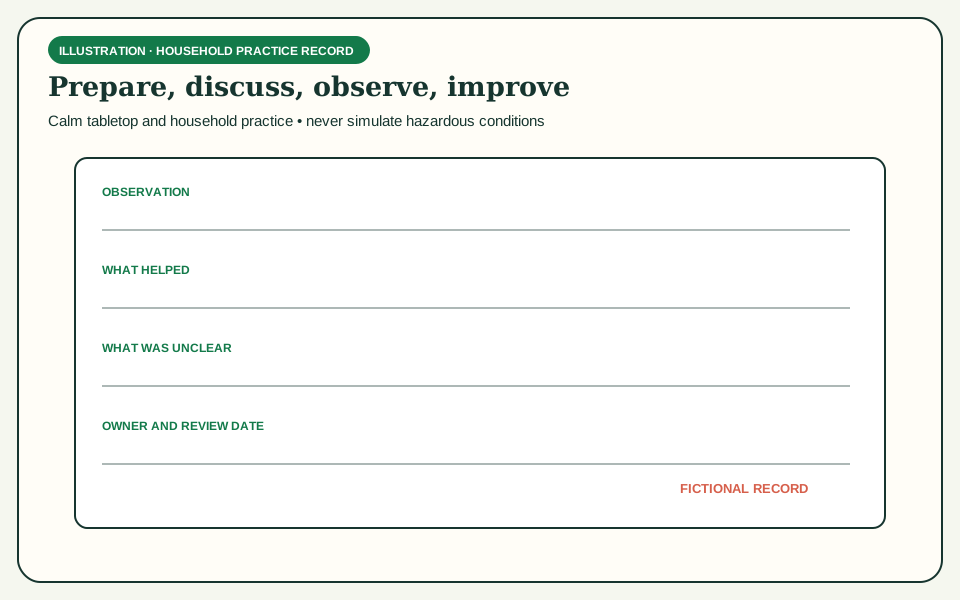
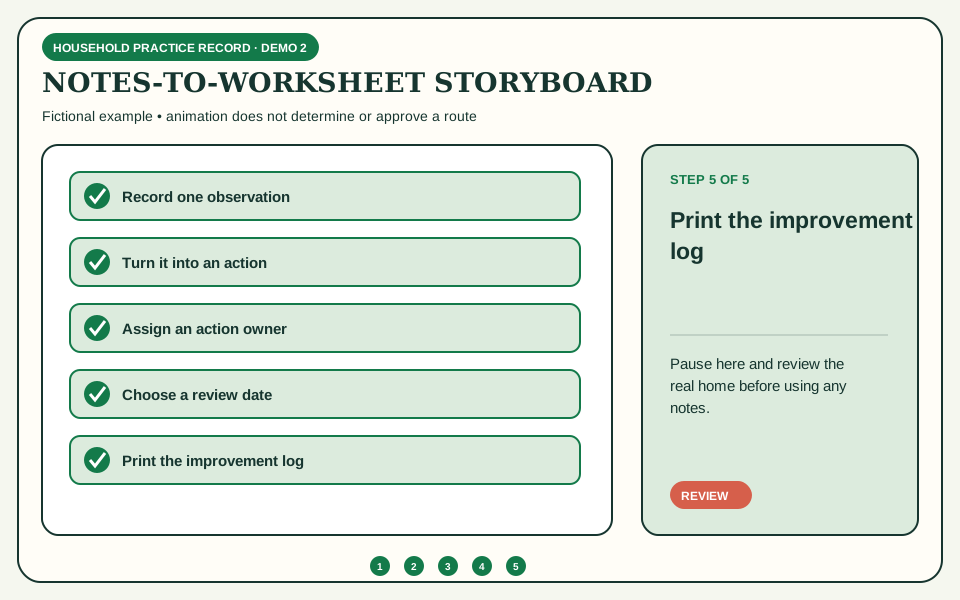
Record the date, participants, scenario, route practiced, and whether the signal, assistance, meeting, and accountability steps worked as intended. Use neutral observations such as “hall box narrowed route” or “meeting symbol unclear.” Avoid judgments about a person's courage, speed, or competence.
Separate immediate corrections from questions needing expertise. Move ordinary clutter now. Ask an alarm professional about notification, management about building instructions, or a qualified professional about an inaccessible threshold or alternative. A drill leader should not invent an answer to make the form look complete.
If you record elapsed time, treat it as context rather than a pass/fail score. NFPA and Red Cross materials stress the very limited time available in home fires, but a fast practice does not validate routes, alarms, support, or behavior in smoke. Never encourage running, skipping mobility support, or unsafe maneuvers to improve a number.
Document whether the scenario remained safe and whether anyone stopped it. A stop can show that participants used sound judgment. Record distress, pain, weather, loose flooring, or a real alarm as reasons to redesign or postpone. Do not conceal adverse observations behind a completion badge.
Assign each action an owner and target date. Examples include clearing the hall tonight, replacing an outdated map this weekend, asking the landlord about alarm meanings, or scheduling local fire-service outreach. At the next review, close an item only when the responsible person verifies the change.
Keep the record private and replace obsolete copies. It may contain names, support notes, or schedules that do not belong in analytics or public storage. Print or save it intentionally, then clear shared-device entries. Repeat practice after meaningful changes and at the household's planned interval.
Consider: Completion and elapsed time do not certify a plan. Do not store sensitive support or schedule information publicly, and resolve technical questions with responsible professionals.
Sources: NFPA: Escape planning, American Red Cross: Home fire escape planning, U.S. Fire Administration: Escape planning
Enter observations for an improvement log
Up to 1,000 characters per field. Entries remain only in this page until you leave or refresh.
Review or print your worksheet
Preview current entries and blank writing lines. Printing opens your browser’s print dialog, where you can choose a printer or “Save as PDF.”
Continue planning
Related household resources
Questions and worksheet
Home Fire Drill Checklist and Improvement Log FAQ
How often should a household practice?
NFPA recommends practicing a home fire drill at least twice a year, including at night and during the day. Review and practice sooner after route, bedroom, alarm, assistance, household, or building-instruction changes. Adapt the method so it remains safe and appropriate.
Should a drill be a surprise?
Preparation is generally safer and more instructive, especially for children and people with sensory, cognitive, health, or mobility needs. Explain the signal and stop conditions. A surprise does not recreate a fire reliably and can cause distress or injury.
Should we block the main exit to test the second route?
No. Use a map card or verbal scenario. Physically blocking an exit creates risk. Walk an alternative only if adults have already assessed it and the movement is safe; windows, ladders, stairs, transfers, and special equipment need qualified review.
Is a two-minute drill a passing result?
No. Authoritative sources warn that escape time can be very limited, but a practice duration is not a compliance or safety score. A fast result cannot prove alarm coverage, route viability, assistance, or real-fire behavior. Never race or omit support.
What if someone is missing at the meeting place?
In a real emergency, tell the dispatcher and firefighters the person's last known information and stay outside. Do not re-enter. During a drill, confirm whether the person was an expected participant without sending anyone inside, then improve the roster process.
How should high-rise residents practice?
Obtain the building-specific emergency plan and ask management or the fire service about alarms, stairs, elevators, doors, refuge provisions, and evacuation strategy. Do not enter smoke or apply universal evacuate or stay-put guidance. Tabletop review may be the appropriate safe exercise.