(775) 317-4488|Need help with your map? Call or chat with us!support@oshamap.com

Q: What OSHA standards apply to commercial buildings evacuation maps?

Quick Answer:

Commercial Buildings facilities must comply with 29 CFR 1910.36 for Emergency Action Plans, requiring posted evacuation maps with exit routes, fire extinguisher locations within 75-foot travel distance, assembly areas, and emergency equipment markers. Additional standards including 29 CFR 1910.37, 29 CFR 1910.38, NFPA 101, IBC Chapter 10 may apply based on facility hazards.

🏬

Evacuation Maps for Commercial Office Buildings

Multi-Tenant Commercial Property Evacuation Planning - Create Compliant Maps in Seconds

AI-assisted draft evacuation maps for commercial office buildings — multi-tenant floors, atrium / lobby zones, stairwell-pressurized cores, elevator-recall floors. Built for property managers and facilities directors; supervisor review required before posting. Generate professional maps free and instant with our AI-powered map maker.

Free instant preview • No credit card • Download in seconds
3 Simple Steps:
1Upload Floor Plan
2Select State & Industry
3Get Your Map
🏢Trusted by 7,500+ businesses nationwide🇺🇸Used in all 50 States🗺️Over 15,000 evacuation maps generated🔒Built on secure, encrypted infrastructureOSHA-aligned US standards

Get Your Free OSHA Risk Assessment

Identify compliance gaps specific to Commercial Buildings in minutes. Our quick assessment helps you understand your evacuation planning requirements.

Start Free Assessment

Commercial Buildings Workplace Safety Compliance Generator

Upload your floor plan and get a professional OSHA-aligned commercial buildings evacuation map in seconds

📊 5 Free Maps Left

Create Your Commercial Buildings Evacuation Map

✏️
High ContrastUse dark ink on white paper. Bold lines help our AI detect walls accurately
📐
Top-Down AnglePhotograph from directly above — tilted angles distort the geometry
🏷️
Label RoomsWrite "Exit", "Storage", "Breakroom" etc. — our AI reads your labels for compliance
🔍
Full Floor PlanCapture the entire layout including all walls, doors, and exits — no cropping
🚪
Mark ExitsCircle or label exit doors with a red dot or "EXIT" text for best detection
💡
Good LightingAvoid shadows and glare — even lighting produces the sharpest results
📁

Drag & drop your floor plan here

or

PNG, JPG, HEIC, TIFF, BMP, PDF - Hand-drawn sketches work too!

Edit your map for free.
Move, resize, and recolor every exit sign, route, and icon.
Create a free account to save and download in HD. No credit card required.
FREE
🔒Your files are private: never shared, stored temporarily, deleted automatically.

Compliance Options

🔥 NEW

Customize Your Map

Add special requests for your safety map - tell our AI exactly what you need!

  • 🎯Add specific details like "Mark fire extinguisher near kitchen"
  • 📍Request specific zones: "Highlight assembly point in parking lot"
  • 🏥Add safety equipment: "Include AED location near reception"
0/2000

Quick Add:

Frequently Asked Questions

Is this evacuation map generator really free?

Yes — you can generate your first OSHA-aligned evacuation map draft completely free. Just upload a floor plan and our AI drafts a professional map in about 30 seconds. No credit card required.

Are the generated maps aligned with OSHA?

Our AI drafts maps that follow OSHA 29 CFR 1910.36–37 and NFPA 101 Life Safety Code standards. Every map includes clearly marked exits, fire extinguisher locations, assembly points, and directional evacuation arrows. Supervisor review is required before posting to your facility.

What file formats can I upload?

We accept JPG, PNG, and PDF floor plans. For best results, use a clear, high-resolution image of your floor plan with visible walls, doors, and rooms.

How long does map generation take?

Most maps are generated in 20–40 seconds. Complex multi-floor plans may take slightly longer. You can download your map immediately after generation.

Can I edit the map after generation?

The generated map is a high-resolution image you can download and print. For custom edits or enterprise features like multi-floor support and branded maps, check our pricing plans.

Is my floor plan data secure?

Yes. All uploads are encrypted in transit (TLS 1.3) and processed in secure cloud environments. We do not share your floor plans with third parties.

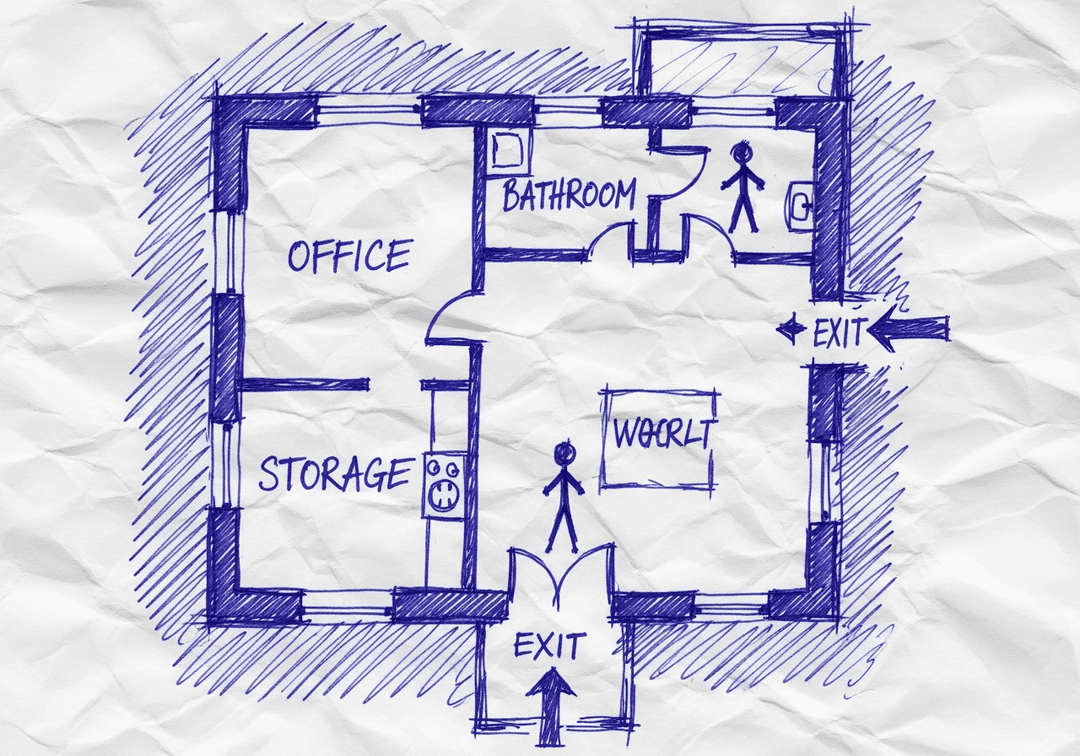
From Napkin Sketch to Professional Commercial Buildings Evacuation Map

Our AI creates professional evacuation maps specifically designed for Commercial Buildings facilities in seconds

Works with photos, scans, PDFs, CAD files, or even hand-drawn napkin sketches

  • OSHA/NFPA-Aligned Draft
  • Instant Results (~30 sec)
  • Print-Ready (11x8.5" or 17x11")

Why Commercial Buildings Professionals Choose Our AI Map Generator

Do I need design skills to create an evacuation map?

No design skills are required. Our AI understands hand-drawn floor plans, smartphone photos, scanned blueprints, and PDF documents. Simply upload any representation of your facility layout and receive a professional-grade emergency evacuation map instantly.

Are the generated maps OSHA-aligned?

OSHAMap is designed to help users organize key evacuation-planning information commonly associated with OSHA 29 CFR 1910.38 — clearly marked exit routes, fire extinguisher locations within 75-foot travel distance, assembly points, YOU ARE HERE markers, and accessibility accommodations per ADA guidelines. Each draft must be reviewed and verified for the actual workplace by the employer, safety officer, or AHJ before posting.

Can I update my evacuation map after renovations?

Yes, unlimited revisions are included. If you renovate your office or add a new emergency exit, simply re-upload your updated floor plan and generate a new compliant map instantly. All free maps include unlimited regeneration so you always have current evacuation documentation.

What types of buildings can use this evacuation map generator?

Our generator works for any building type including warehouses, manufacturing plants, healthcare facilities, schools, retail stores, and office buildings. The AI adapts to any facility size and layout, generating appropriate exit routes, fire safety equipment placement, and assembly point locations.

Industry-Specific Expertise

Commercial Buildings: Operational Safety That Drives Excellence

Operational safety insights designed specifically for Commercial Buildings professionals

Operational Realities & Best Practices

Daily Operations
Challenge:Balancing productivity with safety procedures
Best Practice:Integrate safety checkpoints into standard workflows
Staff Coordination
Challenge:Ensuring all team members understand emergency roles
Best Practice:Regular cross-training and documented role assignments
Resource Management
Challenge:Maintaining safety equipment and supplies
Best Practice:Preventive maintenance schedules and inventory management

Safety-Integrated Workflow

1
Shift Start
Safety briefing and hazard awareness
Immediate recognition of current conditions
2
Operations
Continuous hazard monitoring
Early identification of emerging risks
3
Shift End
Safety review and handoff
Continuity of safety awareness

Critical Equipment Zones & Requirements

Primary Work Area

Hazards:
  • Standard operational hazards
Map Requirements:
  • Clear egress paths
  • Equipment safety guards
  • Emergency equipment access

Storage Areas

Hazards:
  • Material handling
  • Access obstructions
Map Requirements:
  • Organized storage systems
  • Clear pathways
  • Proper labeling

Common Areas

Hazards:
  • Slip/trip hazards
  • Congestion
Map Requirements:
  • Regular housekeeping
  • Clear wayfinding
  • Emergency signage

Shift-Specific Considerations

Standard Hours
Risks: Peak activity periods, Visitor presence
Mitigations: Adequate staffing, Clear procedures for visitors
Extended Hours
Risks: Fatigue, Reduced supervision
Mitigations: Break requirements, Enhanced communication protocols

Seasonal Factors

Peak Season
Increased activity and potential for shortcuts
Reinforced safety messaging and additional training
Off-Peak
Reduced staffing may affect emergency response
Cross-training and updated emergency contacts

Technology Integration for Safety

Safety Management Systems
Digital tracking of safety metrics
🛡️Data-driven improvement decisions
Communication Systems
Emergency notification capability
🛡️Rapid information dissemination

Get Your Commercial Buildings Evacuation Map Now

Industry-specific compliance in under 2 minutes. All commercial buildings hazards and OSHA requirements included.

Trusted by commercial buildings facilities nationwide

See What You'll Get

Real examples of AI-generated OSHA-aligned evacuation maps

Corporate Office - California - OSHA-aligned evacuation floor plan with marked exits and fire safety equipment
🔍 View Full Size

Corporate Office - California

TechnologyCalifornia
Distribution Center - Texas - OSHA-aligned evacuation floor plan with marked exits and fire safety equipment
🔍 View Full Size

Distribution Center - Texas

WarehousingTexas
Medical Center - New York - OSHA-aligned evacuation floor plan with marked exits and fire safety equipment
🔍 View Full Size

Medical Center - New York

HealthcareNew York
Restaurant - Florida - OSHA-aligned evacuation floor plan with marked exits and fire safety equipment
🔍 View Full Size

Restaurant - Florida

RestaurantFlorida

Ready to create your own professional evacuation map?

Register for 1 free file upload with 5 regenerations
🏬

Commercial Buildings Safety Requirements

Industry Fatality RateVaries by specific operations
Injury RateIndustry average: 2.8 per 100 workers
Industry BenchmarkLeading Commercial Buildings facilities maintain 100% evacuation drill completion

🚨 Top Safety Incidents

  • Slips and falls
  • Ergonomic injuries
  • Fire emergencies

📚 Required Training

Emergency EvacuationFire Extinguisher UseFirst Aid/CPR

🔥 Emergency Scenarios

Fire EvacuationSevere WeatherMedical Emergency

✅ Compliance Checklist

  • Posted evacuation maps
  • Clear exit routes
  • Emergency contact lists
  • Annual drill documentation
"

Cut our map update time from 6 hours to 10 minutes.

★★★★★
Sarah M., Hospital Safety Director

Create a professional evacuation map designed specifically for Commercial Buildings facilities

✓ Industry-specific hazards marked✓ OSHA-aligned layout✓ Print-ready in seconds

Unique Hazards in Commercial Buildings

⚠️

Multi-tenant floors with conflicting EAP postings

⚠️

Atrium open-floor smoke movement

⚠️

Stairwell pressurization failures

⚠️

Elevator recall blocking floor egress

⚠️

Single-occupant after-hours pathways

OSHA Regulations for Commercial Buildings

Commercial Buildings facilities must comply with multiple federal and state regulations:

📋29 CFR 1910.36/.37/.38
📋NFPA 101 — Life Safety Code
📋IBC Chapter 10 — Means of egress
📋Local fire marshal posting & drill requirements

Key Requirement: Under 29 CFR 1910.38, commercial buildings facilities must have written Emergency Action Plans with documented evacuation procedures. See our complete OSHA requirements guide for detailed compliance checklists.

Common OSHA Violations in Commercial Buildings

Avoid these frequently cited violations during OSHA inspections:

  • Tenant-suite maps not matching base-building EAP
  • Stair re-entry floors not labeled
  • Elevator banks shown as egress (Code: not permitted)
  • Assembly point inside the building footprint

Generate a compliant evacuation map with our to address many of these common issues.

⚠️ OSHA COMPLIANCE ALERT

Commercial Buildings OSHA Compliance Alert

Commercial Buildings industry fatality rate: 3.5 per 100,000. 150 workplace deaths annually.

💀3.5 per 100,000Fatality Rate
🩹2.8 per 100Injury Rate
☠️150Annual Deaths
🏥27,734Annual Injuries
🚨

OSHA Penalty Structure - Know Your Risk

Other-than-SeriousUp to $16,131Per violation
Serious ViolationUp to $16,131Per violation
Willful / RepeatUp to $161,323Per violation
Failure to Abate$16,131/dayAfter citation deadline

Avoid costly penalties with compliant evacuation maps

⚠️

Top OSHA Violations in Commercial Buildings

Commercial Buildings sees 8+ common violation types. Is your facility compliant?

#129 CFR 1910.37

Exit Routes - Obstructed or inadequate emergency exits

Frequency:12% of general industry inspections citations
Typical Penalty:$3,500-$12,000
✓ Prevention:
  • Keep exits unobstructed
  • Maintain illuminated exit signs
#229 CFR 1910.38

Emergency Action Plans - Missing or inadequate EAP

Frequency:11% of general industry inspections citations
Typical Penalty:$4,000-$14,000
✓ Prevention:
  • Develop written EAP
  • Train employees on procedures
#329 CFR 1910.157

Fire Extinguishers - Inspection and training requirements

Frequency:10% of general industry inspections citations
Typical Penalty:$3,000-$10,000
✓ Prevention:
  • Conduct monthly visual inspections
  • Annual maintenance by certified professional
#429 CFR 1910.1200

Hazard Communication - Chemical labeling and SDS requirements

Frequency:9% of general industry inspections citations
Typical Penalty:$4,500-$15,000
✓ Prevention:
  • Maintain updated SDS for all chemicals
  • Train employees on hazard labels
#529 CFR 1910.303

Electrical Safety - Wiring and equipment hazards

Frequency:8% of general industry inspections citations
Typical Penalty:$5,500-$18,000
✓ Prevention:
  • Maintain proper clearances
  • Use proper covers and guards
#629 CFR 1910.22

General Industry safety violation

Frequency:7% of general industry inspections citations
Typical Penalty:$5,000-$15,000
✓ Prevention:
  • Develop compliance program
  • Train employees
🗺️

Missing Evacuation Maps = OSHA Violation

29 CFR 1910.38 requires emergency action plans with posted evacuation routes. Generate compliant maps in minutes.

Don't Wait for an OSHA Inspection

Get Your Commercial Buildings Evacuation Map Today

Professional, OSHA-aligned maps generated in minutes. Avoid penalties up to $161,323 per violation.

View Pricing
✓ OSHA-Aligned✓ Print Ready✓ AI-Powered✓ Used by 47,000+ Businesses

What Your Commercial Buildings Evacuation Map Includes

🧯

Fire Extinguisher Locations

Strategically placed per OSHA 75-foot travel distance requirements

🚪

Emergency Exits

Clear, prominent EXIT signs at 1.5" width for easy visibility

➡️

Evacuation Routes

Lime green arrows showing the safest path to exits

👥

Assembly Points

Clearly marked gathering locations outside the building

📍

YOU ARE HERE

Bold markers to help occupants orient themselves quickly

🏥

First Aid Stations

Marked locations for emergency medical supplies

Safety Professionals in Commercial Buildings

Join other safety leaders using OSHAMap

Commercial Buildings Hazards & Emergency Planning

Understanding risks specific to commercial buildings facilities

⚠️

Multi-tenant occupant-load confusion

Multi-tenant occupant-load confusion requires specific safety protocols and emergency planning.

Reference: 29 CFR 1910.38
⚠️

Atrium / lobby cross-floor smoke spread

Atrium / lobby cross-floor smoke spread requires specific safety protocols and emergency planning.

Reference: 29 CFR 1910.38
⚠️

Stairwell pressurization failures

Stairwell pressurization failures requires specific safety protocols and emergency planning.

Reference: 29 CFR 1910.38
⚠️

Elevator-recall conflicts during evac

Elevator-recall conflicts during evac requires specific safety protocols and emergency planning.

Reference: 29 CFR 1910.38
⚠️

After-hours single-occupant egress

After-hours single-occupant egress requires specific safety protocols and emergency planning.

Reference: 29 CFR 1910.38

Commercial Buildings OSHA Compliance Requirements 2025

Key regulatory requirements for commercial buildings facilities

📋

29 CFR 1910.36

Specific compliance requirements for commercial buildings operations and worker safety.

📋

29 CFR 1910.37

Specific compliance requirements for commercial buildings operations and worker safety.

📋

29 CFR 1910.38

Specific compliance requirements for commercial buildings operations and worker safety.

📋

NFPA 101

Specific compliance requirements for commercial buildings operations and worker safety.

📋

IBC Chapter 10

Specific compliance requirements for commercial buildings operations and worker safety.

Commercial Buildings Fire Safety & Evacuation Requirements

🚨

Industry-Specific Emergencies

Commercial Buildings facilities face unique emergency scenarios including multi-tenant occupant-load confusion and atrium / lobby cross-floor smoke spread. Professional evacuation maps ensure employees know exactly where to go during any emergency.

📋

OSHA Compliance

OSHA requires commercial buildings facilities to maintain written emergency action plans per 29 CFR 1910.36. Clearly posted evacuation maps are an essential component of these plans.

👷

Worker Protection

With hazards like elevator-recall conflicts during evac and after-hours single-occupant egress, commercial buildings workers need clear guidance to evacuate safely. Our maps highlight all exits, fire extinguishers, and assembly points.

💰

Avoid Costly Violations

OSHA violations for inadequate emergency planning can cost up to $16,550 per violation. Professional evacuation maps help commercial buildings facilities stay compliant.

Commercial Buildings Emergency Preparedness Best Practices

Compliance tips for commercial buildings evacuation planning

1

Post Maps at Every Entrance

Place evacuation maps at eye level (4.5-5 feet) at every building entrance and in high-traffic areas like break rooms and lobbies.

2

Update After Layout Changes

Whenever you reconfigure workstations, add equipment, or modify exits, update your evacuation maps immediately to maintain accuracy.

3

Conduct Regular Drills

OSHA recommends evacuation drills at least annually. Use your maps during drills to reinforce evacuation routes with all employees.

4

Train New Employees

Include evacuation map orientation in new hire training. Every employee should know their nearest exit and assembly point on day one.

5

Account for Shift Workers

Commercial Buildings facilities often operate multiple shifts. Ensure all shifts have access to maps and are included in evacuation training.

6

Mark Hazard-Specific Equipment

For commercial buildings hazards like multi-tenant occupant-load confusion, clearly mark safety equipment locations on your maps.

Free Account Benefits

Create an Account to Unlock

📋

Map History Vault

Never lose a map again

🔄

Unlimited Regeneration

Perfect your evacuation plans

📊

Compliance Dashboard

Stay audit-ready 24/7

🤖

AI Recommendations

Proactive compliance insights

👥

Team Collaboration

Unified safety management

🔔

OSHA Alerts

Never miss an update

📥

Bulk Downloads

Save hours of work

🏆

Priority Support

Expert guidance included

No credit card required

STEP 1 OF 2

Get Free OSHA Compliance Resources

Enter your email to receive free checklists, guides, and compliance tips

"

The free compliance checklist helped us identify 5 safety gaps we didn't know existed!

— Sarah M.Safety Manager, California
256-bit encrypted
No spam, ever
Unsubscribe anytime

By continuing, you agree to our Privacy Policy

🔓 Free Account Bonus

Unlock 1 Free File Upload + 5 Regenerations

Create your free account in seconds and get instant access to professional, OSHA-aligned evacuation maps.

What You Get When You Register:

  • 1 Free File Upload + 5 Regenerations - Professional maps ready for printing
  • No Watermarks - Clean, presentation-ready evacuation maps
  • Personal Dashboard - Manage all your maps in one place
  • Save & Revisit Anytime - Access your maps from any device
  • OSHA-Aligned - Meets 29 CFR 1910.38 requirements
15,000+Maps Generated
4.9/5User Rating
100%Compliant
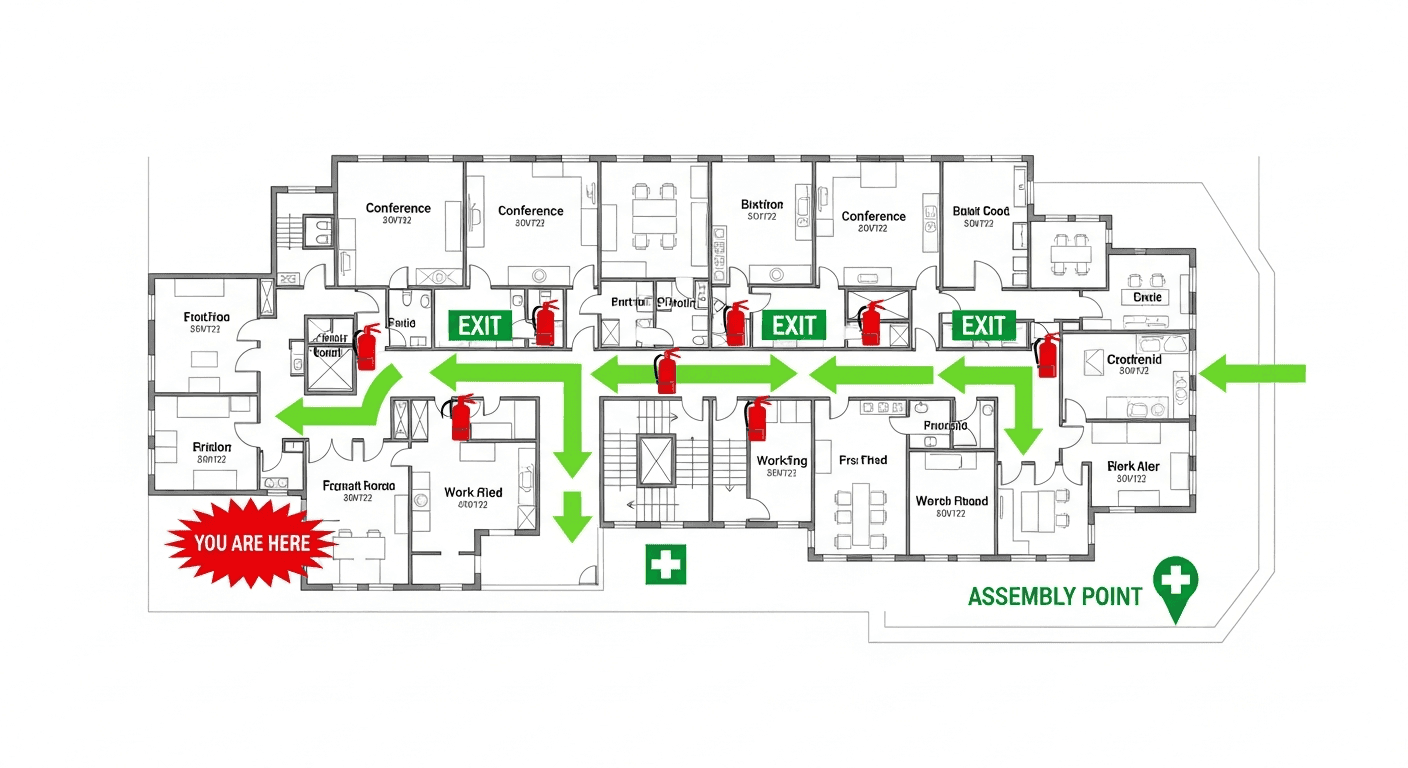
Sample Output
Sample Commercial Buildings OSHA-aligned evacuation floor plan showing emergency exits, fire extinguisher locations, and assembly points
🧯 Fire Extinguishers🚪 Exit Routes📍 You Are Here

No credit card required • Takes 30 seconds • Instant access

Ready to Protect Your Commercial Buildings Facility?

Get your professional OSHA-aligned evacuation map in under 2 minutes.

Commercial Buildings OSHA Evacuation Map FAQs

What OSHA standards apply to commercial buildings evacuation maps?
Commercial Buildings facilities must comply with OSHA standards including 29 CFR 1910.36, 29 CFR 1910.37, 29 CFR 1910.38, NFPA 101, IBC Chapter 10. The primary standard, 29 CFR 1910.36, requires written emergency action plans with evacuation procedures, exit route markings, and employee training. Our AI-generated maps automatically include all required elements for commercial buildings compliance, ensuring you meet all applicable standards.
What are the unique hazards in commercial buildings that affect evacuation planning?
Commercial Buildings facilities face specific hazards including multi-tenant occupant-load confusion, atrium / lobby cross-floor smoke spread, stairwell pressurization failures. These hazards require specialized evacuation routes that avoid high-risk areas, properly placed safety equipment, and clearly marked emergency assembly points away from danger zones. Our commercial buildings evacuation maps are designed to address these industry-specific challenges with appropriate exit routes and equipment placement.
How often must commercial buildings facilities update evacuation routes?
OSHA requires commercial buildings facilities to review and update evacuation plans whenever changes occur that affect egress or emergency procedures. Best practice for commercial buildings is quarterly reviews due to multi-tenant occupant-load confusion, atrium / lobby cross-floor smoke spread, stairwell pressurization failures risks. Maps should be immediately updated after equipment moves, layout changes, or when new hazards are introduced. Our platform makes updates fast and maintains version history.
What training is required for commercial buildings evacuation procedures?
Under 29 CFR 1910.36, commercial buildings employees must be trained on evacuation routes, assembly points, and their specific roles during emergencies. Training should cover recognition of multi-tenant occupant-load confusion, atrium / lobby cross-floor smoke spread, stairwell pressurization failures scenarios that may trigger evacuation. Annual refresher training is required, with additional training after any plan changes. Our maps include clear visual guides that support effective training.
How do I create an evacuation map for my commercial buildings facility?
Upload your floor plan to OSHAMap, select "Commercial Buildings" as your industry type, and our AI generates a professional OSHA-aligned evacuation map in under 2 minutes. The map automatically includes commercial buildings-specific elements like proper fire extinguisher spacing, exit routes that account for multi-tenant occupant-load confusion, and compliant assembly point locations.
Are commercial buildings evacuation maps suitable for fire inspections and OSHA audits?
Yes, our maps are specifically designed to meet all OSHA and fire code requirements for commercial buildings facilities. They include compliant exit routes, fire extinguisher locations at required 75-foot travel distance intervals, emergency equipment symbols per 29 CFR 1910.36, assembly points, AED locations, and first aid stations. Maps are print-ready in sizes appropriate for posting requirements.
What emergency equipment must be shown on commercial buildings evacuation maps?
Commercial Buildings evacuation maps must display fire extinguisher locations (Class ABC for general areas, specialized types for commercial buildings-specific hazards), fire alarm pull stations, emergency exits with travel distance compliance, first aid kit locations, AED positions, emergency eyewash stations where applicable, and designated assembly areas. Additional requirements under 29 CFR 1910.38 may apply. Our AI automatically places all required equipment symbols.
How many emergency exits are required for commercial buildings facilities?
Under OSHA 29 CFR 1910.36, commercial buildings facilities must have at least two exit routes to permit prompt evacuation of employees and other building occupants during an emergency. Additional exits are required when the occupant load, building configuration, or travel distance exceeds limits. For commercial buildings operations, factors like multi-tenant occupant-load confusion, atrium / lobby cross-floor smoke spread, stairwell pressurization failures may require additional exits. Exit routes must be located as far apart as practical and lead directly outdoors to a safe assembly area. Our maps automatically identify and mark all required exit routes.
What special considerations exist for commercial buildings evacuation plans?
Commercial Buildings facilities have unique evacuation considerations including: multi-tenant occupant-load confusion and atrium / lobby cross-floor smoke spread requiring specialized response protocols, industry-specific equipment that may block egress paths, compliance with 29 CFR 1910.37 for hazard-specific procedures, potential need for shelter-in-place zones, and coordination with specialized emergency responders. Our AI-powered generator accounts for these commercial buildings-specific factors when creating your evacuation map, ensuring proper exit routes around hazardous areas.