The Evolution of Evacuation Maps
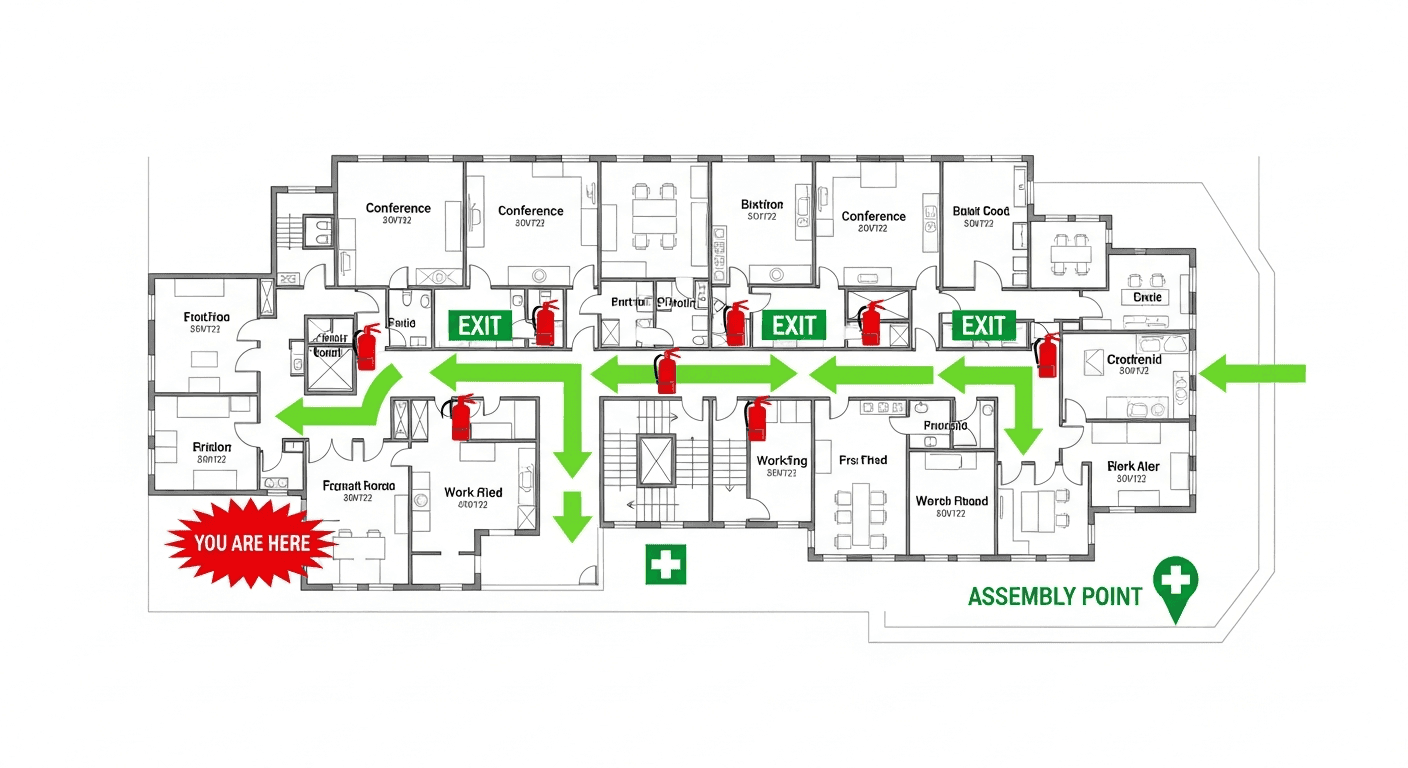
Traditional printed evacuation maps are being enhanced with digital technologies. QR codes on physical maps link to digital versions on smartphones. Digital displays show real-time route status. Integration with building systems can highlight blocked routes during actual emergencies. These technologies supplement (but do not replace) required physical maps.
Benefits of QR Code Integration
- Employees can access maps on personal smartphones
- Digital maps can zoom and provide floor-by-floor navigation
- Updates reflect immediately without reprinting
- Multi-language versions accessible via same QR code
- Can link to additional emergency information and contacts
- Supports visitors and delivery personnel unfamiliar with building
Digital Display Systems
Some modern buildings use digital displays for evacuation information. These systems can: show real-time route status, integrate with fire detection to highlight affected areas, provide countdown timers during evacuations, and display specific instructions for different emergency types. Digital displays require backup power and should be supplemented with physical maps.
Compliance Considerations
Important: Digital-only evacuation systems are NOT currently accepted as OSHA compliant. Physical posted maps remain required. Digital technologies should supplement physical maps, not replace them. During power outages or device failures, physical maps must remain accessible. Always maintain printed maps alongside digital systems.
Implementing QR Code Maps
- Generate QR codes linking to mobile-friendly map pages
- Include QR codes on physical posted maps
- Ensure linked pages work offline (Progressive Web App)
- Test QR codes regularly to ensure links remain valid
- Provide multi-language options via digital platform
- Include QR codes in new employee orientation materials