Floor-by-Floor Map Requirements
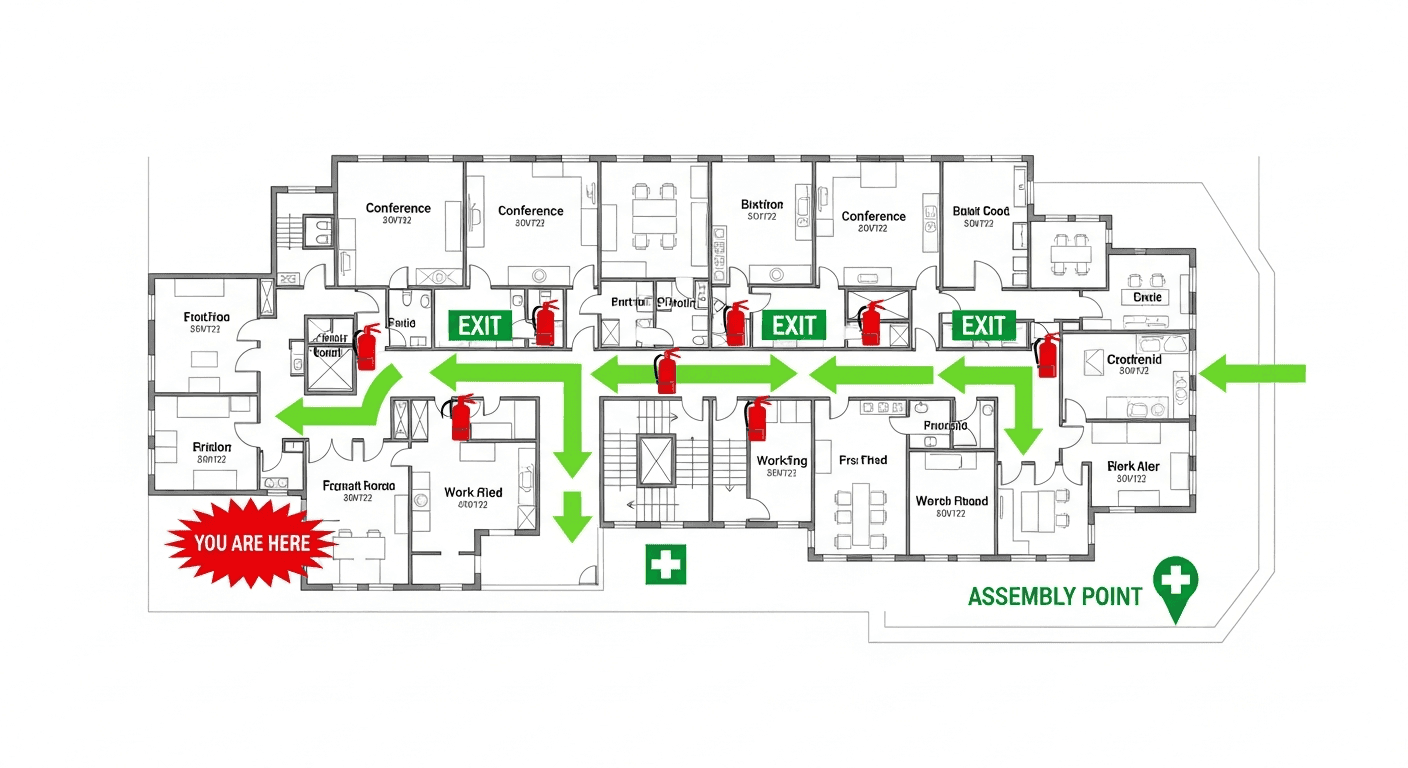
Each floor of a multi-story building needs its own evacuation map. Maps should show: routes to the nearest stairwell, alternate stairwell options, floor number clearly displayed, and how that floor connects to the overall building evacuation plan. Employees should know both the primary route and an alternate in case stairs are blocked.
Stairwell vs. Elevator Rules
- Stairwells are the primary means of evacuation for upper floors
- Elevators should NEVER be used during fire evacuations
- Evacuation maps must mark elevators as "NOT for evacuation use"
- Stairwells must be enclosed with fire-rated doors
- Each stairwell should be numbered or named for identification
- Maps should show which floors each stairwell serves
Assembly Points for Multi-Floor Buildings
Multi-floor buildings often designate a single outdoor assembly point for all floors, or separate zones for different sections of the building. Assembly points should be: far enough from the building to avoid falling debris, accessible for emergency vehicles, large enough for all occupants, and away from streets with heavy traffic.
Where to Post Multi-Floor Maps
- Near all stairwell entrances on each floor
- In elevator lobbies (with "do not use elevator" reminder)
- At main entrances to each floor
- In common areas like break rooms and conference rooms
- Near high-occupancy areas (10+ people)
- At wheelchair-accessible emergency areas
High-Rise Building Considerations
Buildings over 75 feet may have additional requirements under local fire codes, including: refuge floors, firefighter service elevators, voice evacuation systems, and defend-in-place strategies for certain populations. Consult your local fire marshal for high-rise specific requirements beyond federal OSHA standards.
Multi-Floor Evacuation Statistics
Average evacuation time adds 45 seconds per floor in high-rise buildings
Of building occupants cannot identify the nearest stairwell without signage
Multi-floor buildings take 2.5x longer to fully evacuate than single-story
Fire marshals require floor-specific evacuation maps for buildings over 3 stories
Expert Advice: Stairwell Strategy
The most dangerous assumption in multi-floor evacuations is that everyone will use the nearest stairwell. In reality, 60% of occupants head to the stairwell they normally use, regardless of their location during the emergency. Your evacuation maps need to override this instinct. Use bold, contrasting colors and large arrows pointing to the NEAREST stairwell from each map location. Number or name your stairwells consistently across all floors (Stairwell A, Stairwell B). During drills, deliberately have people evacuate using different stairwells so they learn multiple routes. One blocked stairwell shouldn't mean everyone is trapped.
Industry-Specific Multi-Floor Considerations
Office Buildings
- Designate floor wardens for each floor to coordinate evacuation
- Include conference room capacities to ensure headcount accuracy
- Mark printer rooms and server closets that may be occupied
- Show accessible routes for mobility-impaired employees
Hotels & Hospitality
- Post maps inside every guest room door per fire code
- Include room number ranges served by each stairwell
- Mark ice machine and vending alcoves on routes
- Show elevator lobby evacuation alternatives
Healthcare Facilities
- Include horizontal evacuation zones for defend-in-place
- Mark medical gas shutoff locations on each floor
- Show patient evacuation routes separate from visitor routes
- Include bed staging areas for non-ambulatory patients