What Is a Fire Escape Route?
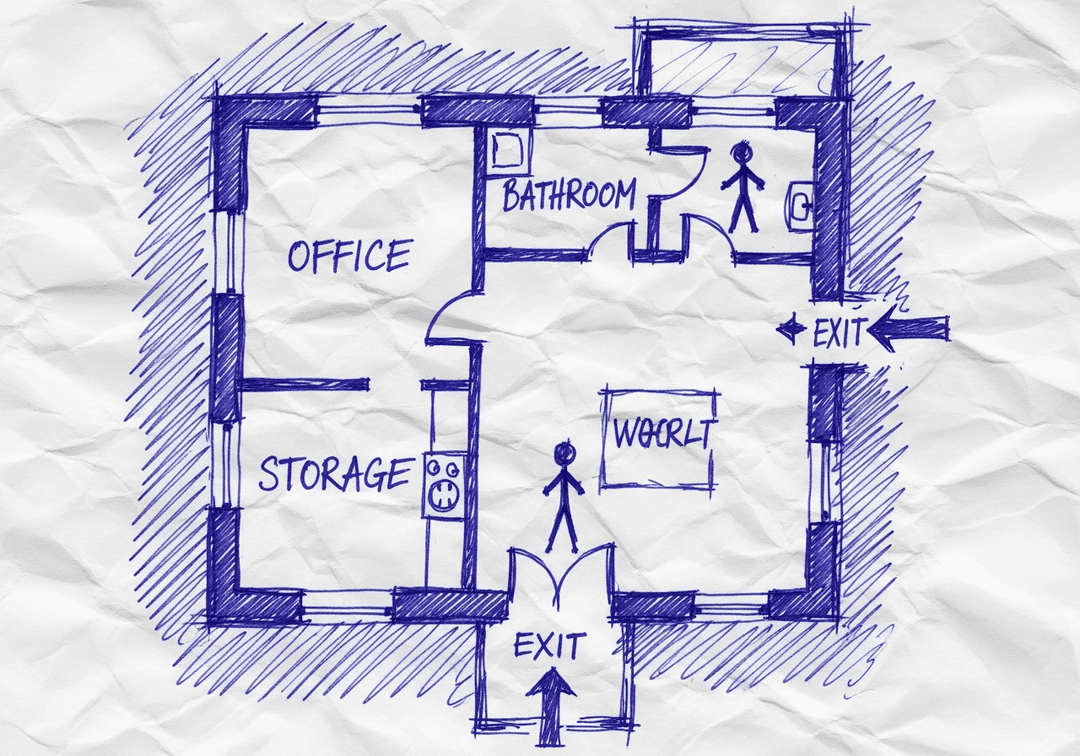
A fire escape route is a continuous, unobstructed path of travel from any point in a building to a public way or safe area outside. Under OSHA and NFPA standards, escape routes consist of three parts: the exit access (corridor, aisle, or room leading to an exit), the exit itself (door, stairway, or passage through the building envelope), and the exit discharge (path from the exit to the public way or assembly point). Every occupied space must have access to at least two separate escape routes to ensure occupants have an alternative if one route is blocked.
Primary vs Secondary Fire Escape Routes
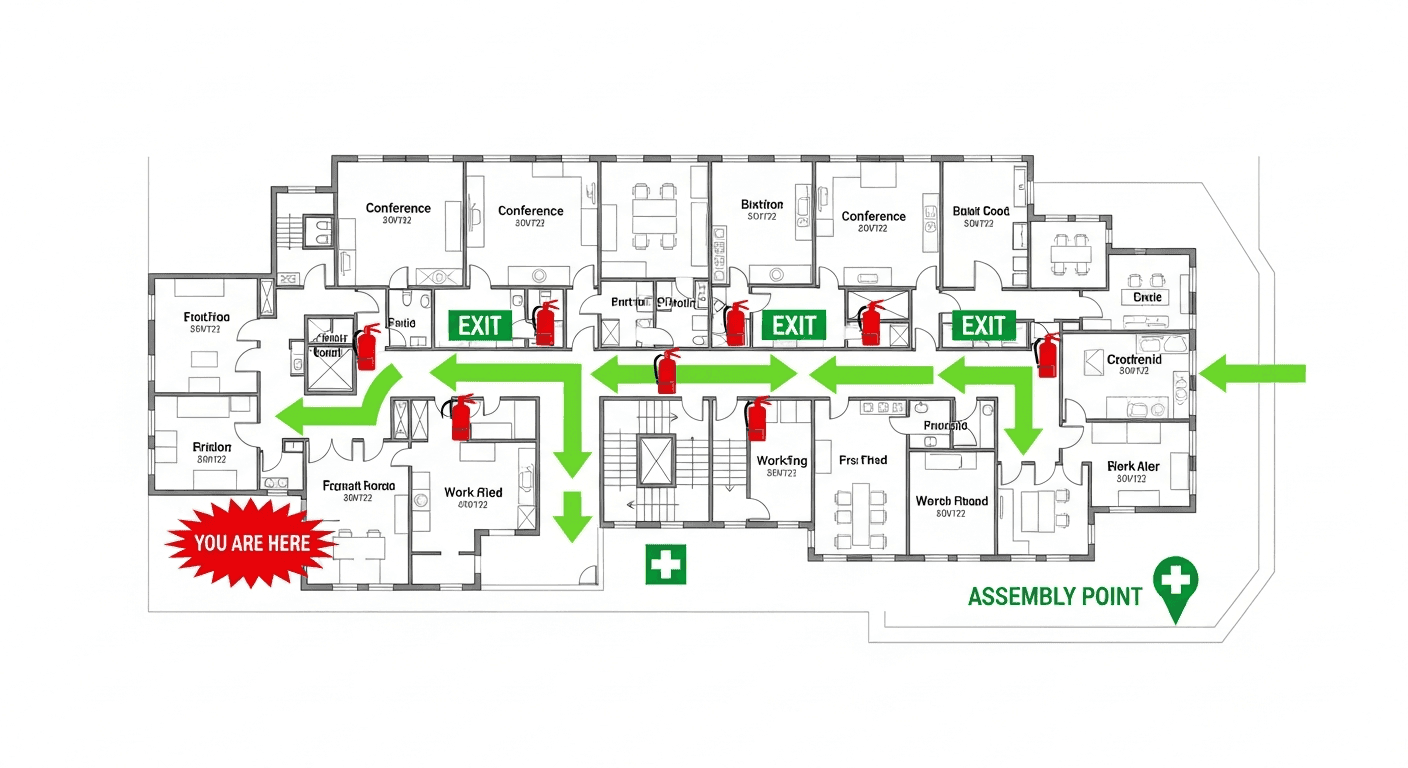
The primary escape route is typically the shortest and most direct path to safety from any given location. This is the route employees should use under normal circumstances. The secondary route provides an alternative when the primary route is blocked by fire, smoke, or other hazards. Both routes should be clearly marked on your evacuation map, often with primary routes shown in solid green arrows and secondary routes in dashed green arrows. NFPA requires these routes to be "remotely located," meaning they should be positioned so that both would not be blocked by a single fire event.
Fire Escape Route Requirements
- Minimum two escape routes from each work area (except very small spaces)
- Routes must be remotely located from each other (typically 1/2 diagonal distance)
- Minimum 28 inches wide for new construction (44 inches for main corridors)
- Routes must be kept clear at all times (no storage or obstructions)
- Adequate lighting in normal conditions and emergency backup lighting
- Exit doors must swing in direction of travel when serving 50+ occupants
- Routes must lead directly to exterior or safe area of refuge
Fire Escape Route Checklist
- Routes clearly marked with directional signage
- All exit doors unlocked from inside during business hours
- No dead-end corridors longer than 20 feet (varies by occupancy)
- Floor surfaces level and slip-resistant
- Stairways equipped with handrails on both sides
- Emergency lighting illuminates entire route path
- Exit doors equipped with panic hardware where required
- Assembly point designated outside building
Fire Escape Route Examples by Facility Type
Office Buildings
- Primary route: Main corridor to nearest stairwell
- Secondary route: Alternate corridor to opposite stairwell
- Open floor plans need marked aisle paths
- Conference rooms require two exits if over 50 occupants
Warehouses
- Primary route: Main aisle to personnel exit doors
- Secondary route: Cross-aisles to loading dock exits
- Routes must stay clear of forklift traffic patterns
- High-rack areas need routes at both ends of aisles
Retail Stores
- Primary route: Main customer aisle to front entrance
- Secondary route: Employee path to rear exit or loading area
- Fitting room corridors need marked escape paths
- Stockroom requires separate route to exterior
The Remote Location Rule Explained
NFPA 101 requires that when two exits are required, they must be placed at a distance from each other equal to at least one-half the length of the maximum diagonal dimension of the building or area being served. For example, in a 100-foot by 50-foot building with a diagonal of approximately 112 feet, the exits must be at least 56 feet apart. This ensures that a fire in one area will not block both escape routes simultaneously. Your evacuation map should reflect this separation by showing routes that lead to different areas of the building.
Common Fire Escape Route Problems
Watch for these frequent issues: Blocked routes from stored materials, furniture, or equipment. Propped-open fire doors that should remain closed. Routes that converge before reaching separate exits. Locked exit doors during business hours. Missing or non-functional emergency lighting. Routes that pass through hazardous areas without protection.
Fire Escape Route Quick Facts
Most occupied spaces require at least two separate routes
Minimum escape route width for new construction
Required backup illumination duration
Target time to reach assembly point