Beyond Fire: All-Hazards Planning
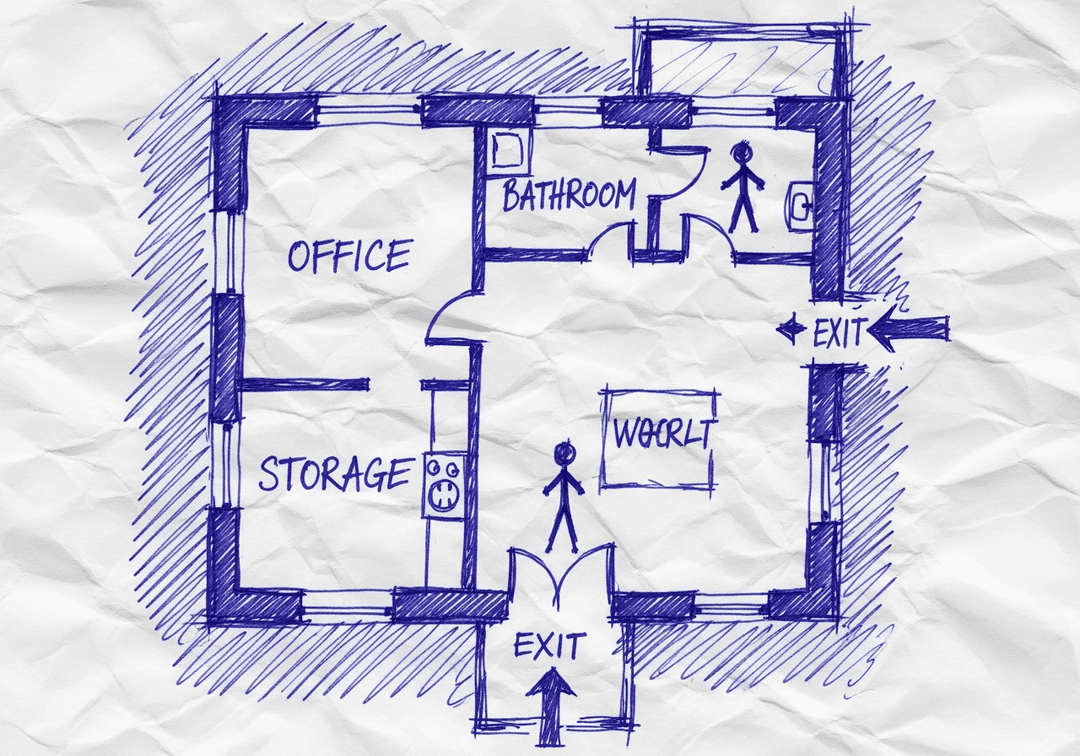
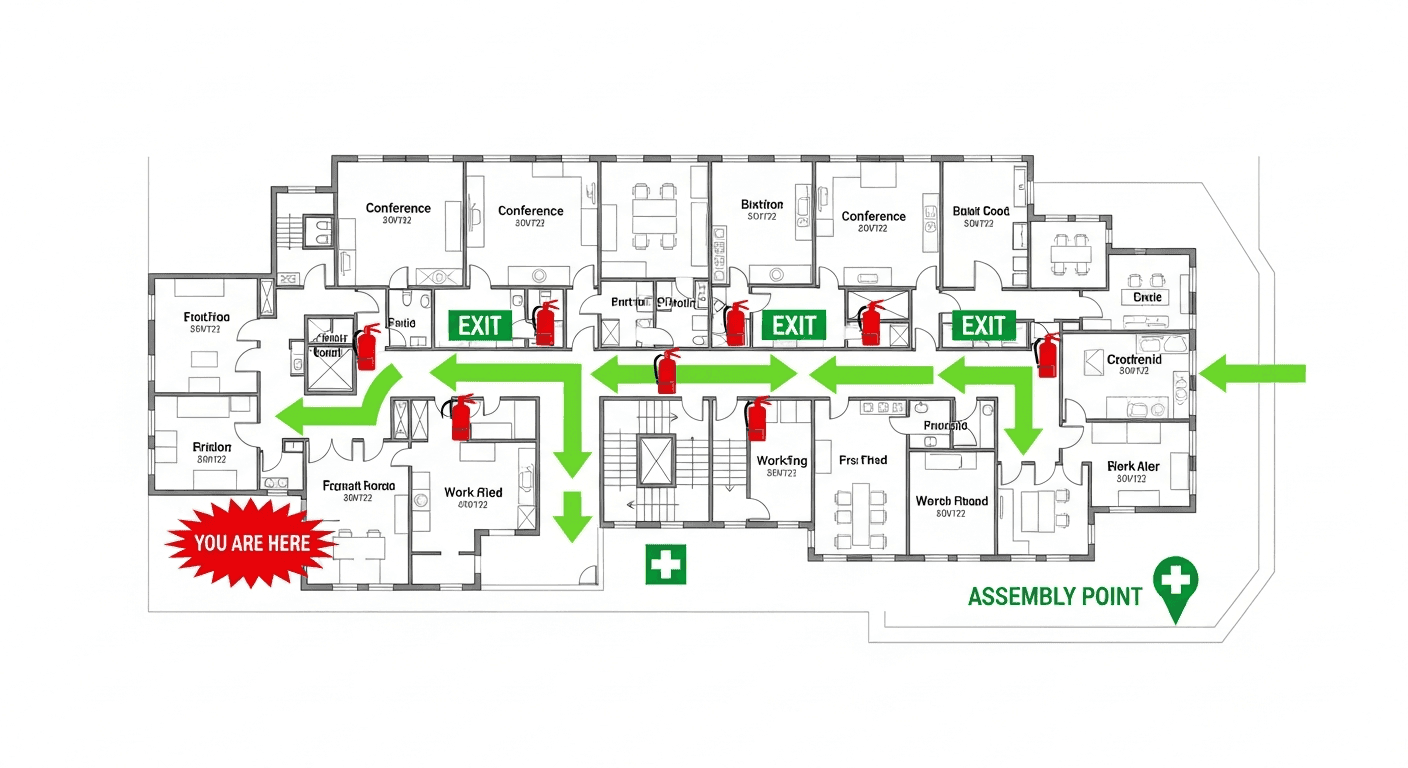
Modern emergency planning uses an "all-hazards" approach that prepares for multiple emergency types: fires, severe weather, hazmat incidents, medical emergencies, and active threats. Each emergency type may require different responses - sometimes evacuation, sometimes shelter-in-place, sometimes lockdown. Evacuation maps should support all response options.
Active Threat Response (Run-Hide-Fight)
- RUN: Know primary and secondary escape routes (same as fire)
- HIDE: Identify lockable rooms and shelter locations on maps
- FIGHT: Last resort only, not typically shown on maps
- Maps should show multiple exit options from each area
- Consider routes away from main corridors/common areas
- Identify rooms that can be secured from inside
Severe Weather Shelter Planning
- Identify interior rooms away from windows (tornado)
- Lowest floor locations for severe storms
- Avoid large open spaces (gymnasiums, cafeterias)
- Mark shelter areas on evacuation maps
- Capacity considerations for shelter areas
- Communication systems in shelter areas
All-Hazards Map Enhancements
- Clearly marked severe weather shelter areas
- Rooms suitable for lockdown/barricade identified
- Multiple exit routes from each location shown
- Hazmat-specific evacuation routes (upwind, uphill)
- Medical emergency response locations (AED, first aid)
- Communication device locations
- Legend explaining different emergency response zones
Training for Different Emergencies
Employees need training on when to evacuate vs. shelter vs. lockdown. Fire alarms mean immediate evacuation. Tornado warnings mean move to shelter. Active threat situations require real-time judgment (run if safe, hide if not). Regular drills for each scenario reinforce proper response.