Understanding OSHA Workplace Hazards
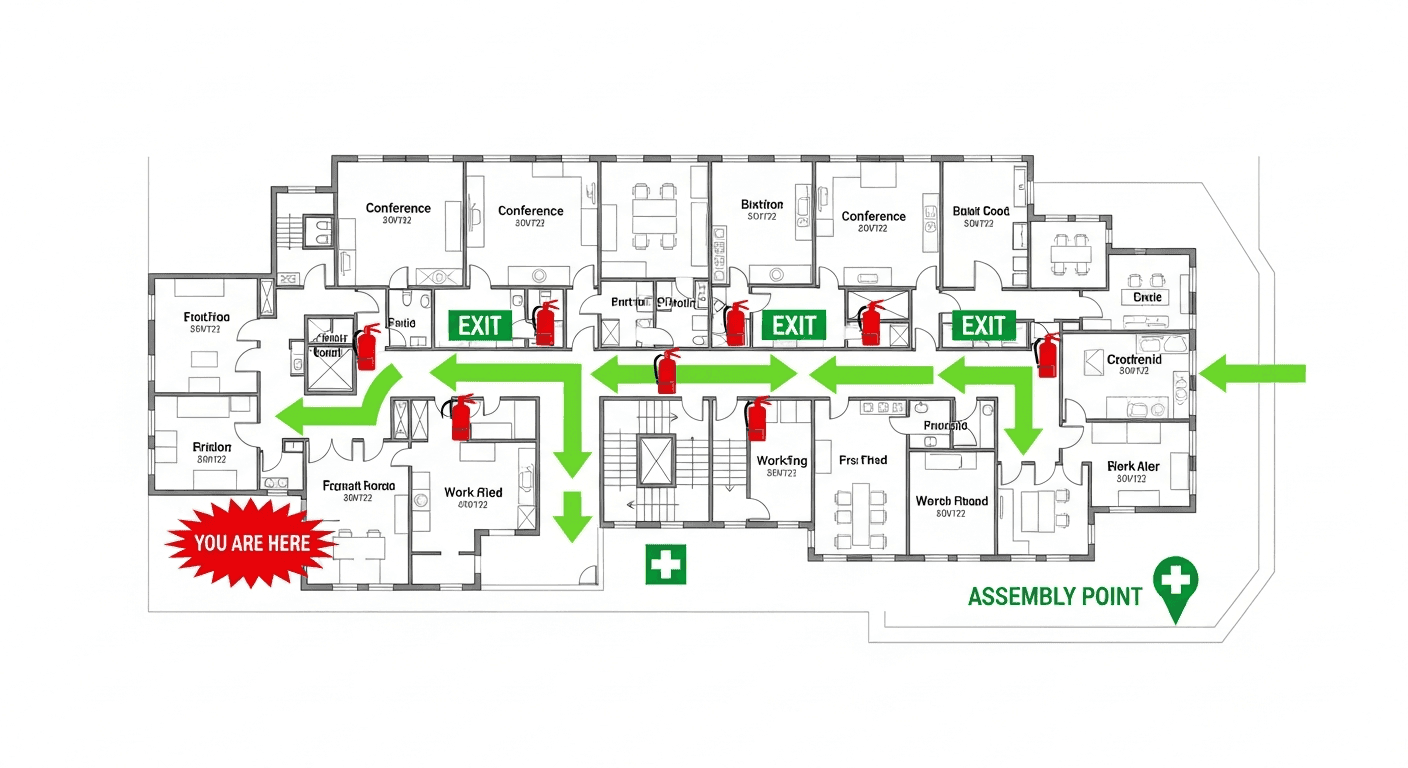
OSHA identifies workplace hazards as conditions or practices that could cause injury, illness, or death to workers. These hazards must be identified, documented, and controlled as part of your safety program. Visual hazard mapping on your evacuation plans helps employees quickly identify danger zones and navigate safely during both normal operations and emergencies. Facilities that map hazards experience significantly fewer workplace incidents according to safety research.
The Four Major OSHA Hazard Categories
- Physical Hazards: machinery, electricity, noise, temperature extremes, radiation
- Chemical Hazards: flammable materials, toxic substances, corrosives, carcinogens
- Biological Hazards: bacteria, viruses, mold, bloodborne pathogens, animal handling
- Ergonomic Hazards: repetitive motion, awkward postures, heavy lifting, vibration
Common Workplace Hazards to Map
- Electrical panels and high-voltage equipment
- Chemical storage areas and hazmat locations
- Machinery with pinch points or moving parts
- Hot surfaces and temperature extremes
- Confined spaces requiring special entry
- Areas with fall hazards (elevated platforms, pits)
- Locations with excessive noise requiring hearing protection
- Forklift and vehicle traffic zones
- Emergency shutoffs for gas, electric, and water
- First aid stations and emergency eyewash/shower locations
- Fire suppression system controls
Why Visual Hazard Mapping Works
Hazard mapping transforms abstract safety concepts into visual reality. When employees can see exactly where dangers exist, they develop spatial awareness that prevents accidents. Studies show that facilities using visual hazard maps experience up to 43% fewer workplace incidents compared to those relying solely on written policies. Mapping also supports emergency planningβduring evacuations, people can identify routes that avoid hazardous areas where chemical spills or equipment failures may pose additional danger.
Hazard Mapping by Industry
Manufacturing
- Mark machine guarding zones and lockout/tagout points
- Identify chemical storage and spill containment areas
- Show emergency shower and eyewash stations
- Highlight forklift traffic lanes and pedestrian walkways
- Mark hearing protection required zones
Office Buildings
- Identify electrical panel locations
- Mark server room and battery backup areas
- Show ergonomic assessment zones if applicable
- Highlight construction or renovation areas
- Mark chemical storage for cleaning supplies
Warehouses
- Show forklift and powered equipment zones
- Mark high-stack areas with fall hazards
- Identify loading dock danger zones
- Highlight chemical and flammable storage
- Show battery charging station ventilation areas
Color Coding Hazards on Your Map
Effective hazard maps use consistent color coding that employees can recognize instantly. Standard practice includes: RED for fire hazards and flammable storage, ORANGE for machine and electrical hazards, YELLOW for caution zones and trip hazards, PURPLE for radiation hazards, BLUE for safety information and first aid, and BLACK outlines for confined spaces. Your map legend should clearly explain each color and symbol. This coding should remain consistent across all your facility maps.
OSHA Hazard Communication Requirements
- Written hazard communication program maintained
- Safety Data Sheets accessible for all hazardous chemicals
- Labels on all hazardous material containers
- Employee training on hazard identification
- Hazard assessments documented and updated
- Personal protective equipment provided where required
- Exposure monitoring where applicable
How Hazard Mapping Reduces Incidents
Facilities with visual hazard maps show significant incident decreases
Mapped hazards are recognized 3x faster than text warnings
Workers feel safer knowing hazard locations
Cost per OSHA recordable injury that mapping can help prevent
Hazard Mapping Best Practices
Ensure your hazard map reflects current conditions. Common mistakes include: Not updating after equipment moves or new installations. Using unclear symbols without proper legend. Failing to train employees on map interpretation. Mapping only during initial setup and never reviewing. Not coordinating hazard zones with evacuation routes (routes should avoid passing through hazardous areas when possible).