OSHA vs NFPA: The Overlap
OSHA regulates workplace safety under federal law, while NFPA (National Fire Protection Association) creates fire safety codes adopted by states and municipalities. In practice, most businesses must comply with both. OSHA 1910.38 covers Emergency Action Plans while NFPA 101 (Life Safety Code) covers fire evacuation specifically. Fortunately, the requirements overlap significantly.
When Both Are Required
- All workplaces with >10 employees (OSHA EAP required)
- Buildings in jurisdictions that adopt NFPA codes (most states)
- Healthcare facilities (Joint Commission uses NFPA)
- Educational facilities (state fire codes)
- Any building requiring a fire inspection permit
Key Differences
| Feature | Type |
|---|---|
| Primary Focus | OSHA: All emergencies | NFPA: Fire specifically |
| Authority | OSHA: Federal law | NFPA: State/local adoption |
| Enforcement | OSHA: DOL inspectors | NFPA: Fire marshals |
| Training Focus | OSHA: Employee procedures | NFPA: Building occupants |
| Map Requirements | Similar: Both expect posted routes |
Creating a Compliant Hybrid Map
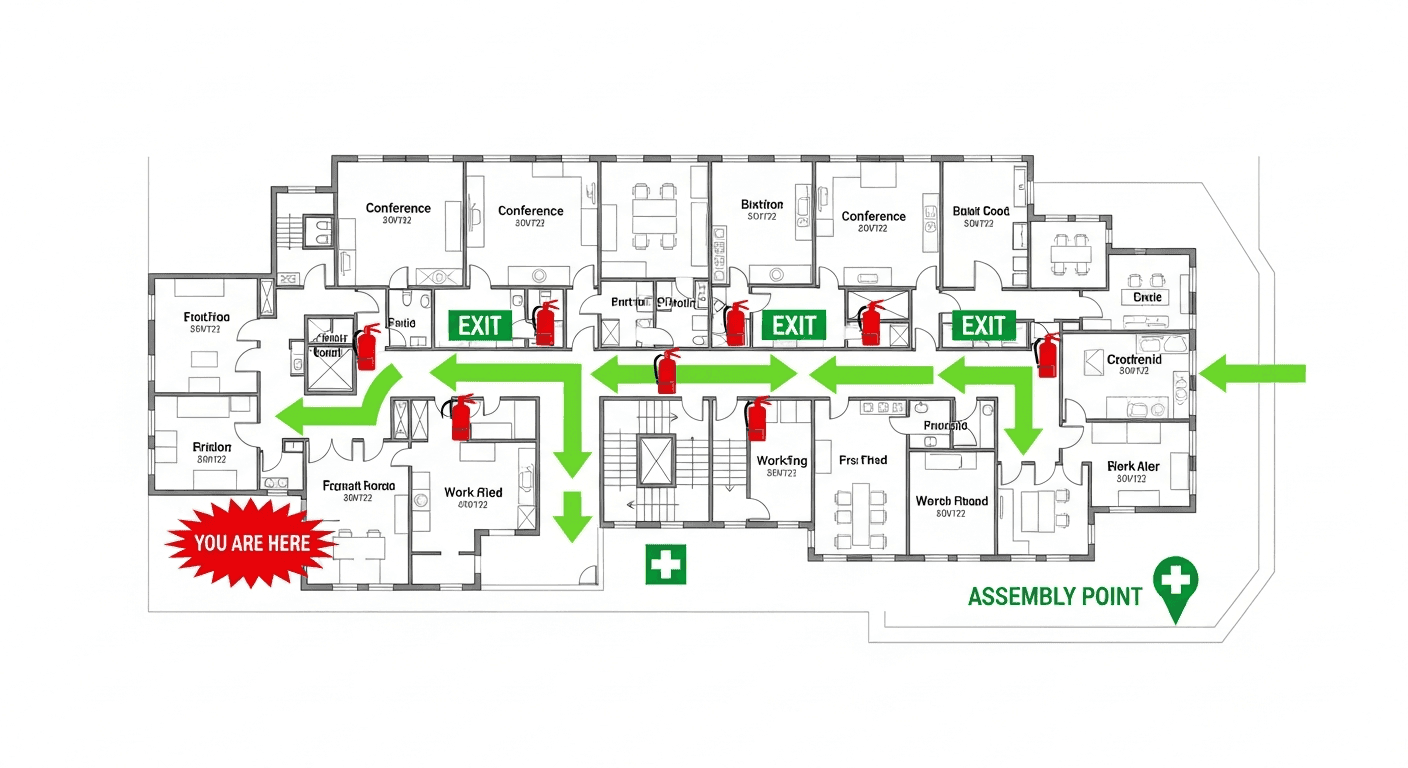
A well-designed evacuation map can satisfy both OSHA and NFPA requirements. Include: primary and secondary exit routes (both), fire extinguisher locations (both), pull stations (NFPA emphasis), assembly points (OSHA emphasis), "You Are Here" markers (both), and accessible routes (ADA/both). Use OSHA-standard color coding and NFPA-compliant symbols where applicable.
Fire-Specific Elements (NFPA Focus)
- Fire extinguisher classifications shown
- Fire alarm pull stations prominently marked
- Sprinkler system shut-off locations (for fire department)
- Fire door locations
- Smoke barrier locations in healthcare facilities
- Stairwell pressurization zones (high-rises)